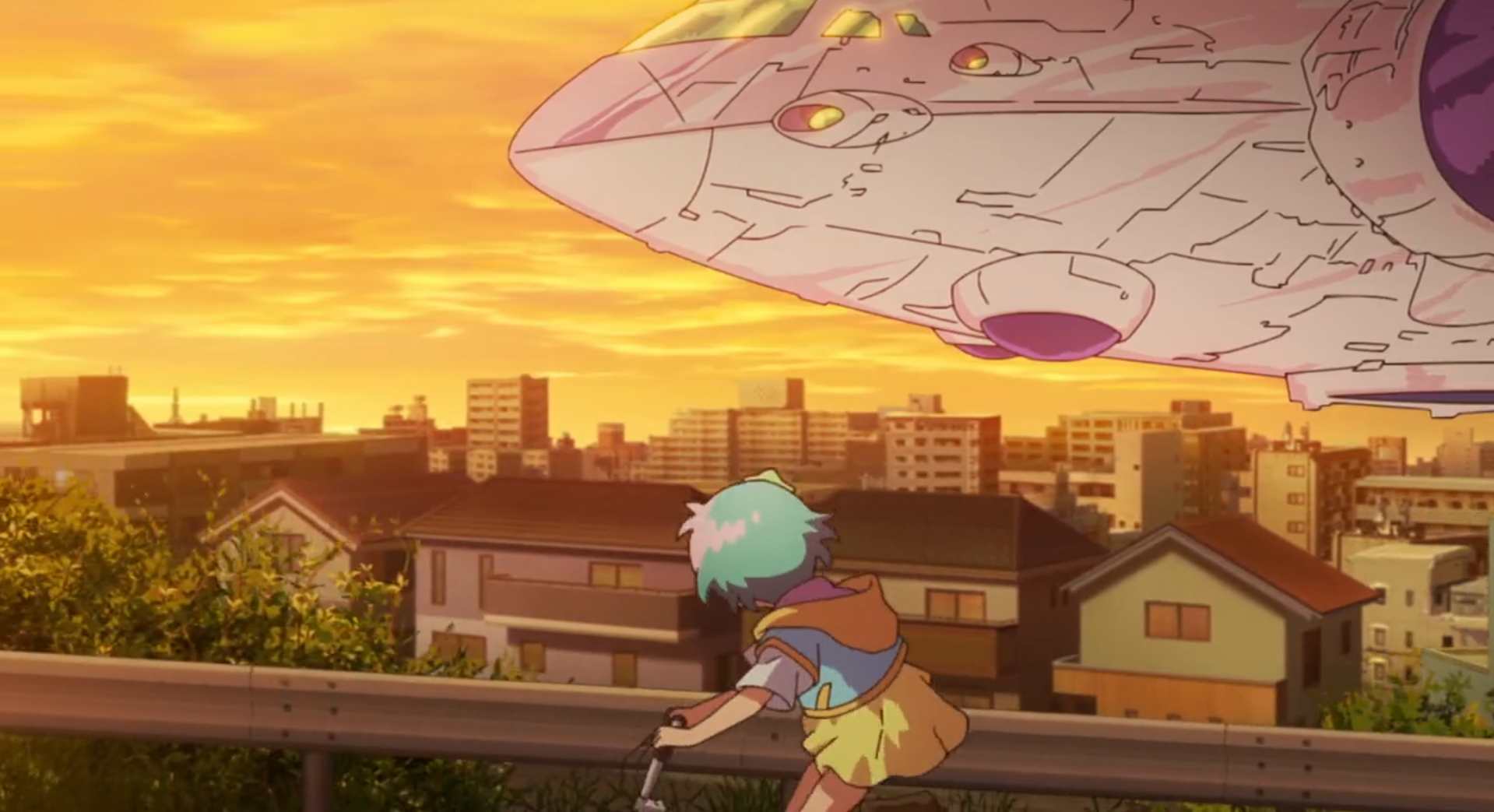
In 2025, anime studio Pierrot announced a new show: Mahou no Shimai LuluttoLilly, or Magical Sisters LuluttoLilly, which had aired its first episode on April 5, 2026. On the surface, this doesn’t really seem like it would grab that much attention. Only a few seasons ago, Princess-session Orchestra had been announced and just recently completed its 48-episode run, and Meitantei Precure! had itself started its run several weeks prior to LuluttoLilly’s premiere. And that’s not even getting into all the other mahou shoujo that exist during the course of a given year, whether it’s something more overtly marketed to children or an eagerly-awaited film being delayed for the umpteenth time because it’s not ready yet.With a plethora of magic already on the table with franchise recognition to boot, along with seemingly no English license, LuluttoLilly has everything working against it. Underneath that uphill climb however is a cavern of tradition and spectacle that is worth diving into not just for LuluttoLilly’s sake, but also to understand how exactly a particular type of magical girl show came to be.
And it all started with a sensation so big, it consumed everything.
An Unfortunate Name, a Fortunate Sensation
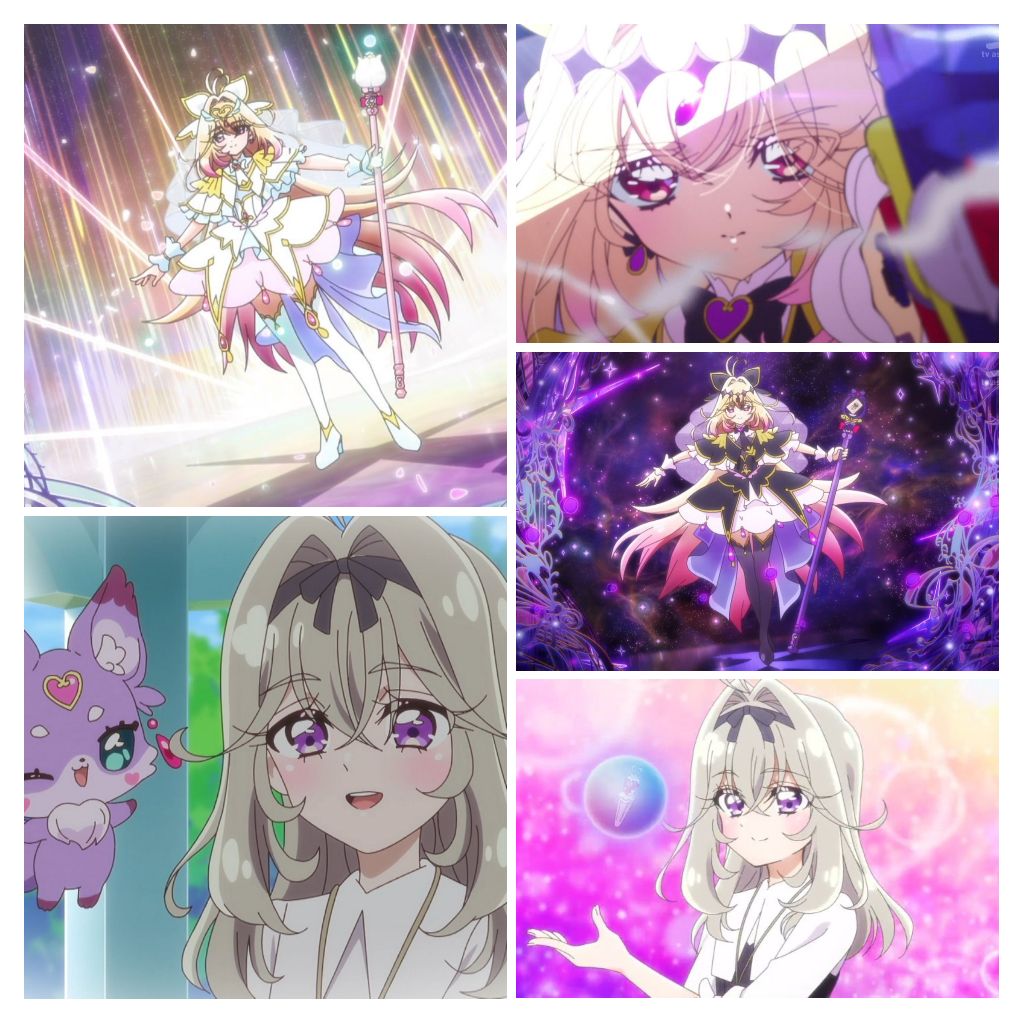
Back in the early 1980s, Magical Princess Minky Momo had entrenched itself within anime canon as cultivating an audience of older men who would spend time and money on a magical child that can age herself up into an adult with varying occupations. This was not quite intended – the series was meant to cater towards young girls so that they would be compelled to buy toys. But in the end, no one can truly predict which way the market winds will blow. Minky Momo herself would proceed to have a 63-episode series that itself had many ups and downs, but would be successful enough to create a ripple within anime marketing. Along with Miyazaki Hayao’s 1979 film Lupin III: The Castle of Cagliostro with its Clarisse character, she helped usher in the 1980s lolicon boom, as controversial as that was, and still is. Regardless, shortly after the series began paying dividends (social and economic, even if the latter claim has toy manufacturers claiming otherwise), Yomiko Advertising sought to get in on this action and approached the executives at Pierrot to try and come up with a mahou shoujo of their own that would be marketable.
Enter, of all people, Itou Kazunori. If that name sounds familiar, you may recognize him from his scripting work on numerous properties such as Oshii Mamoru’s Ghost in the Shell film, numerous installments of Mobile Police Patlabor, and other cult series like .hack//SIGN and Zettai Shounen. But before he became known for that, or even helping with the script for Miyazaki’s Nausicaa of the Valley of the Wind, he was integral in the formation of the first of the eventually-so-called “Pierrot Magical Girl Quintet.” From his plan—he’s even listed in the credits under “Original Plan / 原案” and is the credited series composer—and those who helped crystallize it came Magical Angel Creamy Mami in 1983, an anime about a young girl who can magically age herself up to be a pop idol sensation.
And yes, the name “Creamy Mami” is very funny for the English-speaking audience. Whatever joke you have lined up, I promise that someone else has thought of it first.
Now, it would be journalistic malpractice to not mention that, despite the intent to make a series with a pop idol as a marketable star both in the context of the show and in reality, Creamy Mami was not the first show to do this. Macross with Lynn Minmay in 1982 technically beat Creamy Mami to the punch. The critical difference however is that Macross also had its overarching war plot against the Zentraedi and the love triangle between Hikaru, Ayase, and Minmay as orienting points rather than just pushing a music marketing agenda. Creamy Mami was, first and foremost, intended as a vehicle for Ōta Takako to reach superstardom. She was not trained as a voice actress, nor had she gotten any particularly notable hits prior. However, with the backing of an anime studio, Itou’s writing, and the blessings of marketing, Creamy Mami became huge. This was not a flash-in-the-pan circumstance, either. The series still has its relevance – Ōta not only still does signing events based on the Creamy Mami persona, but the show was apparently such a hit in Italy that, even many decades after it stopped airing, the character and her music still manages to charm audiences even now. Watch the people sing along! It’s sweet!
But calling Creamy Mami a success purely because of the marketing isn’t giving the show itself enough credit. Lasting for 52 episodes, it proved to be a major success in nearly every respect possible as a piece of entertainment. It’s storyboarded well and has strong layouts, and the animation is never poor. Though it rarely crosses into what we would traditionally call “sakuga,” some of the sequences are actually quite solid. Utilizing its primarily episodic format, it managed to offer an early anime glimpse at Japanese show business, including a couple of plots that were far more nefarious than one would assume for a show like this. It cultivated characters that simultaneously acted like brats and were adorable, weaving continuity that gradually builds into its final climax. Yuu and Toshio’s dynamic, and how Yuu’s persona as Creamy Mami throws a wrench in their relationship, makes for both comedy and some of the show’s more potent emotional resolutions.
Interestingly enough, for being a show about pushing a real-world idol, Creamy Mami doesn’t bludgeon the audience with a new song every few episodes. Ignoring the supplementary OVA or sequel material, in truth, there’s only about 8-9 songs that make their way into the show. Compared to something like Love Live! where it seems you can’t go 3 episodes without a new song (or less, depending on which series you’re watching), the spacing out of musical numbers and their de-emphasis production-wise is itself significant. It reflects that the show isn’t shy about its marketing origins, but would not be defined by them. Itou took pains to make sure the show worked materially without that overhang, giving it a perch above many of the shows it spiritually spawned either intentionally or unintentionally.
A Lineage Ends
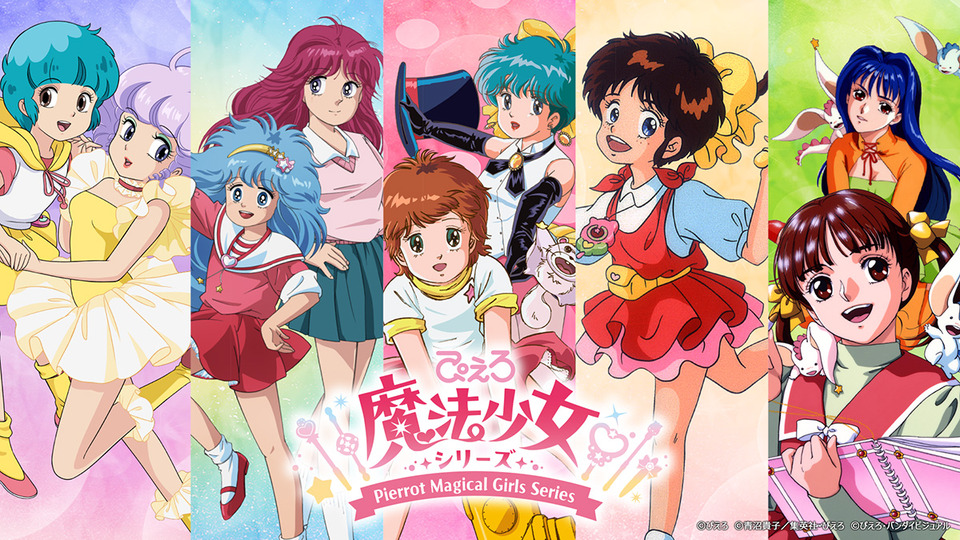
Realizing that they had such a huge hit on their hands, it should come as no surprise that Pierrot would try and emulate Creamy Mami in newer forms. What followed was a loose pentalogy of series that used the original as a base, changing the details every so often to make each one distinct. Those series were Persia, the Magic Fairy (1984, 48 episodes), Magical Emi, the Magic Star (1985, 38 episodes), Pastel Yumi, the Magic Idol (1986, 25 episodes), and Magical Stage Fancy Lala (1998, 26 episodes). Most of these, like Creamy Mami before them, managed to have their own series of OVAs that would have crossovers to playfully create a loose continuity between them all. Regardless of which show was being produced at the time, they followed a general set of blueprints that, while having some variation or exceptions, could be relied upon:
- The protagonist was an elementary school girl and decidedly normal until they received their magic powers from some kind of “other-world” entity or presence
- The protagonist’s family operates a home business that gets involved with the story in some way
- Animal sidekicks / faerie-esque characters offer advice or complications depending on the circumstances.
- There is a love interest boy that’s either their same age or slightly older. Romcom jokes or hijinks, or more sincere romantic feelings, may be used for both episodic plots and / or larger character arcs
- A transformation sequence involves being aged up, usually to around 16.
- The older identities, in some way, complement or contrast with their real identities and how they either see themselves, the world, or their relationships
Naturally, the “best” or “worst” of these shows is going to depend on the person. But there are some notable things to consider in terms of the lineage Pierrot had cultivated. For one, the episode length of each series gradually declined: the initial 52 episode run of Creamy Mami stands out as the longest lasting. Only four years later, Pastel Yumi had about half its length. What conclusions can we draw from this? Without diving into a full forensic investigation into every variable possible, it’s likely that Pierrot had simply exhausted the formula, or audiences caught on to the notion that each series was just not strong or distinct enough on its own. Even if the particulars of a series differ from the others, the overarching sense of “too similar” may still rear its head. There’s also the problem of “Mami Dearest,” too: given Creamy Mami’s monolithic popularity that was still strongly felt (Ōta had released eight albums by the end of Pastel Yumi with no sign of slowing down), the idea of a Pierrot series “not being as good as Creamy Mami” is a sentiment that shouldn’t be written off when it comes to reasons for people tuning out.
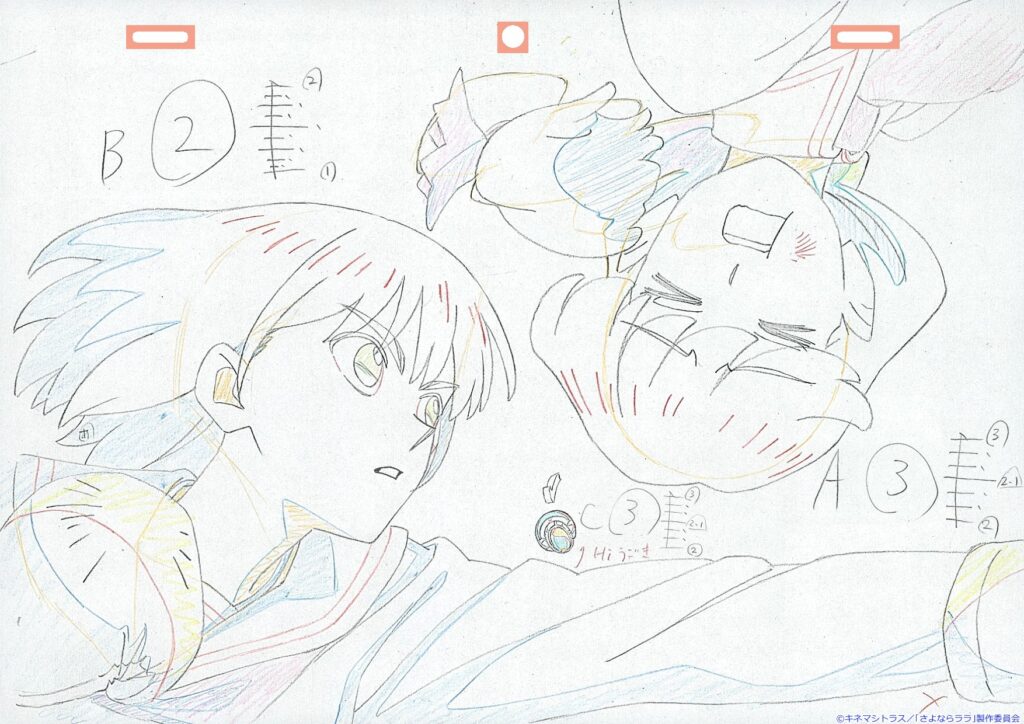
Of all these shows however, [Magical Stage] Fancy Lala stands out as an outlier in this list for several reasons. For one, it had the—at the time—largest gap between itself and its predecessor at twelve years. Without being in the room where the meetings happened, it’s entirely possible that Pierrot’s executives decided to try and bring the formula back for a new generation of anime fans, while older ones might recognize the show as a “nostalgic return” of sorts. It also interestingly enough drew inspiration from the period of magical girl productivity, though in a strange way. The anime was based on the single-episode OVA Fashion Lala: The Story of the Harbor Light / Harbor Light Monogatari: Fashion Lala yori from 1984. Having watched it about a year ago and rewatching it for the sake of writing this article, I’m still thunderstruck at how it tries combining a Cinderella-esque story with terroristic bombing the Disco Queen Contest (no, seriously, I’m not making this up – go see it for yourself). The whole thing collides so badly with itself that I find myself somewhat enjoying its bizarreness. All that being said, one can easily see how the idea could be molded into the finalized Fancy Lala, with its dinosaur-like animal friends and the emphasis on fashion.
However, much like Pastel Yumi twelve years earlier, Fancy Lala did not last very long, clocking in at 26 episodes before going gentle into that good night. Evidently, the series did not manage to leave its mark on the anime landscape, and unlike its predecessors, it spawned no OVAs or side projects of note (it did give Kyoto Animation some work during their outsourcing years, though). I cannot say this with any certainty as I have found no source to corroborate it, but with the sheer abruptness of the final episodes, I suspect that the show was planned to go on longer than it did. There were several pertinent unresolved story concepts or ideas introduced early on. Yet, it’s a testament to Mochizuki Tomomi’s writing and Oomari Takahiro (of Natsume’s Book of Friends directorial fame) that they managed to create a genuinely strong and appropriate ending despite how quickly it occurred. If Pierrot’s magical girl legacy was to end here, it ended on a triumph rather than a whimper.
And so, the franchise was put on ice seemingly forever…until it wasn’t!
A Lineage Reborn
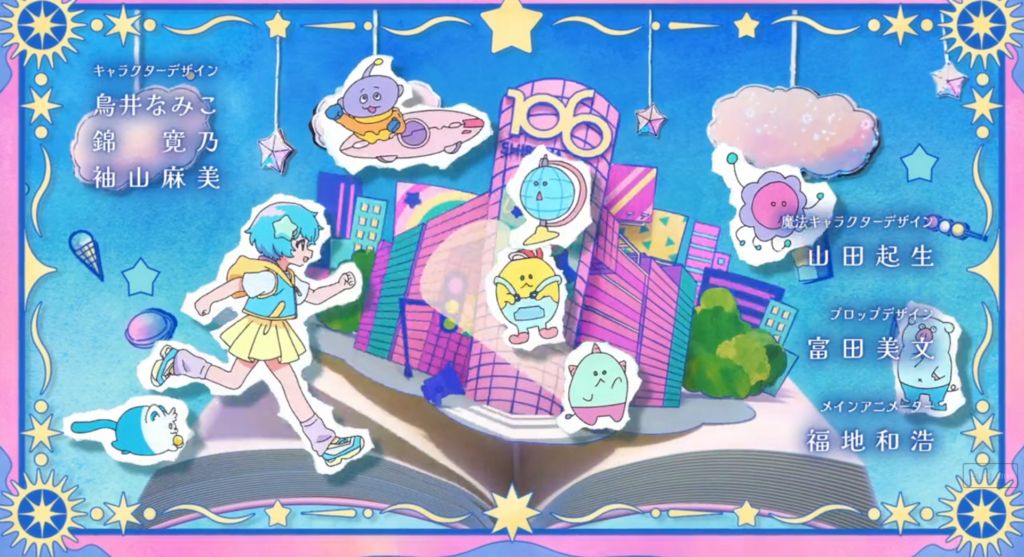
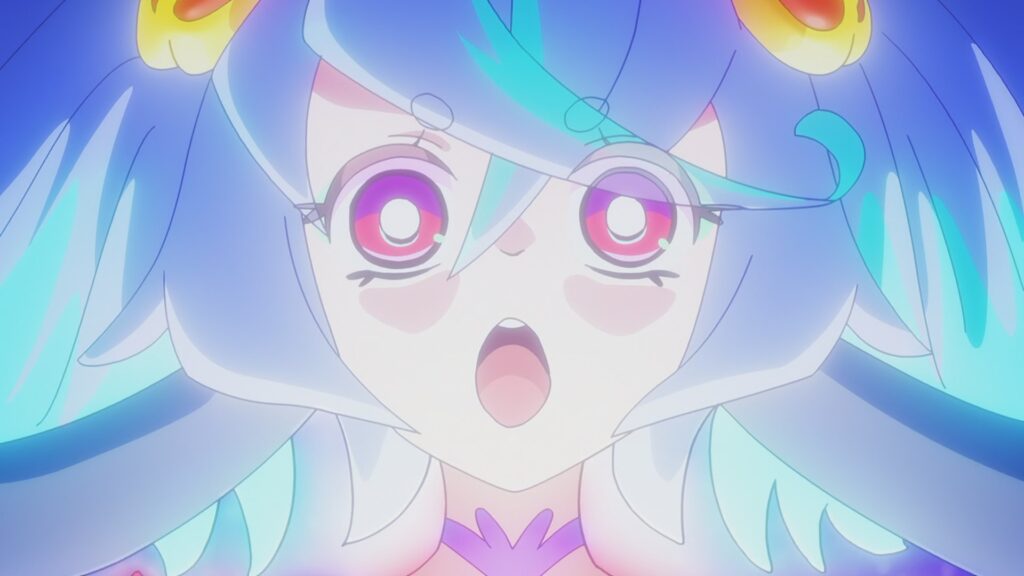
At first flush, Magical Sisters LuluttoLilly feels like opening a time capsule of a bygone time. Even complete with the giant image of Creamy Mami herself in one sequence, the whole reads like an announcement to remember that which once was. I already mentioned at the start of this article that LuluttoLilly’s status and timing might cause it to pass under the radar or be dismissed as “just another magical girl” show in a sea of them recently. But when a studio makes a conscious effort to bring back something back, especially given its historical significance, it’s worth taking an earnest look at what it has to offer. And indeed, the series does feel like it is wholly within the overall framework of what Pierrot did before. Nonoyama Fuu and Rui are two sisters whose parents run a sweets shop, and Fuu herself is elementary school aged. She seems to have at least some kind of familiarity with Shou (romantic inclinations unspecified at this point), and her character design even looks like Yuu from Creamy Mami. By the time the first episode is over, Fuu has met her animal friends and gotten her powers, immediately using them to make a fireworks show and age herself into the version of herself she wants to be. Complete with some horizontal flatness in the layouts, it seems like Pierrot isn’t necessarily putting their best foot forward both production-wise and conceptually, despite the fun of the pastel color design.
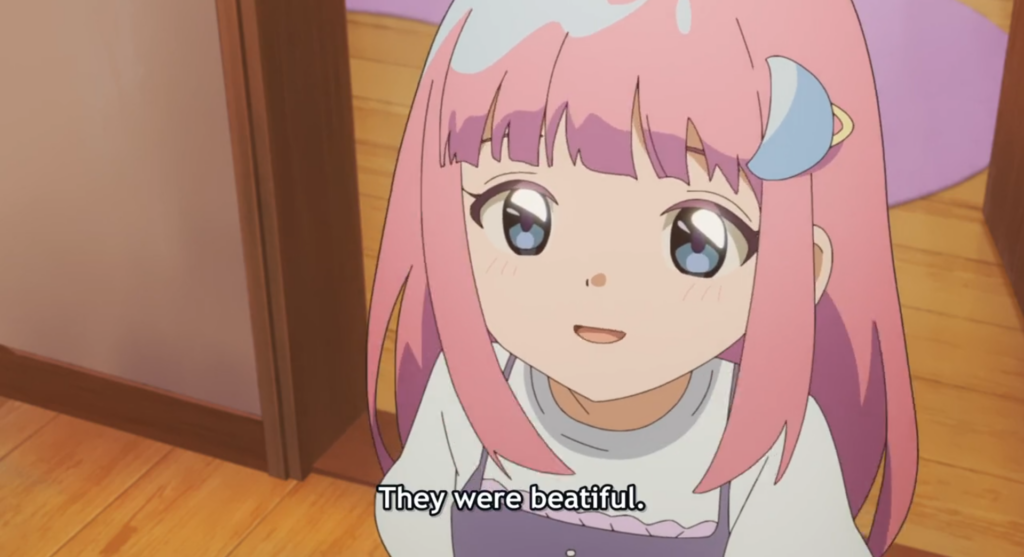
But it is in several rather notable ways that the series manages to distinguish itself that offers some possible riches lying within. The series choosing to focus on two girls instead of just one is a slight change compared to the prior installments, but makes a world of difference in how the show operates. Fuu’s entire character is centered around loneliness and malaise, the idea that her older sister is leaving her behind not just in terms of age, but also of energy. It’s established that Rui used to play with Fuu often and sing with her, but a hospitalization seems to have robbed Rui of her spirit and she now wants to spend her time studying or keeping away from singing altogether. Fuu’s preoccupation is making her sister happy rather than operating under the desire to become an industry success. As such, the base character dynamic is more melancholic and “unfun” compared to much of what has been previously done. LuluttoLilly feels far less like a comedy, and while it does have some adorable or fun moments within, its warmth shines through with Fuu succeeding in lifting her sister’s spirits. We saw it at the end of the episode when Fuu asks if Rui watched the fireworks, and she says that they were beautiful while smiling (even if the fansubbers couldn’t spell “beautiful” correctly).
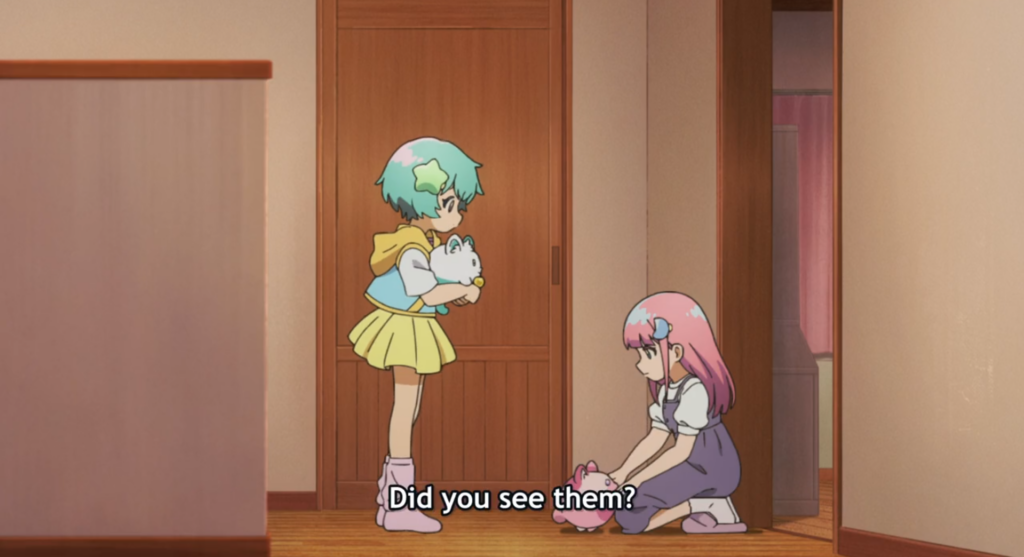
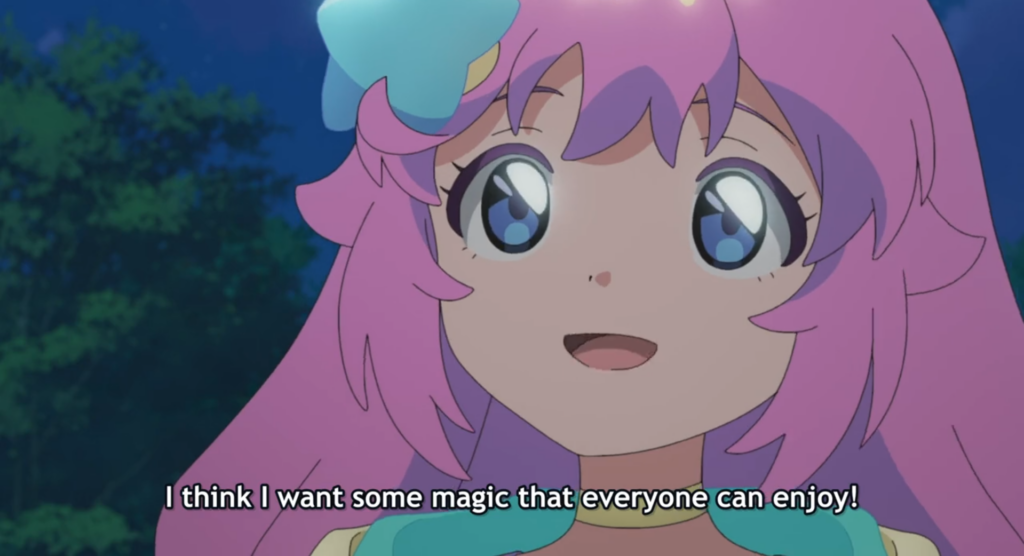
We already know from the OP and the official artwork that Rui will receive their powers in time and that both sisters will become idol sensations. But Meeter’s condition of magic is that, much like with Creamy Mami, they cannot divulge their magic to anyone and they must give it up within one year. It’s no doubt a repeat of what came before, but for a more cynically-driven 2026 audience, this approach feels like the most-sensible continuation of Pierrot’s running theme of how older identities contrast or complement their younger ones. By having two perspectives (one of pessimism turning into optimism and one of optimism trying to reach out) blessed with magic and music, both Rui and Fuu will have aspects of their lives that they need to keep secret. Considering that there already is a metaphorical distance between the two sisters, it might inadvertently drive an even larger wedge between them. It may cause Fuu especially to question or wonder if her attempts to cheer Rui are not working / uncrossable.
On the opposite side, Rui’s secret means having to possibly reject time with Fuu, even as her spirit brightens, which might make the relationship frosty. This poses both a fascinating angle and a genuine problem for the narrative to unravel. United as magical girl idol sensations, separated as sisters, their powers ironically being the thing that pulls them apart and brings them together depending on the personae. Because it seems more willing to engage with character instead of overt marketability (at least at the present time), LuluttoLilly stands poised to be more of a larger character study rather than a series of purely situational ventures that then have major motions forward out of the blue. Granted, it may still take that course in time, but for an initial impression, it starts off quite well.
LuluttoLilly may, in the end, result in the lineage once again being put back in the freezer. But someone within Pierrot’s ranks (be it executive, Douge Shintarou as director, or someone else entirely) felt that there was still something worthwhile within this tradition of magical girl anime. I doubt that anyone involved believes that this will become as big or sensational as Creamy Mami before it. If first episode reactions are any indications, the show is not exactly making waves. But even if LuluttoLilly and its eventual second season are to eventually fade into the backgrounds of otaku memory, it peeked its head out of hibernation and reminded the world that some things cannot be so easily forgotten or let go. In the worst sense of that, we get lifeless remakes of Spice and Wolf and the upcoming Fist of the North Star (don’t ask me about that trailer). When it works, we get something like LuluttoLilly.
Hopefully, it follows through.
EDIT (3 June 2026): Formatting fixed.