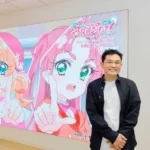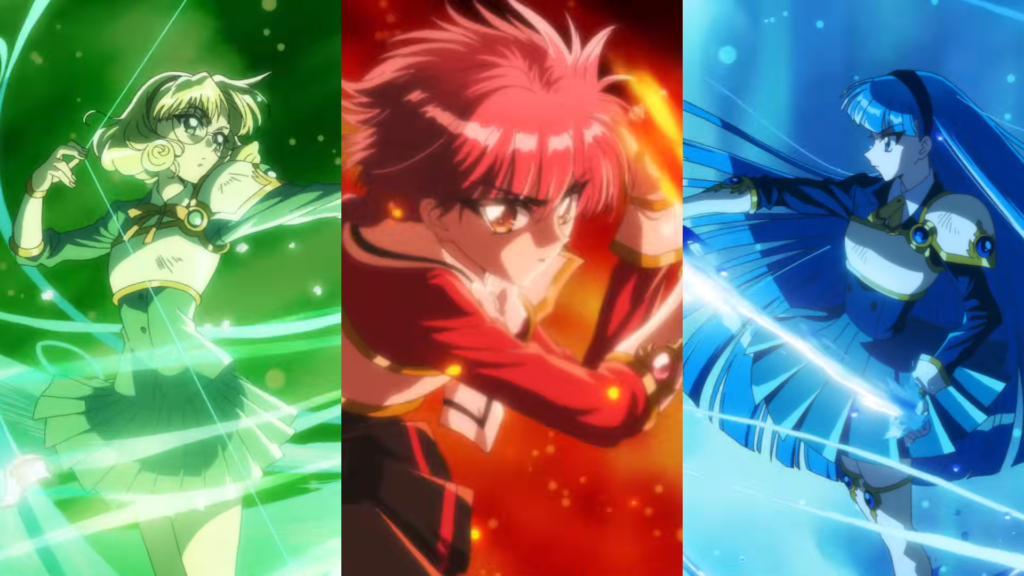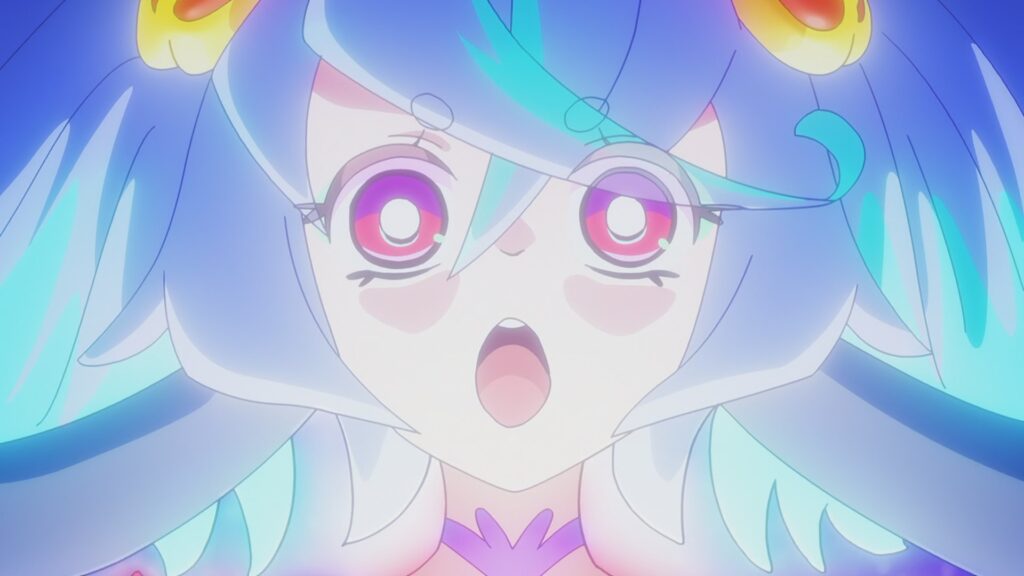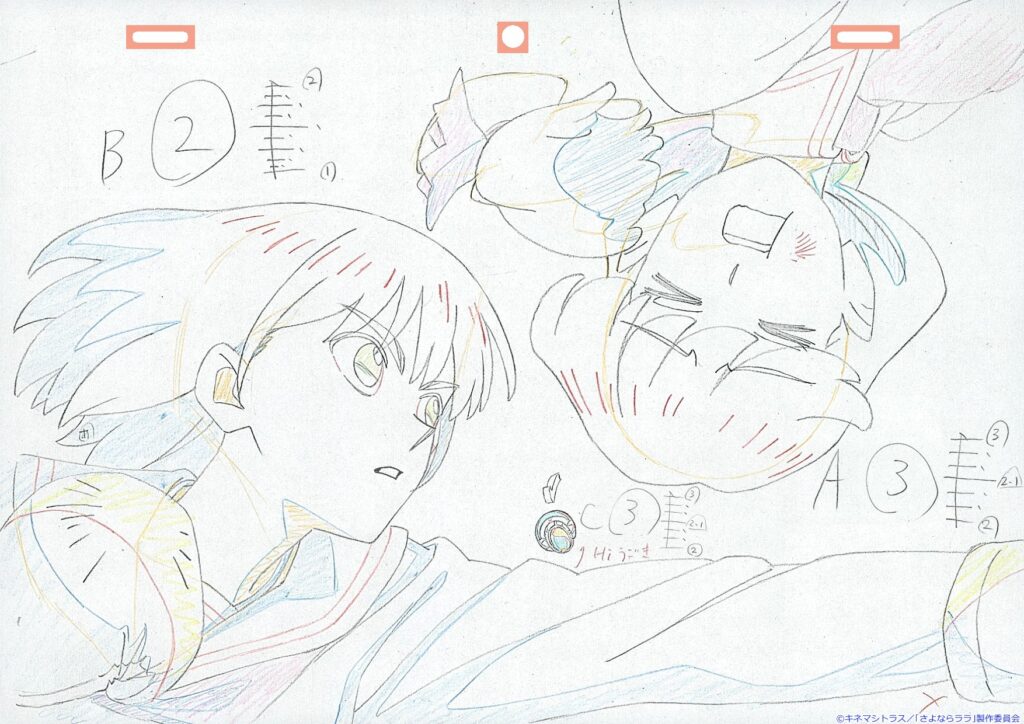
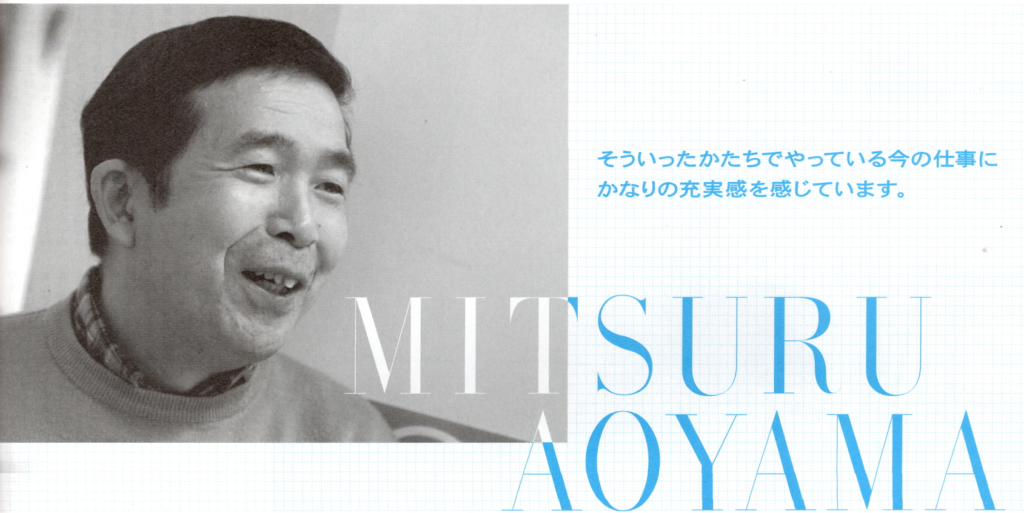
Hello everyone, another interview but this one is of quite an old vintage, same with the guy who this interview is about actually! While I was researching for my article about Mitsuru Aoyama, I stumbled on the fact that he did an interview in Animage a while ago thinking it would help me with piecing together how his early career panned out.
The magazine was very good actually, for only 950 yen (just under five quid) I got a window into anime from 16 years ago being talked about when they were new! It was very charming to see (shame about the Hetalia front cover though).
This interview was an extended four page interview with Mitsuru Aoyama by Yuuichirou Oguro (Anime-sama), editor in chief of AnimeStyle for Animage, just after Precure All Stars DX2 released 16 years ago and right in the middle of Heartcatch Precure’s initial television run! Aoyama has done interviews since this one and I actually have another one in my possession too! Maybe we’ll take a look at that one day, who knows. Until then, please enjoy this interview!
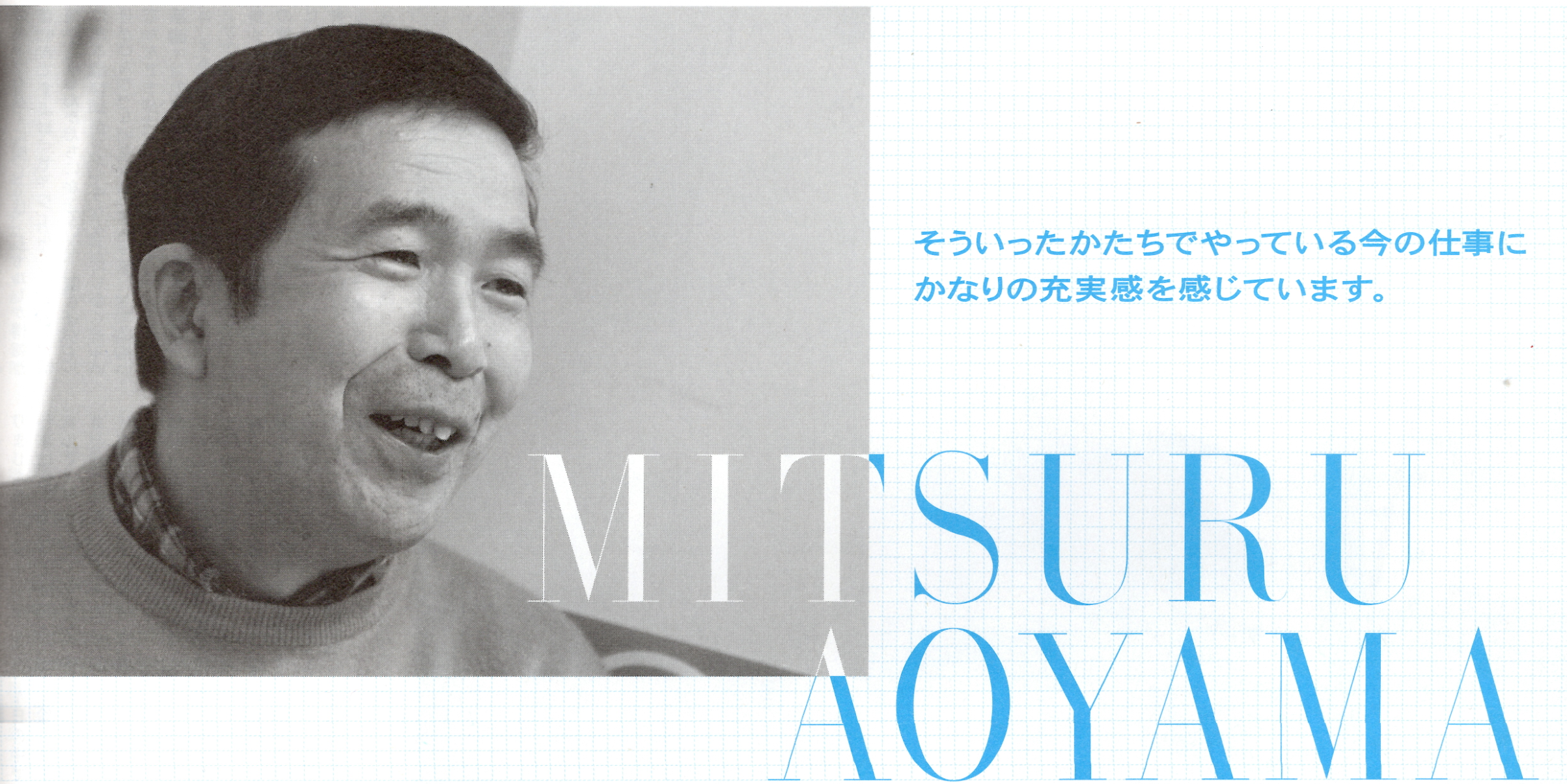
Translation by “nui”, Editing by me. This Month’s “That Person”: Mitsuru Aoyama was originally published in Animage magazine in June 2010
This Month’s “That Person”: Mitsuru Aoyama.
Precure All Stars DX and Precure All Stars DX2 were massive event movies where successive generations of Precure gathered together. He served as the character designer and animation director for them, drawing every single character. He’s a super-powerful animator who not only works on the Precure series but has been a constant staff member on the Sunday 8:30 AM timeslot shows since Tongari Boushi no Memole, often handling all the key animation for a single episode entirely by himself.
Interviewer: I originally wanted to ask you about what first made you feel a sense of fulfillment backduring your time on Ojamajo Doremi, but the timing didn’t work out so it never happened. I imagine last year’s Precure All Stars DX and this year’s DX2 were pretty massive projects for you?
Aoyama: Yes, definitely.
Interviewer: I came here today to talk to you with these two movies as the starting point. Honestly, I feel like you’re the only one who could have pulled off being the animation director for DX and DX2.
Aoyama: Oh, you think so? (laughs). I don’t know what to say to such high praise…
Interviewer: Do you mind if we dig into the past a bit? What got you into being an animator in the first place?
Aoyama: In my generation, I don’t think there were many people who actually set out to become animators. It’s the same for graphic designers. I was studying design in school, but it’s a classic story, I just kind of stopped going. I was working various part-time jobs and eventually thought, “If I’m gonna work, I’d rather do something where I draw.” I mentioned it to a friend, and they introduced me to a subcontracting animation studio. That was basically the trigger. I’ve been doing this job ever since.
Interviewer: Is that when you moved to Toei Doga (now Toei Animation)?
Aoyama: I was at about two subcontracting studios (Studio Look and Studio Aton), went freelance after that, and then ended up at Toei, yeah.
Interviewer: Was there a specific moment when you personally started feeling a sense of fulfillment in animation?
Aoyama: Like I said, I went in completely blind to how the industry worked. But as I kept doing what I was told, it gradually started getting fun. The fact that I didn’t quit halfway through probably means I was suited for it. You get paid per drawing, so it turned into cash right away, that was motivating, and it’s a job where people actually see your work. Plus, your name ends up on TV. So in that sense, I’m a really impure animator (wry smile).
Defining a Style and the “Solo Key Animation” Legend.
Interviewer: Personally, I’ve always thought of you as an artist who naturally draws with a bit of a thick, fleshy, intense style. Am I off base there?
Aoyama: This might be going on a bit of a tangent, but in animation, you don’t really draw in your “own” style very often. It’s mostly work based on existing character designs, so when I’m working as a key animator, I’m always trying my best to match the character sheet.
Interviewer: So was there a turning point where your own art style was established?
Aoyama: Oh man… I don’t think it’s established yet! (laughs).
Interviewer: Really? Not yet?
Aoyama: I don’t think so. It’s still a work in progress, and honestly, I’ll probably stay a work in progress for the rest of my life. I always have the desire to animate drawings as close to the character reference sheets as possible. Like you just mentioned, Oguro-san, it seems people looking objectively often think “that’s an Aoyama drawing!” But I think that’s just because I’m still developing and haven’t perfectly nailed drawing exactly to the character sheet yet.
Interviewer: The first time I remembered your name was from the movie Arcadia of My Youth. Kazuo Komatsubara was the animation director, and you were the assistant animation director, right? Harlock’s face in that movie was about twice as intense as before, and I always figured that was your doing.
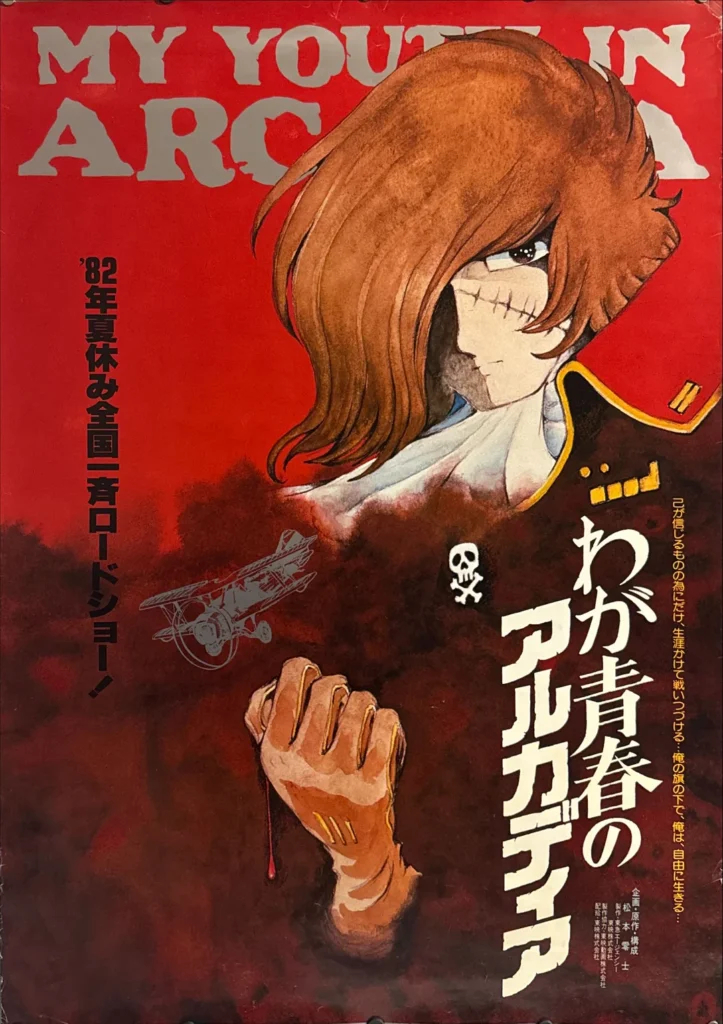
Aoyama: Even though I was the assistant animation director, I don’t think I did that many cuts. Komatsubara-san corrected almost everything, so the only things I fixed were the mob scenes and stuff. I did do a few cuts as a key animator, though.
Interviewer: If I recall, the scene where Harlock’s eye gets crushed was your animation, right?
Aoyama: Ah, yes it was (laughs). You’ve got a great memory!
Interviewer: I actually had the chance to see the key animation for that scene. It was super powerful
Aoyama: I remember the work from that era really well. I had just gone freelance, and touching back on what we talked about earlier, that was right around the time I vaguely started thinking, “Hey, this job is actually pretty fun.”
Interviewer: Around the time you transitioned from key animator to animation director, were there any memorable projects or people you met?
Aoyama: As for people, definitely Komatsubara-san who we just mentioned, and Yasuhiro Yamaguchi, who was the animation director on Queen Millennia. Before coming to Toei, I worked on Tiger Mask II, and there I got a lot of guidance and was really taken care of by Hiroshi Wagatsuma and his company colleague Takao Kouzai. Everything they taught me during that time has become my personal treasure.
Interviewer: Did the folks you just named give you direct, hands-on instruction?
Aoyama: Not necessarily “instruction”, it was more about watching Komatsubara-san and Yamaguchi-san work, or getting to see the drawings they had corrected. We talked a lot about private stuff, but they weren’t the type to preach to you about the job.
Interviewer: Any specific shows from back then that left a big impression?
Aoyama: Definitely. I’d say Ganbare Genki is the project I remember most fondly. It was probably my first or second year doing key animation. This was also before I joined Toei. At the studio I was at, there was an animator named Shigetaka Kiyoyama and an episode director named Masahiro Sasaki. I got to do key animation on Ganbare Genki. Through that job, they taught me the ABCs of key animation and directorial pacing. Looking back, that experience became my foundation. Plus, I just really liked Ganbare Genki as a show.
build note: Aoyama was a Key Animator for several episodes of Ganbare Genki, regularly working alongside Kiyoyama and Sasaki on their episodes of the show. Source
Interviewer: I vaguely remember that you started doing all the key animation for entire episodes by yourself around the time of Bemubemu Hunter Kotengu Tenmaru. It’s been almost 30 years, so my memory is a bit hazy…
Aoyama: Yeah, that might be right. Up until then, I’d been doing theatrical movies, and I think Tenmaru was my first time as an animation director on a TV series. Back when I worked on Arcadia of My Youth, a production manager named Satoru Ikegami said to me, “Aoyama-kun, why don’t you try doing a whole episode by yourself?” He might have been joking, but it stuck with me, and I thought I’d like to try it if I ever got the chance. Then, during Tenmaru, the production manager at the time, Saburo Yokoi, also floated the idea, like, “Wanna try doing the key animation by yourself?”
Interviewer: (Laughs).
Aoyama: I didn’t know if I could actually pull it off, but since they asked, I figured I’d just give it a shot, and that’s how it started.
Interviewer: Being asked to “do a whole episode by yourself”, do you think they just knew you had that kind of insane horsepower?
Aoyama: I wonder. It sounds presumptuous to say it myself, but they probably judged that I could handle it safely. I was already drawing a huge volume of work, so I figured as long as the schedule permitted, I could probably pull it off.
The Process of a One-Man Army.
Interviewer: Since Tenmaru, you’ve basically been doing all the key animation for one episode by yourself, right?
Aoyama: For TV series, mostly yes. Though there have been times where I had a few other people jump in to help.
Interviewer: Practically speaking, how do you actually go about drawing an entire episode by yourself?
Aoyama: At first, it might have been really tough. I establish a daily rhythm, work backward from the deadline, and calculate: if I finish “this” many layouts and key frames a day, I should make it. Of course, since the sheer volume is so high, I’m sure there are times when the art quality suffers a bit.
Interviewer: From a layman’s perspective, I can imagine doing an episode solo if the characters are simple, like in Maple Town Monogatari. But for characters with tons of details and parts, isn’t drawing even one frame exhausting?
Aoyama: You’re right. That just comes down to experience, I guess. In the Sunday 8:30 AM timeslot, shows cycle out every year or two at the longest. So every time the show changes, the priority is just getting used to the new characters. You really have no choice but to adapt and come up with your own little drawing shortcuts as you go.
Interviewer: What order do you work in? Do you tackle the hardest cuts first, for example?
Aoyama: For layouts, I just do everything straight from the beginning. If I don’t grasp the flow of the story myself, I just can’t do it. As for the key animation, I rank the cuts A, B, C, D, E, and honestly, I start with the easiest ones. Even if I start with the easy ones, the brutal ones are always waiting for me at the end (wry smile). I do the easy ones, and once I hit a groove, I’ll ride that momentum to knock out the tough scenes.
Sticking around for Bikkuriman.
Interviewer: Going back to your career history, were there any memorable events or encounters after Tenmaru?
Aoyama: After Tenmaru, there was Palm Town, and then Bikkuriman. Around the Maple and Palm era, we had incredibly talented young directors, like Yukio Kaizawa, Hiroyuki Kakudou, and Junichi Sato, who is now doing amazing work outside of Toei. They taught me what key animation should look like from a director’s perspective. Then, on Bikkuriman, I got to do character design for the first time. Looking back, I was given an incredibly blessed opportunity.
Interviewer: Blessed in what way?
Aoyama: The show itself was really fun, and the staff were all veterans of the 8:30 AM slot, so we all knew each other well. I got a lot of guidance from producers like Yasuo Yamaguchi, and Keizou Shichijou during New Bikkuriman. And then, of course, there was Lotte’s Tango Shiro.
Interviewer: Did you interact with Tango-san directly?
Aoyama: Most communication went through the producers, but I did meet him directly a few times to talk. Tango-san was never overly strict or picky about the art, so I remember it being really easy for us on the production floor to work. I ran into him for the first time in years during a magazine gig a while back, and he was just as kind as ever, offering me a lot of warm words.
Interviewer: From a personal workload perspective, how was Bikkuriman?
Aoyama: It was definitely tough. For Bikkuriman, the only character reference we had was the sticker seals. And those stickers were incredibly detailed and packed with information. We thought, “Oh boy, we probably have to adapt every single detail from the sticker into the character design” (wry smile). So we drew everything, but the line count was just so high that the key animators really had a rough time. Well, myself included, obviously.
Interviewer: When you become a character designer, you have to do promotional illustrations on top of the designs and episode animation, right? Your workload must have blown up during Bikkuriman.
Aoyama: Oh yeah, between drawing key frames, designing characters, and doing promo art, I had a ton of work. But still, the amount of time you can genuinely focus in a day is pretty limited, so I tried to cram it all into those hours. I’d use my days off, too. I’ve rarely ever pulled all-nighters for work.
Interviewer: Has that been true your whole career?
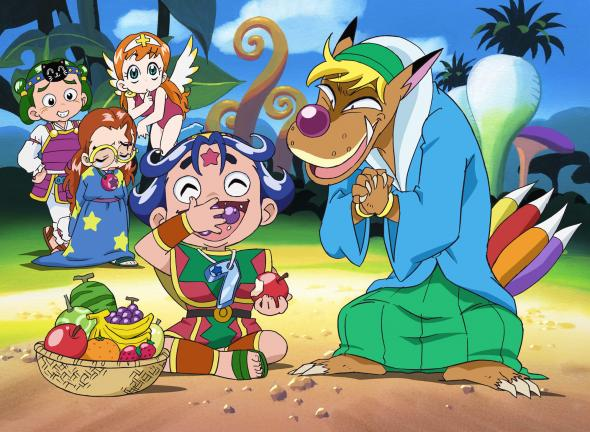
Aoyama: Yep.
Interviewer: I heard you’re an early bird Aoyama-san, which is pretty rare in this industry.
Aoyama: Oh yeah, I wake up early (laughs). I usually get to Toei around 9 or 10 AM, work until 7 or 8 PM, and call it a day.
interviewer: Was the next series, New Bikkuriman, handled similarly?
Aoyama: With New Bikkuriman, the anime actually ran ahead of the stickers a lot of the time, so I recall having to create characters that didn’t even exist on stickers yet a few times. Because of that, I was able to clean up the line work myself, making the characters simpler than the original Bikkuriman. Like in the “School Arc,” we just stripped away all the clunky parts and threw them in school uniforms. Because we could take shortcuts like that, I remember the animation side being less of a nightmare than the first Bikkuriman.
Interviewer: After that, you worked as an animation director on things like Goldfish Warning! and then moved onto Super Bikkuriman. The characters got much taller and slimmer this time around.
Aoyama: The producers requested a more realistic look. My memory gets a bit fuzzy around here, but I believe there was a manga based on the stickers before the anime aired, and I used that as a reference when designing the characters.
Interviewer: I see.
Aoyama: The animation industry was seemingly in a slump back then. Because of that, we had strict production limits, like capping the number of animation frames. I clearly remember them asking me to keep the character designs simple, too.
Interviewer: Jumping topics slightly, but a few years ago they made Happy Lucky Bikkuriman. How were you involved with that?
Aoyama: They were animating Bikkuriman again for the first time in a while and asked me to be the character designer. But right around then, Precure had already started.
Interviewer: That would have been around Futari wa Precure Splash☆Star, right?
Aoyama: Exactly. Since I was already working on Precure, I couldn’t be the animation director for it.
Interviewer: I found that curious at the time. Since you were doing the character designs, I figured you might take a break from Precure to be the animation director for Bikkuriman. Was staying on Precure as an animation director your own decision? Or was it due to production reasons?
Aoyama: It’s a bit awkward to talk about, but it was a production decision. I personally wanted to dedicate myself entirely to Bikkuriman, but the situation simply didn’t allow for it. By only doing the character designs, I always felt like I did a disservice to the Bikkuriman staff.
Aoyama’s Biggest Challenge.
Interviewer: Going back a bit, another show you did character designs for was GS Mikami. How did you feel about your work on that?
Aoyama: Mikami was a difficult show in many ways. It was my first time working on an anime that already had a source manga. I met with the original creator and got a lot of advice. …Honestly, taking that kind of trendy, popular art style and translating it into animation really exposed my own technical shortcomings, and I ended up causing quite a bit of trouble for people.
Interviewer: I’m sure that’s not true!
Aoyama: No, no, it really is. Despite all those regrets, Mikami was a lot of fun to draw. It had a bit of sex appeal to it, and the story was genuinely funny.
Interviewer: Mikami has a lot of beautiful women and cute girls in it. How was that aspect for you?
Aoyama: Ah, right. You know… this might veer off-topic again, but fundamentally, I’ve never been very good at drawing “shoujo” (girls’) series, ever since I became an animator. In that sense, I prefer “shounen” (boys’) series. Like Bikkuriman and Ganbare Genki. Ever since Tongari Boushi no Memole, I started working on a lot more girls’ anime. And obviously, Precure today is a girls’ anime
too.
Interviewer: For the last decade or so, you’ve been exclusively doing girls’ shows.
Aoyama: Yeah, I have (wry smile). For better or worse, I’ve been allowed to keep working on them.
Interviewer: In that case, did you struggle with the heavy romance series like Marmalade Boy, Gokinjo Monogatari, and Hana Yori Dango?
Aoyama: Shows like that require you to push that distinctly “shoujo manga” vibe to the forefront, even in how the characters act. Honestly, I felt a lot of resistance toward it. I just had to compartmentalize it as a job and push through.
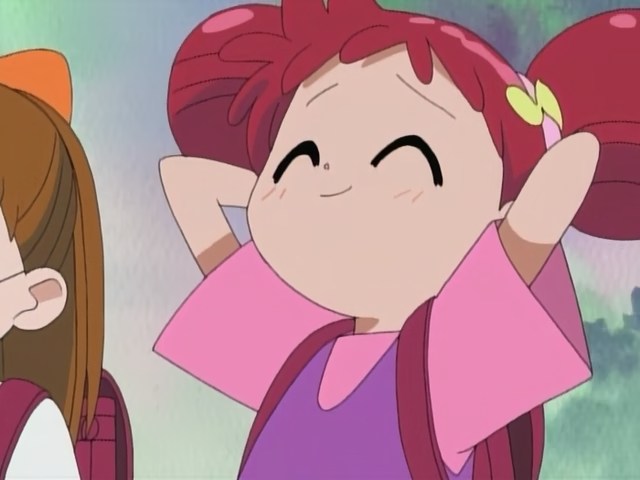
Interviewer: Honestly, I figured Ojamajo Doremi must have been a much harder design for you to draw than Marmalade Boy or Hana Yori Dango.
Aoyama: Doremi really was a tough design. I could never quite grasp it, and my drawings never looked quite like the designs, that’s something I still kick myself over. Even when drawing key frames, if an expression wasn’t on the character sheet, I couldn’t easily visualize it. The episode directors had to save me, and I got a lot of advice from Yoshihiko Umakoshi who did the designs. But Doremi had a great story and a strong message, so I’m really glad I got to be part of it.
Interviewer: So Precure was actually easier to draw than Doremi?
Aoyama: Precure was definitely easier. Even though the protagonists are girls, they fight more like boys.
Interviewer: You’ve been on the Precure series forever too, was there a specific season that was easiest for you to work on?
Aoyama: I’d have to say Toshie Kawamura’s designs for Yes! Precure 5 and Yes! Precure 5 GoGo! were very easy to work with. In the very beginning, Precure was an original work, so the character designer, Akira Inagami, and everyone else were fumbling around trying to figure it out. I remember participating as a key animator and going through a lot of trial and error trying to figure out exactly how the characters should be expressed.
Interviewer: I’m sorry to make assumptions, but I feel like this year’s Heartcatch Precure! falls into the category of designs you struggle with.
Aoyama: You hit the nail on the head. Anyone with a good eye can tell, huh?
Interviewer: Oh, no, no. It’s just a completely different lineage of design from what we had up until last year.
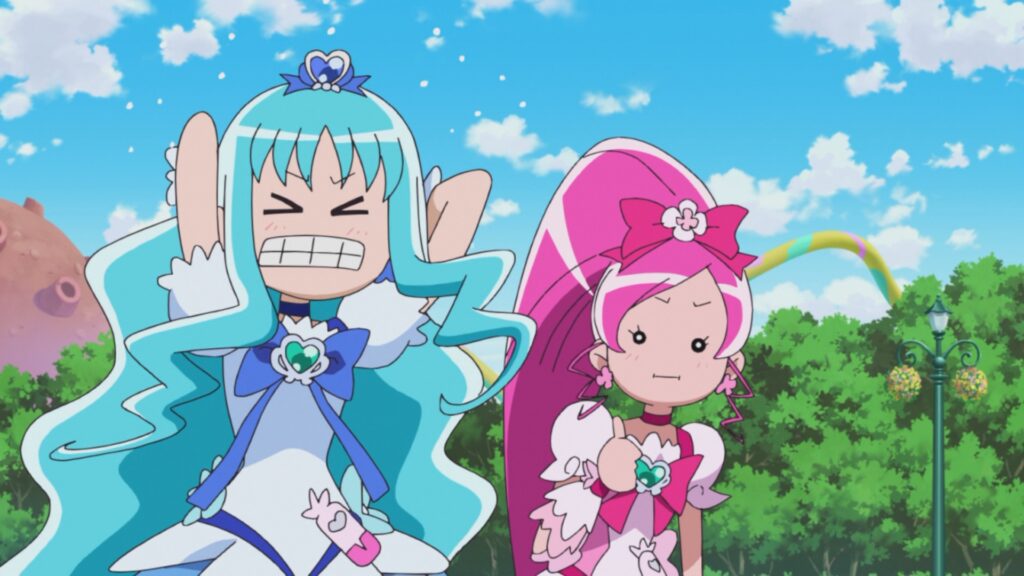
Aoyama: This loops back to DX2, but the theatrical side actually adapted the characters into animation earlier than the TV side.
Interviewer: Oh, really?
Aoyama: From an art perspective, I didn’t have any opportunities to have Umakoshi-san correct my drawings. In that sense, my art in the movie might look quite disconnected from how Heartcatch looks on the TV broadcast.
Interviewer: So when you started working on DX2, Episode 1 of Heartcatch wasn’t even finished yet. If you had watched Episode 1 before drawing for DX2, you probably could have nailed the nuances better, right?
Aoyama: I think so…
Interviewer: After watching the movie, I actually thought you tweaked the Heartcatch characters’ designs slightly to make them blend in better with the previous Precures!
Aoyama: Well, that tendency isn’t entirely non-existent. But my personal policy is that if there’s a character designer, I want to match their art as perfectly as humanly possible. As for how that turned out… I’ll leave that up to the viewers’ judgment.
The Power of All Stars
Interviewer: Was the reason you were chosen as the animation director for DX simply because you had participated in every single Precure series up to that point?
Aoyama: I guess so. I heard from Director Takashi Ootsuka later that he was the one who requested me. I’ve worked on the Precure series forever, but honestly, I never in a million years thought I’d be doing the theatrical movies. But since I was specifically requested, I figured that even if the workload was brutal, I’d give it a shot.
Interviewer: It was fantastic. You managed to keep the first and second generations looking exactly like their TV series counterparts.
Aoyama: Oh, you think so? I’m really happy to hear you say that.
Interviewer: The character designers from past generations also jumped in to do key animation, right?
Aoyama: In the first DX, I think it was just Kawamura-san. Kawamura-san has saved my bacon in so many different situations, not just on the movies (wry smile). When she handles the important cuts, I can just coast right past them.
Interviewer: Did Kawamura-san handle the scenes where the Precure 5 characters appeared?
Aoyama: Exactly. She also handled the big climax scenes in the second half of DX2. It was a massive help.
Interviewer: So it wasn’t a case where a ton of animators from past Precure series all came back to work on the movies?
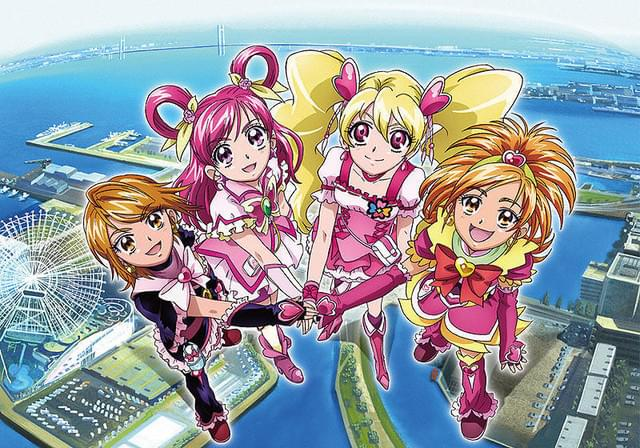
Aoyama: The TV series is running concurrently. Because of that, we couldn’t really pull staff off the TV broadcast to work on the film. The same was true for DX2.
Interviewer: As the animation director for DX and DX2, was the workload insane?
Aoyama: Oh yeah. It was truly brutal (wry smile). I remember DX being even harder than DX2.
Interviewer: Why was that?
Aoyama: It’s a production-side issue, but on DX, we had a lot of key animators who only submitted 1st key animation (layouts/rough animation). Many of them submitted 1st keys where the characters weren’t fully fighting or fleshed out, so when it came time to send them to 2nd key animation, I had to completely draw the characters over them first.
Interviewer: I see.
Aoyama: DX had a very tight schedule, which led to that kind of production system. On this new one, DX2, there were only a handful of people, including me, who only submitted 1st keys. Most of the staff carried their cuts all the way through to final key animation. In that sense, I think the animation quality has powered up significantly.
Interviewer: DX2 really brought the heat with the action scenes, too.
Aoyama: It really did. When you have highly skilled people working on it, you get an incredible result. The director put a ton of effort into the storyboards, so the action turned out great.
Interviewer: For example, if you have to draw the first or second generation Precures after years of not drawing them, can you just do it immediately?
Aoyama: Once I start drawing while looking at the character sheets, I somehow manage. I mean, I’m kind of forced into a situation where I have to draw them (wry smile).
Interviewer: Do you ever forget their design parts?
Aoyama: Oh, I forget all the time. I’m practically glued to the reference sheets while I work.
Interviewer: Moving away from DX for a moment… I feel like when an animator reaches your level, you could probably draw the characters during a TV series broadcast without even looking at the reference sheets. Is that true?
Aoyama: Nah, people tell me that a lot, but I actually think I look at character sheets quite heavily, mainly to double-check my work.
Interviewer: Really?
Aoyama: It would be best if I could draw them from memory, honestly. I feel like if I could animate them without looking, I’d be able to draw a completely different, freer type of key animation. But it’s just not happening for me.
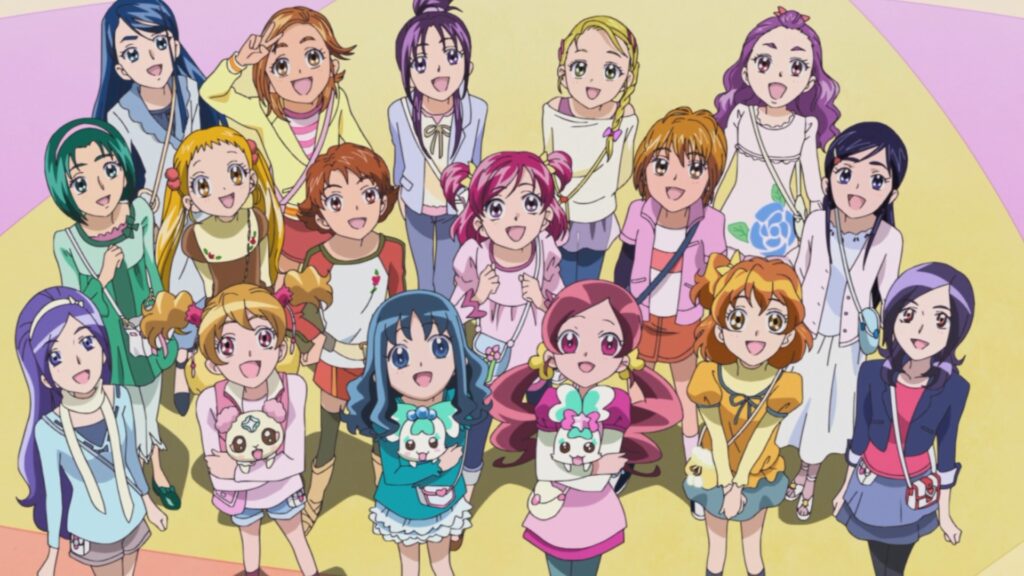
Interviewer: Going back to DX… I really felt a sense of raw power in your work.
Aoyama: That was purely me being pulled along by Director Ootsuka’s energy. It’s nothing more than that. The director is the one who raised my motivation.
Interviewer: How so?
Aoyama: He’s young, probably just a little older than my own kids, but he really drags everyone forward with him. I felt like I had to step up and work hard to respond to that passion. I guess that’s what led to the final result.
Interviewer: How exactly did he raise your motivation? Was it during production meetings?
Aoyama: Conversations were part of it, but the storyboards are his direct message.
Interviewer: Makes sense.
Aoyama: When we have a meeting and he says, “I really want this scene to feel like THIS!”, there’s no way I can cut corners. If I don’t provide the art that answers that passion, he won’t be satisfied. Considering all of that, I’m genuinely grateful that Director Otsuka called me to work on DX.
Interviewer: Earlier you mentioned you’re a morning person who doesn’t pull all-nighters. Did you stick to that pace even for a theatrical movie?
Aoyama: Well, even with a tight schedule, the project spans three and a half to four months. During that time, my daily working hours extend by about 10% or 20% compared to my normal load (wry smile).
Interviewer: But it’s only a 10% or 20% increase!
Aoyama: You really have to just chip away at the work, day by day. It’s not a volume of work you can just finish by pulling a single all-nighter.
Interviewer: I see.
Aoyama: Doing a little bit at a time, deciding my daily workload so that it finishes perfectly on schedule, and managing myself, it’s the exact same for TV series, and that’s just my working style. Conversely, with theatrical films, there are times where I finish my own work but have to stay up all night waiting for the “rush checks”.
Looking towards the future.
Interviewer: You mentioned earlier that you started feeling fulfillment after you began working. What do you find fulfilling about the job nowadays?
Aoyama: Honestly, I think the reason I’ve lasted so long is just because I love this job. I’m the type of person who likes to draw a clear line between my work and private life. So when it’s time to work, I always give it my absolute best. To draw an entire episode’s key animation by yourself, you have to pile up the effort every single day. I feel a deep sense of fulfillment in the current work I do in this manner. I figure doing things this way is the reason I’ve been able to do the same job for decades.
Interviewer: Getting your daily work done properly is the most important thing, huh.
Aoyama: At the very least, it’s very important to me.
Interviewer: It’s amazing, really. It’s been over 25 years since you started doing solo key animation for episodes.
Aoyama: Yeah, time flies. It just sort of ended up that way. It’s a mix of the production team’s goodwill, piling up the work day by day, and just being blessed with great staff around me. Honestly, no matter how much time passes, drawing layouts is still exhausting, and turning them into key animation is even worse, that’s how I feel while working. I’ve accumulated a long career, but I sometimes feel like I was better at drawing when I was younger!
Interviewer: Do you have any desires like, “I want to draw this kind of character,” or “I want to animate this type of show”?
Aoyama: I think I had a little bit of that ambition when I was younger. But after going freelance, I started a family, so making a living became priority number one. If you do your job diligently on the Sunday 8:30 AM block, they’ll hire you for the next series, too. People with a lot of power and clout can bounce around doing various jobs, but I’ve always figured that if I leave this timeslot, I wouldn’t find work so easily. So, being able to consistently work in the exact same timeslot for this long brings me a lot of happiness. Though, as I mentioned earlier, I do have my likes and dislikes when it comes to the actual content of the shows.

Interviewer: Do you consider yourself an artisan-type animator?
Aoyama: Oh man, it’s hard to judge myself. I can tell with other people, but I have no idea how to evaluate my own work.
Interviewer: So you don’t really dwell on pride in being a professional?
Aoyama: Not at all. Seriously.
Interviewer: You’ve just treated it as a normal job and steadily knocked it out.
Aoyama: Yep. I’m such a hopelessly boring animator I almost feel bad (laughs).
Interviewer: Don’t be ridiculous! It’s highly admirable.
Aoyama: No, no, I have no policies or philosophies, I’ve just gotten old.
Interviewer: You still look like you have plenty of gas left in the tank!
Aoyama: Haha, yeah. I think it’d be nice if I could keep going for another 10 years or so. Veterans like Wagatsuma-san who we mentioned earlier, or Masami Suda are still going strong. Looking at them, I feel like I can survive as an animator for at least another decade. That’s the mindset I have working right now.
Interviewer: Wonderful.
Aoyama: Well, it’s mostly just because I don’t have much else to do besides work!
Interviewer: Do you have any hobbies?
Aoyama: Reading books, watching movies… I mean, I have them. But reading a book all day gets boring. Working is the absolute best way for me to lose track of time.
Interviewer: Oh, really?
Aoyama: Honestly, I think it’s just the age I’ve reached. This might not be the kind of thing you say in an interview, but my kids have grown up and left the nest. When they were little, I worked for the sake of the family. I looked forward to things like going out to the countryside or taking the kids to Disneyland during summer vacation, that’s what motivated my work. But now, work is the only thing left that makes me forget the time. So I’m incredibly grateful to have this job.
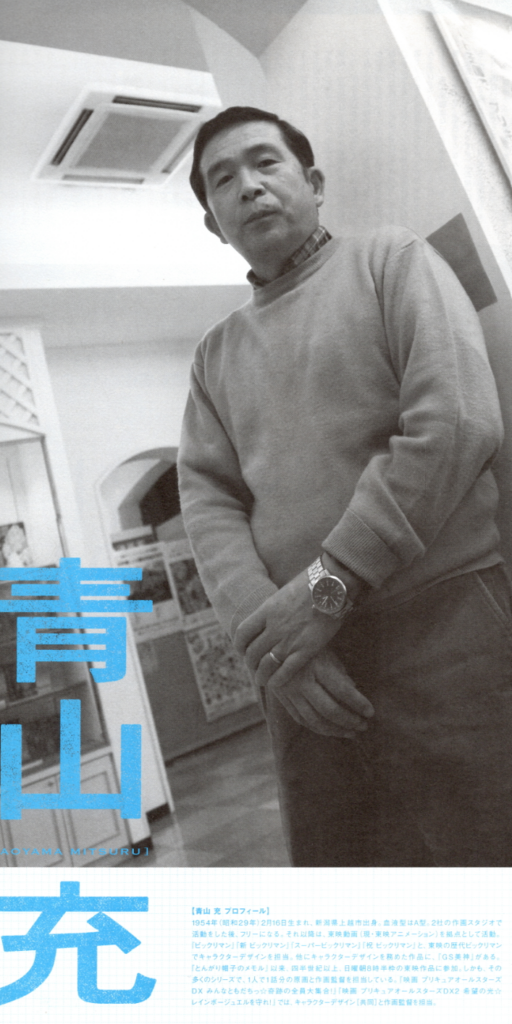
Profile: Mitsuru Aoyama
Born February 16, 1954, from Joetsu City, Niigata Prefecture. Blood type A. After working at two animation studios, he became a freelancer. Since then, he has been based at Toei Doga (now Toei Animation). He served as the character designer for Toei’s successive Bikkuriman series, including Bikkuriman, New Bikkuriman, Super Bikkuriman, and Happy Lucky Bikkuriman. Another work where he served as character designer is GS Mikami. Since Little Memole, he has participated in Toei’s Sunday 8:30 AM timeslot shows for over a quarter of a century. Moreover, in many of those series, he has handled the key animation and animation direction for entire episodes by himself. In Precure All Stars DX: Everyone’s Friends☆The Miracle of the Entire Gathering! and Precure All Stars DX2: Light of Hope☆Protect the Rainbow Jewel!, he served as character designer [co-design] and animation director.