Hello everyone, I hope everyone has been enjoying Luluttolilly this anime season! I’m enjoying it too which is a bit weird for me since as many people may already know, I’m not really a seasonal anime guy. We actually managed to get these interviews from Animedia translated for everyone to enjoy so you can know a little bit more about the show and some important folks behind it.
The interviews are a bit short so in my infinite wisdom, I decided to just combine the interviews into one handy article. Isn’t that convenient! In this article you’ll get to hear from Director Shintaro Doge and Yuuko Kakihara who handles Series Composition!
Oh yeah, before I go I just remembered you should all absolutely read Z-Note’s article on Luluttolilly as well! Hopefully after all of this you’ll be full of knowledge about the Pierrot Magical Girl Series!
Translation by “nui”, Editing by me. These interviews were originally published in Animedia May 2026 pages 30-31
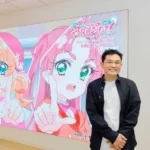
Director / Original Character Design: Shintaro Doge
Main works include: Assistant Director for Arknights: Perish in Frost, Episode Director and Animation Director for the 3rd cour ending of Black Clover, among others.
Expressing the sisters’ positions through visuals too!
Interviewer: First off, could you tell us how you ended up working on this project, Director Doge?
Doge: I was approached by Animation Producer Naomi Komatsu from Studio Pierrot, whom I’ve worked with before, and I ended up joining as the director. I think she recommended me because the project felt like a good fit for my usual style. I’ve loved magical girl shows since I was a kid, and the concept sounded incredibly fun right from the pitch, so I was thrilled to be offered the director spot.
Interviewer: Since your first directorial work is part of the traditional Pierrot Magical Girl Series, did you feel any pressure?
Doge: I definitely did! It takes a completely different part of the brain compared to just doing episode direction, so it has been tough. But I believe my main job is to “make an anime that I find fun,” so I just focus my efforts on that. I’m sure I’m causing trouble for a lot of people, but I’ve made it this far with everyone’s help. Since it is an original work, as the director, I have to answer the staff’s questions. Sometimes they ask about things I haven’t thought too deeply about, and I have to come up with an answer on the spot. But the process of those spontaneous ideas connecting with other ideas to form the big picture is something you only get with an original work, and it is super interesting.
Interviewer: What do you think is the main appeal of the Pierrot Magical Girl Series ?
Doge: Most of the magical girl shows I’ve watched had battle elements in them. I think that is still the mainstream right now, but the Pierrot Magical Girl Series doesn’t have battles; it is a world where magic exists in everyday life. Solving everyday troubles by borrowing the power of magic is really interesting. It is grounded in drama while still having fantasy elements. It has serious moments, but when it is time to let loose, it goes all out. That gap is a huge part of the series’ charm, and I am hoping to carry that over into this work as well.
Interviewer: What specific aspects did you consciously try to bring to the forefront as the unique charm of this series?
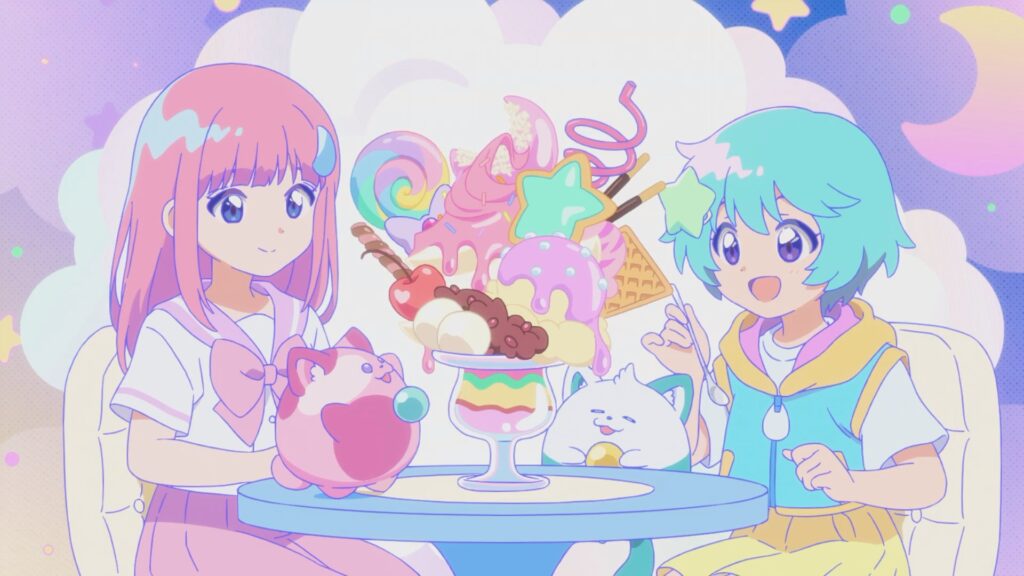
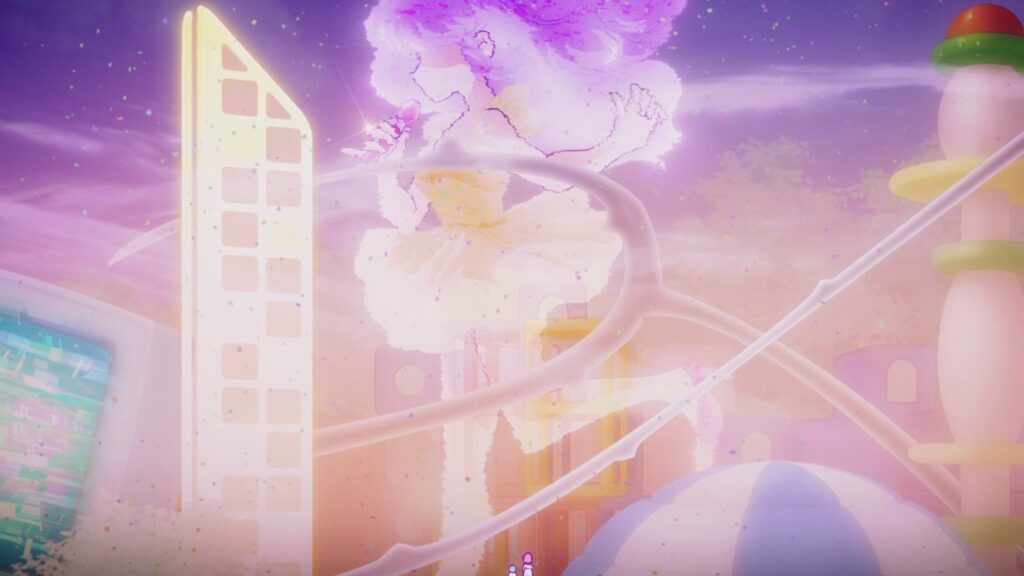
Doge: I really wanted to take my time showing the process of these sisters, Fuu and Rui, who have lived normal lives, expanding their world through their encounter with magic. It might be a little low-key, but I wanted to explore ideas like, “What happens if the sisters transform with magic, don’t reveal their identities to each other, and meet as entirely different people?” I thought making that kind of drama the starting point of the fun would be great. Also, instead of battles, I focused on showing that “using magic causes these mysterious things to happen.” For the live concert scene in Episode 2, I made it with the intent of conveying just how fun using magic can be.
Interviewer: How were the characters for the main protagonists, Fuu and Rui, created?
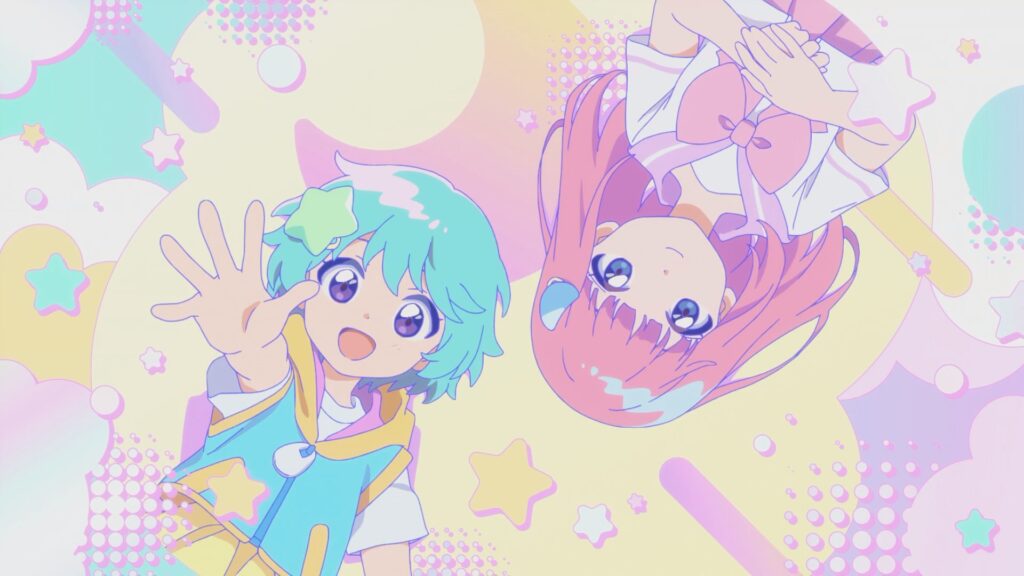
Doge: It was decided from the planning stage that the main characters would be sisters, so my job was figuring out how to flesh them out to make the drama easy to drive forward. For Fuu, I followed the tradition of past protagonists in the Pierrot Magical Girl Series, imagining a bright, energetic girl who moves the story along. I wanted Rui to be a contrast to Fuu, so she became a quiet girl who isn’t great at expressing herself. It is usually hard to move the plot forward with a character like Rui as the lead, but because both sisters are the protagonists this time, we were able to pull it off.
Interviewer: The pale pastel visual tone is really striking. Did you also decide on the direction for the color palette, Director Doge?
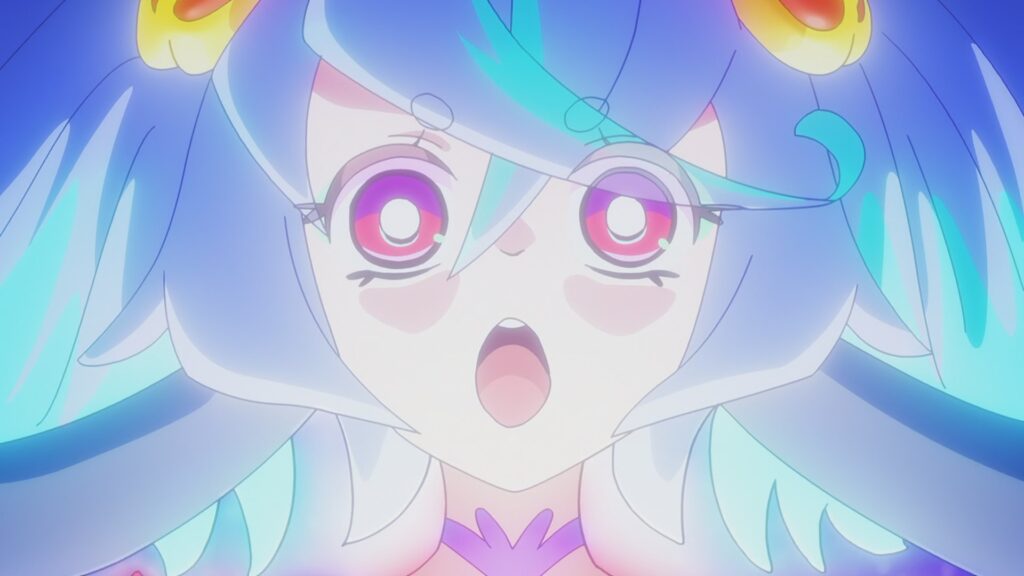
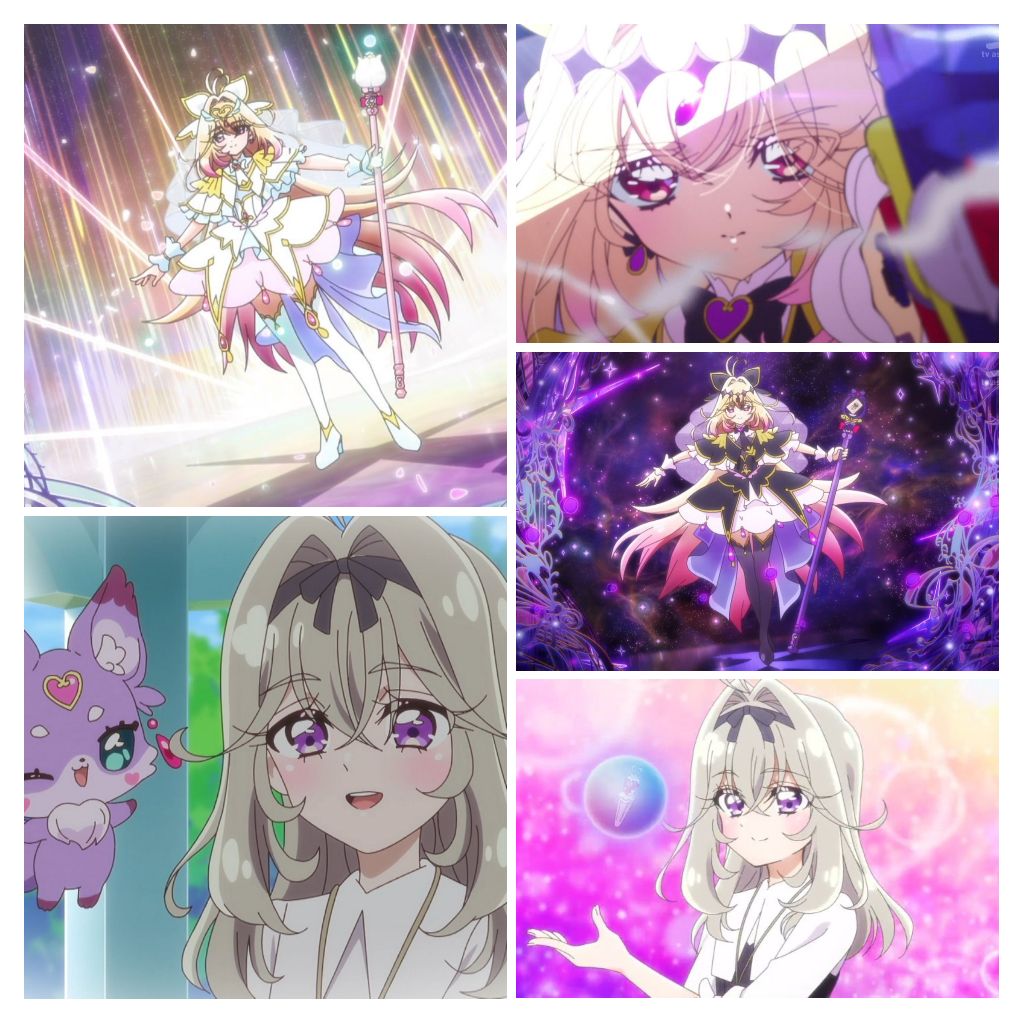
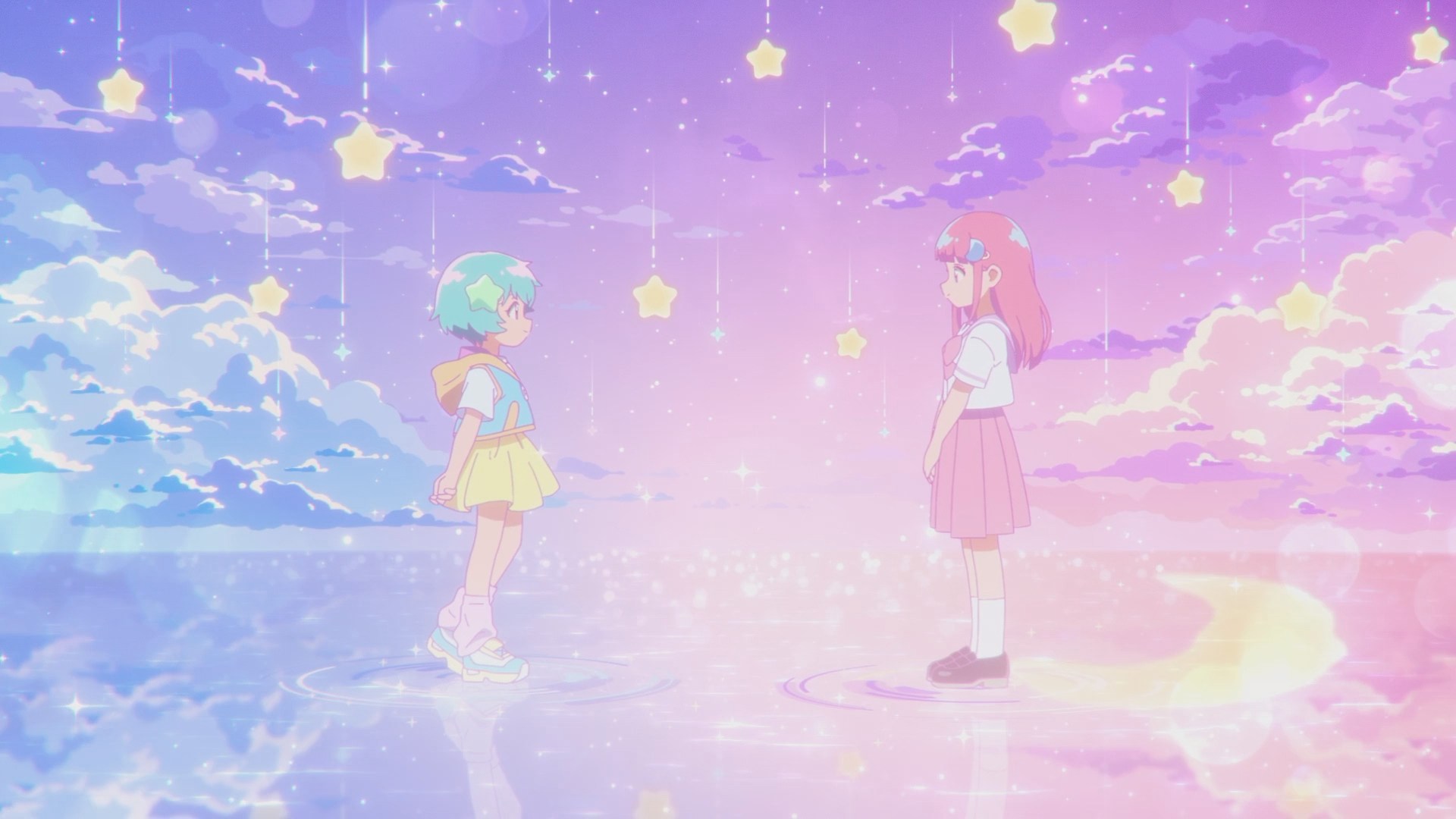
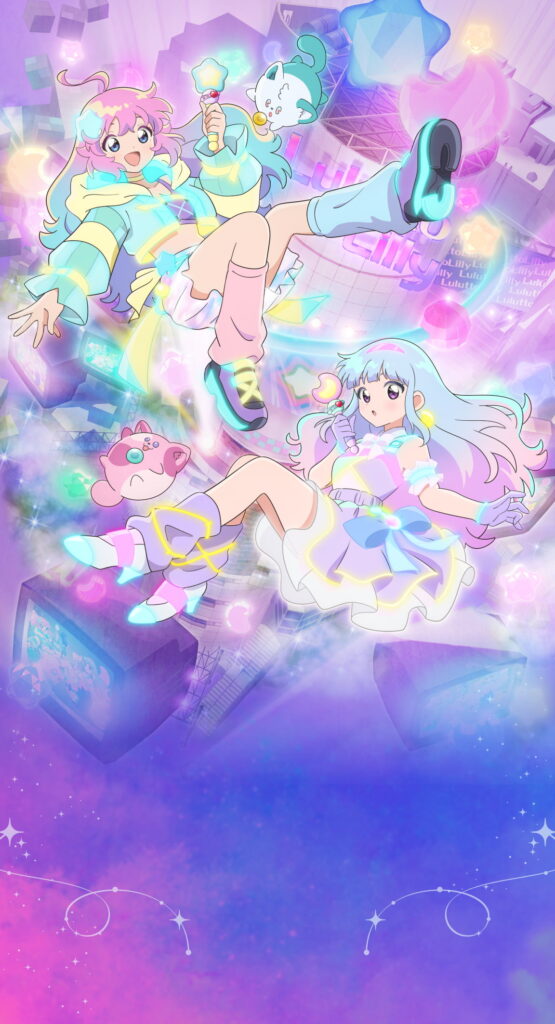
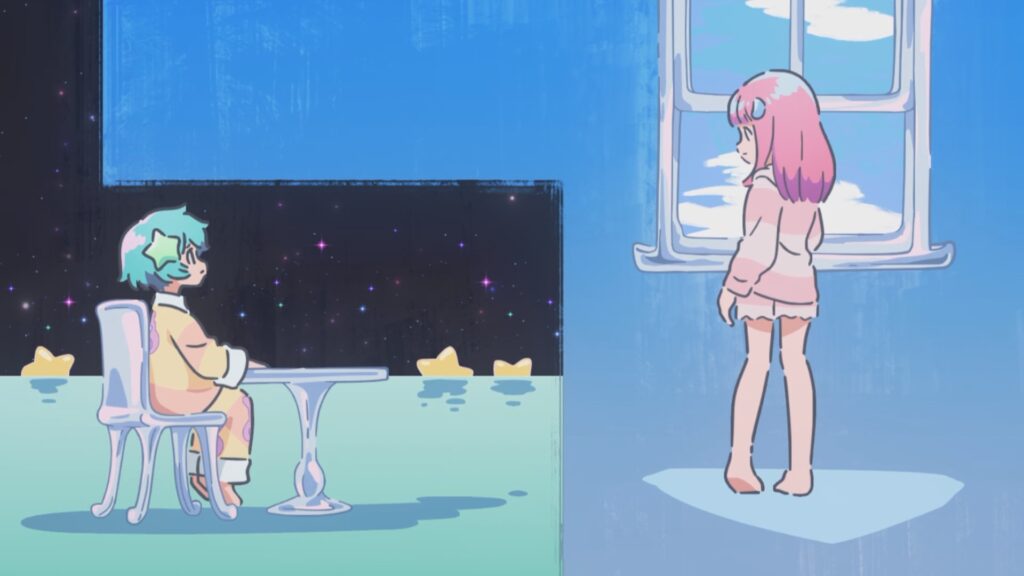
Doge: I definitely moved forward while consulting with the staff, but for the overall direction, I had them create a visual atmosphere that I personally find “cute.” Also, I was really particular about the coloring for Lilly and Lulu. We actually inverted the girls’ hair colors from before they transform. One of the fun parts of this show is how the sisters’ roles reverse after their encounter with magic, so we made that visually easy to understand.
Look forward to the changing relationship between Fuu and Rui !
Interviewer: What was your goal in casting Mei Tachibana as Fuu and Nao Ojika as Rui ?
Doge: We decided on their roles through auditions. Tachibana is fundamentally full of energy, but she perfectly acted out the delicate sides of Fuu as well. Koshika did a great job expressing Rui, who is quiet but has a stubborn streak, so we asked the two of them to take the roles. It was pure coincidence, but Tachibana and Koshika actually paired up during the audition and did a dialogue scene together. I really felt their great chemistry at that moment, so that was also a deciding factor.
Interviewer: Why does Meeter, the resident of the magical kingdom, look like an alien?
Doge: Miita’s design is mostly just my personal taste (laughs). The main goal was to make the audience think “What the heck is this guy?” and feel a sense of wrongness, so he has a slightly bizarre design. Plus, if the being granting them magic was, say, a super great witch or an impressive person, Fuu and Rui might stiffen up and think, “We have to do something amazing with this magic!” So, by making him a weird, incomprehensible entity, I figured we could maintain a more relaxed vibe.
Interviewer: How did you approach the characterization for Uguisu and Azuki?
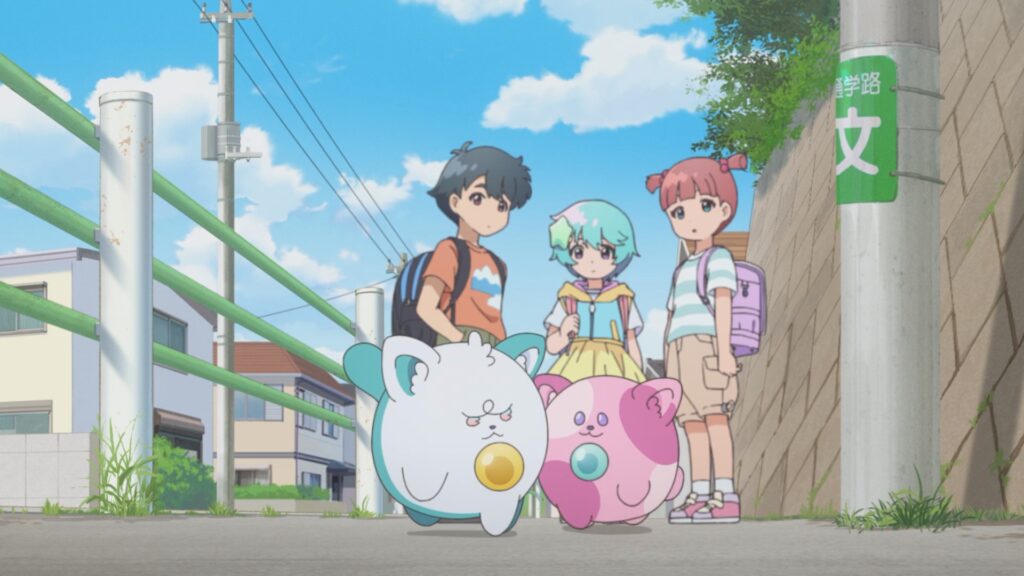
Doge: I think this applies to humans too, but even if both sisters are good kids, you still naturally want to hang out with people you click with. Keeping that in mind, I thought about characters who would have good chemistry with Fuu and Rui, and their personalities developed naturally from there. Fuu, who doesn’t sweat the small stuff, paired with Uguisu, who complains a lot but actually isn’t thinking too deeply about anything. Then you have Rui, who has her sensitive side, paired with Azuki, who can read the room. I think they both make really good duos.
Interviewer: What was the intent behind creating Touko and Sena from Production Once More?
Doge: Fuu and Rui were normal girls with no connection to the entertainment industry. But gaining the ability to use magic suddenly blew their world wide open. Touko and Sena act as symbols of that expanding world, and their role is to guide the girls into a slightly more adult world. Since they hadn’t really intersected with the sisters’ story much, we dig deeper into their characters during things like the quiz tournament in Episode 5.
Interviewer: What are the highlights from episode 6 onwards?
Doge: The biggest highlight is definitely the changing relationship between Fuu and Rui. However, if we only focus on the main plot, things get a bit too stiff, so we’ve included more lighthearted episodes like the quiz tournament in Episode 5. I hope everyone looks forward to seeing how these two sisters handle situations they would never encounter if they were just living normal lives.
Interviewer: Finally, could you give a message to the readers!
Doge: In this day and age, a magical girl show without battles might be pretty rare. But because it is a grounded story, I think there are many parts that viewers will be able to relate to. I’d be incredibly happy if you could watch it from the same perspective as Fuu and Rui, feeling as if you’ve become able to use magic yourself.
Series Composition / Script: Yuuko Kakihara
Main works include: Series Composition and Script for Champignon no Majo, Series Composition for MAO, and others.
build Note: These are just what Animedia think are her main works. I’d honestly say that her work on the Aikatsu series (Stars, Friends, On Parade) would be a bit more relevant here. She also handled Series Composition on Jewelpet Sunshine which I think is an anime that only the best anime watchers can watch.
Depicting the sisters freely enjoying using magic!
Interviewer: Please start by telling us your impression of the Pierrot Magical Girl Series.
Kakihara: I am from the generation that watched Magical Angel Creamy Mami right when I was a kid. I was such a huge fan that I followed not just the anime but the manga version too. I had a lot of emotional attachment to the Pierrot Magical Girl Series, so I was really happy to be involved in this way. I approached the production with the desire to deliver that same feeling of “fun” that I felt as a child to the people who love anime today.
Interviewer: What do you think is the unique charm of this series?
Kakihara: In this era, magical girl shows with battles and flashy developments are the mainstream. However, for this project, Director Shintaro Doge had a firm concept of making it a grounded story. By setting it in a place that is almost exactly like the world we live in, we were conscious of making the magic seem even more special. Another important thing about this show is that the protagonists don’t have a set goal like “accomplishing something by using magic.” There is absolutely no grand premise like saving the world. It is just about depicting kids having fun using magic. I wanted to show that as the unique appeal of this series.
Interviewer: “Making it interesting without doing anything flashy” sounds like it would be quite difficult.
Kakihara: Director Doge often brought up Doraemon as an example to share the image among the staff. The secret gadgets in Doraemon are basically like magic, but Nobita and the others don’t necessarily have something they want to accomplish by using them. The director always said he wanted to pack the show with that kind of fun of just playing freely with magic. Also, with this kind of show, you naturally want to include moralistic episodes like “if you use magic the wrong way, you will make a mistake like this,” but he said we didn’t need those kinds of episodes either. Drawing things like “penalties for using magic” makes the story feel cramped. We decided not to include those elements and instead make a work where people can enjoy watching kids use magic with their free imagination.
Interviewer: What about the setting of the story?
Kakihara: A major concept of this show is the sisters expanding their world by using magic. To emphasize that, Director Doge was really particular about making the starting point a place that feels a bit rural. For instance, in Episode 2, Fuu transforms into Lilly and goes to Harajuku. That “excitement of going to the city you admire” is exactly what Director Doge was aiming for. For the subsequent scenarios as well, they go to unknown places with magic and try things for the first time. I am writing the scripts while cherishing that sense of excitement.
Interviewer: They transform into idols with magic, but becoming idols isn’t the goal. It is just one way they play using magic, right?
Kakihara: My impression of recent idol shows is that they often dig deeply into the characters’ emotions, exploring things like “the meaning of standing on stage as an idol.” I asked Director Doge if we should include those elements, but he said we didn’t need to do that either. Especially for Fuu, she just accidentally became an idol while playing with magic. She doesn’t need to have an idol’s self-awareness like “treasuring the fans” or anything. So, I also kept in mind not to treat this as an idol show while writing the scripts.
Interviewer: Hearing your policies so far, wasn’t the series composition difficult?
Kakihara: It is true that the protagonists don’t have a specific goal they need to achieve, so I was a little worried at first. But I structured it by having Fuu and Rui keep their magic a secret from each other, and by creating some minor pinches early on. Other than that, I was just careful to meticulously depict the process of their world expanding through their encounter with magic. We are still early in the broadcast, so there is a lot I can’t say, but there are some pretty big developments waiting towards the end, so I hope you look forward to it.
Interviewer: Are there any unique tricks you used when writing the scripts for this show?
Kakihara: Actually, before starting the scripts, we had the children of the production staff take a survey asking, “What would you want to do if you had magic?” There were a lot of little dreams written down, like “I want to become a baker.” We did a similar survey for adults too, and “magic to fly in the sky” was popular. It was very helpful to learn about the “little everyday magic” that everyone imagines.
Interviewer: What were you conscious of when writing the dialogue for the protagonists, Fuu and Rui?
Kakihara: I can write the conversations between Fuu and Rui without overthinking it, but the dialogue for Lilly and Lulu was difficult. Both of them look like adults, but their insides are still children, and that doesn’t change. Sometimes they try to act mature to match their appearance, but there is still a limit to that. Establishing their characters was really hard at first.
Interviewer: That makes sense. If their tone of voice was exactly the same after transforming, people might think “won’t they get found out immediately?”
Kakihara: At first, I was worried about that too. But worrying too much about it is no good either, so we prioritized fun and decided not to explain it too much. If you look at it objectively, it might be super obvious. But as long as there are no fatal mistakes like being seen transforming directly, they can probably cover it up. I wrote the scripts walking right on that borderline.
Interviewer: The quiz show episode in Episode 5 was pretty crazy.
Kakihara: If we only have episodes that advance the main plot, viewers will get tired watching it. So we try to insert fun episodes like that at key points. Because this show is centered around the sisters, there are no so-called “focus episodes” for the supporting characters. Therefore, through episodes like this, we try to dig deeper into the supporting characters like Touko and Sena. I hope people will come to love not just the sisters, but Touko and Sena as well.
Interviewer: What do you keep in mind when writing the dialogue for Uguisu and Azuki?
Kakihara: Initially, I tried to have the two of them explain the magic a little more. But Director Doge requested that they be portrayed as “healing presences just by being there.” So, we reduced the dialogue for Uguisu and Azuki as much as possible, and we are trying to portray them as cute mascots. They are just two cute mascots with absolutely no ulterior motives, so I hope everyone is healed by them.
Interviewer: Finally, please give a message to the readers!
Kakihara: What will happen to Fuu and Rui, who are keeping secrets from each other? I definitely want you to look forward to that. Not only that, but we’ve thought up all sorts of fun stories using magic, so please have high expectations!