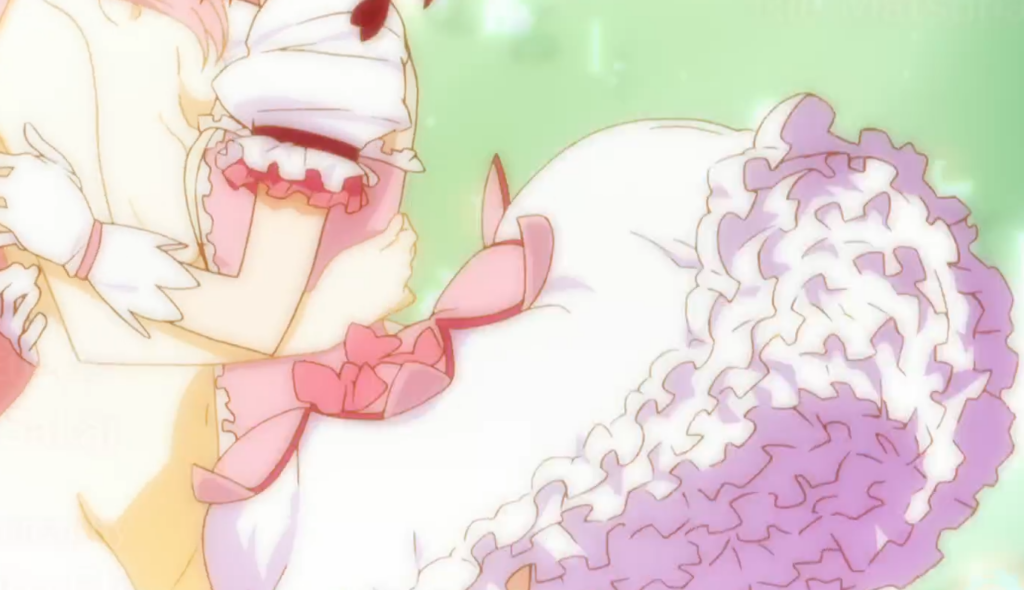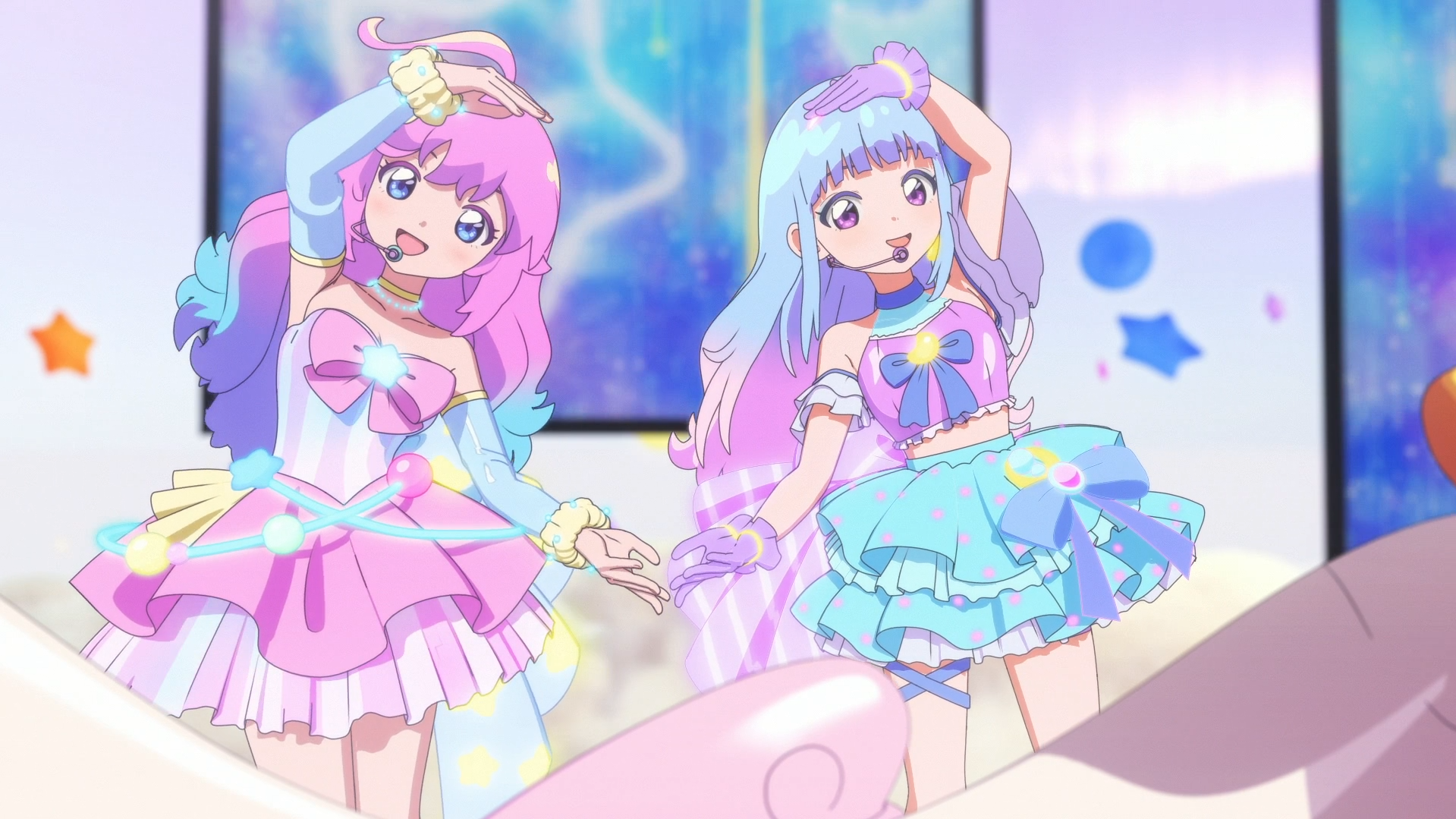
Back when I wrote my article about the first episode of Mahou no Shimai LuluttoLilly, or Magical Sisters LuluttoLilly, I made the effort to position the series within the larger canon of studio Pierrot’s 1980s mahou shoujo, as well as talking about the first episode and what it was doing. The first season / cour of the series has now ended, though it will resume in October of this year assuming there are no serious behind-the-scenes production mishaps (given the industry’s propensity for announcing delayed broadcasts, anything is possible). During the course of this break, however, it is worth taking an earnest look at what the series did well, where it struggles, what it suggests, and what I fear. With the special help of our own dear buildknuckle’s edit of “nui’s” interview with LuluttoLilly’s series director and chief writer, as well as my own article from early April, let’s dive in.
The Sisters: Together and Apart
I mentioned that the series deciding to focus on two main protagonists so intently rather than just one opened a slew of differences in how the series would operate compared to its predecessors. Because we’re following two sisters that, by necessity, live double lives that they need to keep apart from each other, how they interact both as sisters and as their personae will be the main drive for how the show operates. LuluttoLilly wisely draws enough distinction between Fuu and Rui and Lilly and Lulu to make each one not only feel both like and apart from themselves, colorful splashes of interaction malleable to whatever situation the show wants to throw its way.
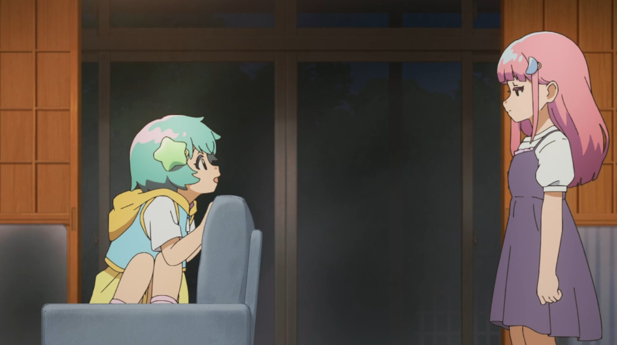
Rui’s character ultimately ends up reading as the more conceptually and dramaturgically realized between the two. This is, in-part, by design. Compared to Fuu, Rui is the person in this story who is most in need of overt healing, the one for whom Fuu does what she does. From the show’s first episode of creating the magical fireworks to encouragingly talking to her in her Lilly form, Fuu exists primarily for the sake of her sister both as a presence in the story and as a character in general. This is not to somehow disparage Fuu, though. What comes through in all her interactions, both with Rui and involving Rui, is the overall sense that she sincerely wants to do everything to lift her sister’s spirits. Given that I often have trouble with depictions of imouto characters (usually because I find them either annoying or trying far too hard to be cute and adorable to the point where it feels unintentionally phony or forced), seeing her be comparatively normal and not a catchphrase / meme-generating machine was refreshing. I don’t mind when she’s on the screen by herself, but I’d be stretching the truth if I said that she was as well-integrated as Rui. If anything, the “problem” with Fuu is that she’s simple, but considering the other half of our duo, simple is perfectly fine since the dynamic of their relationship is more complex.
Take the final episode in a vacuum for a moment: in the greenroom, while Fuu/Lilly is happy and bubbly at the prospect of performing, Rui is still rather uncertain. This is not just because of stage fright or performance anxiety (though you couldn’t blame her for feeling this way at all). To Rui/Lulu, this performance is effectively the first real step towards her self-actualization, to realizing that singing is not gone from her life. It’s true that her solo performance in episode four was her first vocal performance, the one that got her formally on the map in the eyes of the show’s entertainment industry and public. But, for the sake of her overall character, the gravity of that situation versus the end of the season is different.
There are other knots in the performance that are telling, though not quite overtly. One of which is that it is Fuu/Lilly who opens the show, rather than Rui/Lulu opening it with her. On the one hand, this could be chalked up to the production only having three songs within the season, so blowing the duet at the top would ruin the performance’s climax if you start from the top and work your way down. But it also reflects that, during the newly-formed duo, Rui/Lulu is the one following Fuu/Lilly, despite the former being older in her original state and more mature in her idol state. Her introspection at the end of the episode highlights this, too: she tells herself that it’s because Fuu/Lilly inspired her that her song could eventually make everyone smile.
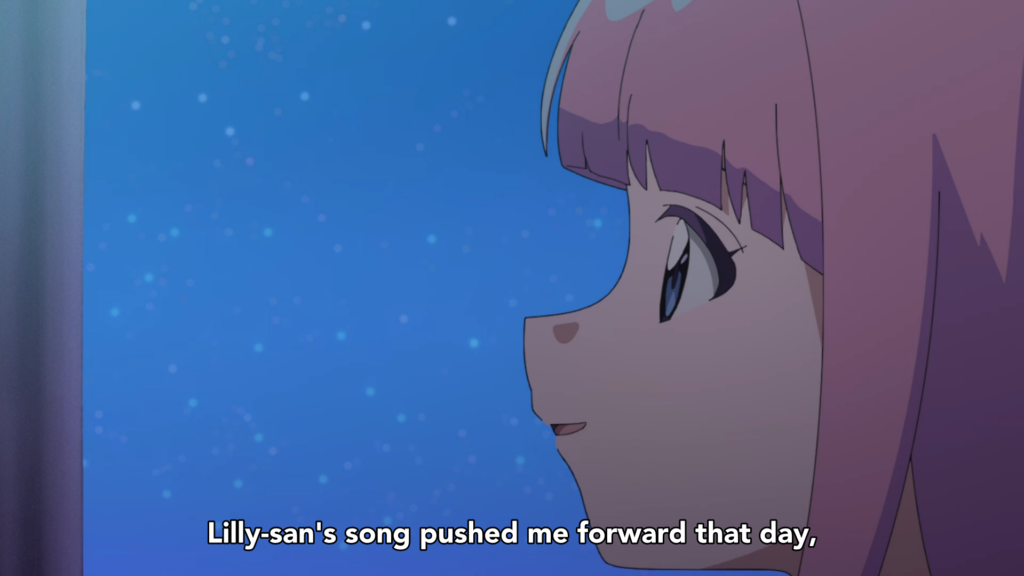
Rui/Lulu’s self-confidence is thus thoroughly—if not entirely—tied to Fuu/Lilly being there for her, but with the added wrinkle that it is Fuu’s persona rather than Fuu herself that makes this possible. Rui, when not in her Lulu form or doing things for the sake of the Once More production company, still cannot bring herself to sing. Her sense of personal belonging is tied to both Lulu and Lilly, and magic in general. This would imply, at least somewhat, a distance between the two sisters divorced from magic, but even then, the show is peeling this back. The final stroll with the sisters along the river is a long period of uninterrupted happiness between the two of them. Rui finally begins to let down her wall as she mentions dreaming of flying through the sky (a metaphor for the flying cart in the insert song), and Fuu says she had the same dream. Whether they’re both telling the truth or not about the dream is not the point. Rather, the sense of kinship between them is starting to bud, so that even if she cannot discern it for herself yet, Rui is becoming more like she once was. She’s older, yes, but this withdrawn girl is learning to be with Fuu again and smile with her. As I phrased it in my initial article, “By having two perspectives (one of pessimism turning into optimism and one of optimism trying to reach out) blessed with magic and music,” the show has its spiritual center. It’s cute, and it’s good.
The problem with this framing is that the hospitalization does not quite connect so cleanly to Rui’s suppression of her singing. Perhaps it is in keeping with the idea of vague and mysterious illnesses for cute anime girls (think Nagisa from Clannad, Shiori from Kanon, etc). But for something traumatizing for a character such that they stop singing, I can’t help but wonder what exactly happened here. I especially ask this because the show offers a far more plausible setup: that Rui is getting older, more concerned with studying, and doesn’t feel like she has time for games for frivolity. This in and of itself could provide the natural source of disassociation between Rui and singing, and be a natural barrier between two sisters in different schools and having different concerns. How that would in and of itself tie into Rui not being able to sing is anybody’s guess, though. But it could be as simple as her not liking her singing voice because it’s been out of use for so long. The extension to this is that, much like it is with her character now, magic to Rui is a false crutch, a thing she holds onto because she mistakenly believes that she NEEDS it. Magic fixes her voice, and rekindles something she realizes she lost. Now that she has experienced what magic can do, she equates not using magic to being less of herself.
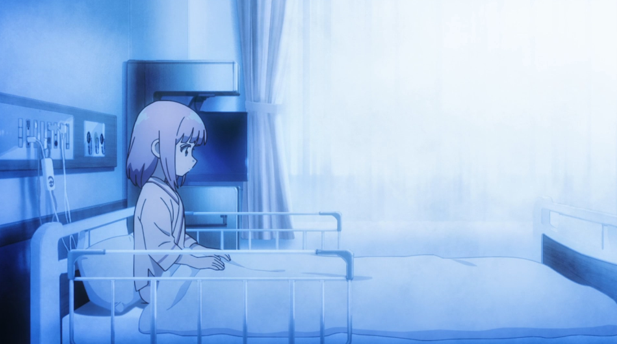
In a way, LuluttoLilly framing Rui as having suffered from a mysterious illness somewhat trivializes the notion of song connecting with lost youth and sisterhood. This is not to say that the current setup is somehow lacking. At the end of the day, I can put up with a little “eh, don’t question it” if the show’s sense of fun maintains itself. And it does. Besides, we’re talking about a series where young girls age themselves up into idols, most intended for young girls. A little leniency is called for, I think. But regardless, Rui especially will need to make peace with losing her powers.
The Boy: Why Are You Here?
One character whose presence in the story has gone largely unaddressed is Shota. A childhood friend of Fuu and classmate of Rui, he’s often seen alongside his friend as they talk about Lulu and Lilly, with the last episode involving a discussion of which one Shota likes more (he doesn’t answer). His connection to them is not just in the abstract, either: Lulu playfully asks him before the concert which of the two he supports. But aside from little moments like these, or Fuu wondering why he’s not as available to play as he used to be, Shota’s use in the story remains a mystery.
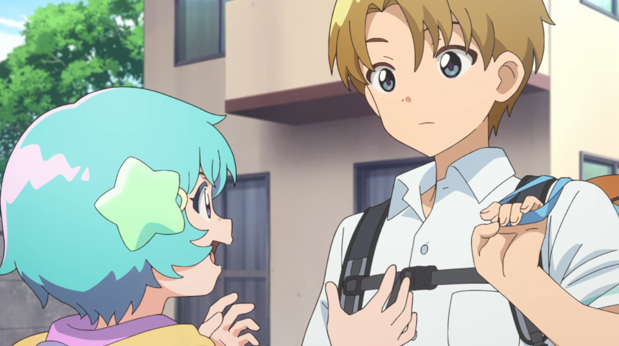
Like I said in the former article, it was common for 80s Pierrot mahou shoujo to have a male character serve as a love interest for the girls, and at least at the onset, that seemed to be a general intention here. Magical Angel Creamy Mami had Toshio and Midori as love interests for Yuu (even though only one was ever truly in the running), and Magical Stage Fancy Lala had Tarou. Even here however, there are marked differences between their implementations: Toshio and Midori were in nearly every episode of Creamy Mami to some extent, either as part of attending Mami concerts or Midori being terminally whipped over how cute Yuu was. Tarou was frequently a comedic foil and occasional brat in Fancy Lala, and Miho/Fancy Lala herself would often say things to him to “teach him a lesson” about treating girls properly. These would often be related to something he did that bothered Miho earlier in the episode.
Considering that Shota and Rui are classmates, there seems to be a strange disconnect between social implication of the characters interacting and what actually transpires. One would assume that they would have far more chemistry or interactions that would at least set up a proper juxtaposition between how he talks to Lulu versus Rui. It makes the idea of romantic connection even more plausible. But even here, he spends more of his time meaningfully with Fuu in her Lilly form. As his friend reminds him before the concert, he got Lilly’s autograph, whereas he has done nothing of the sort with Lulu despite being closer in age to Rui.
Even in the process of writing this article and re-watching old episodes of the show, I was surprised at just how little Shota matters to the course of the narrative. There are no indications that he knows that Fuu and Rui are Lilly and Lulu respectively. He is not involved in Once More, nor is he positioned with the same kind of superfan mentality that Creamy Mami’s Toshio did. For right now, Shota is “kind of existing” in the story, and there doesn’t seem to be any indication that he’ll become more proactively involved in a professional or personal capacity at this point. One could say that he’s primed as a character to learn about Fuu and Rui’s magic. He seems like a decent boy who would keep a secret if asked, but since their magic will leave if someone discovers that they possess it, it kind of makes that character trait moot. There’s likewise no real sense of romantic tone between him or either of the girls. If LuluttoLilly wants to make something of this character, it had better do so soon. As of now, he doesn’t have any particularly noteworthy function, which leaves his scenes unmemorable and uninteresting.
The Staff: Dream-makers and Dream-wanters
Once More’s primary producer and original members, there’s a fair amount that we learn about the two of them throughout the course of the show. Though it’s easy enough to say that it’s a classic case genki girl against deliberately flatter character archetypes, there does seem to be more underneath the surface. Much like Rui/Lulu with Fuu/Lilly, Touko is the primary motivator and go-getter between herself and Sena. Sena’s confession about how she was effectively roped into Touko’s dream to become an idol is, in a way, rather depressing to think about. In an unflattering reading of that, one could argue that she’s a rather listless character, simply going through the motions of being an adult rather than seeking greener pastures. She doesn’t necessarily deny this, as her primary interests are dance and clothes. But there is something to be said about her loyalty to Touko’s crazy dreams. Regardless of how much overt energy she expends, much like Fuu with Rui, she has a sincerity to what she does that shows her heart is in the right place. At the end of it all, her tone could be said to be that of “cool” to Touko’s “hot.”
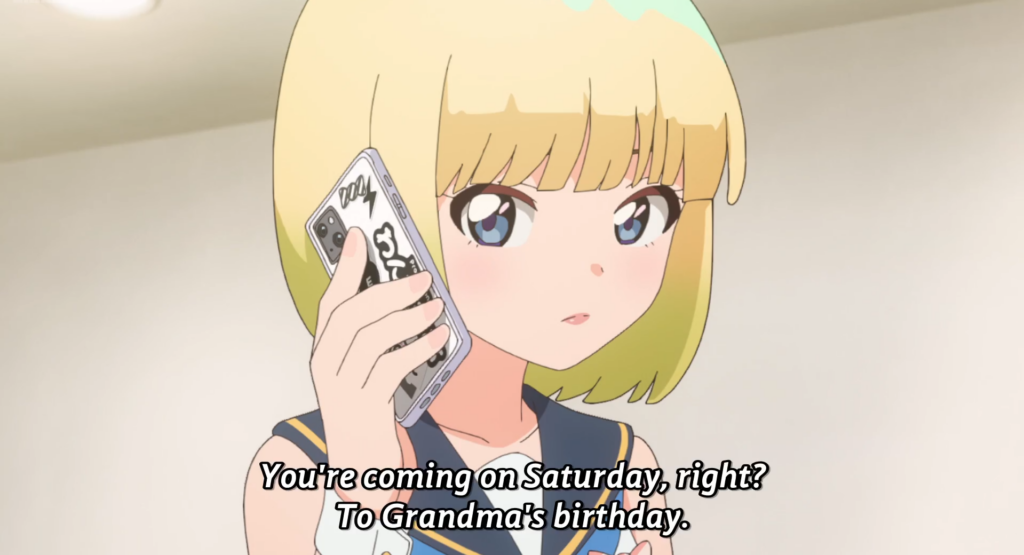
The thing is, this descriptor is simple. Touko, compared to some of her producer-centric forebearers, is only a handful of years older than the aged-up Lilly and Lulu. She is not quite the bona fide “PRODUCER” in that she has a phone constantly ringing / a whole slew of stars waiting for their debut, and her moments of focus aren’t always for the purposes of comedy. Despite being the one spearheading both scouting out Lilly and Lulu, as well as using her business savvy to get them opportunities, she seems to have her own troubles. One particular sequence that stands out comes in episode five, before Once More goes onstage for the soon-to-be-hell quiz show. The phone call she gets from her mother is brief, but not exactly warm. She declines attending her grandmother’s birthday, even though her mother said that the food has already been ordered. I sympathize with a character wanting to reject certain occasions in favor of others (and I’ve certainly been “asked” to attend something when the implication is that it’s not up for debate), but it also clarifies that Touko is so deep within her dream that she’s shirking other aspects of her life. Japanese work-life balance can obviously be hellish—to put it lightly—but LuluttoLilly took the time to show us this interaction specifically.
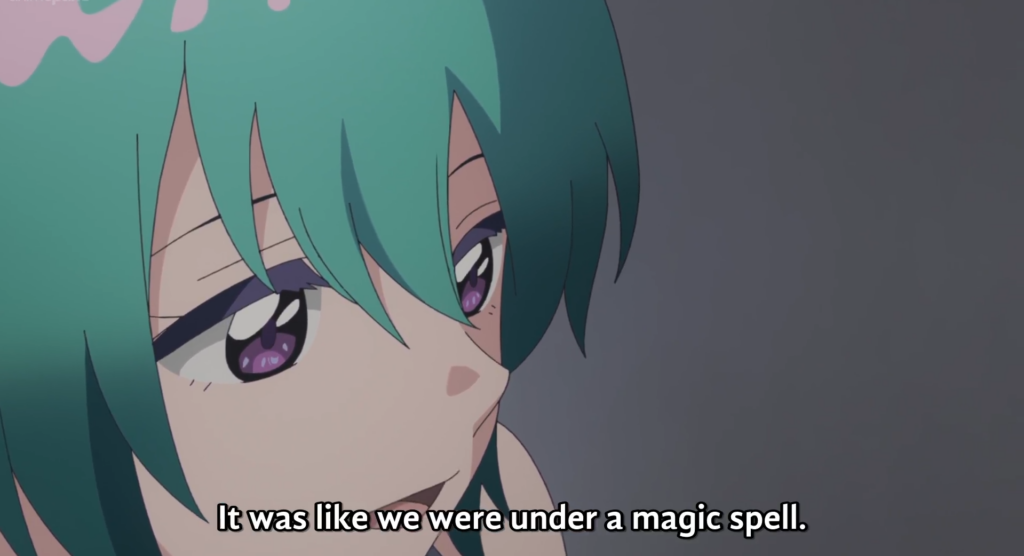
Compounded with this is that her uncle is the other figure at Once More helping make things work. He’s the primary source of capital and other tasks that Touko is not quite equipped to work with, though they at least get along pretty amicably. And sure enough, during the “closed circle haunted house” episode (which I will talk about more in the next section), he clearly expressed concern at getting back in time. What seems to be happening is the life story of a character whose family life is giving contrasting impressions: her business and Sena seem to be her main family, whereas her actual family either doesn’t support her or doesn’t understand her. There’s a question to be asked of how much of this is her own making because, as Sena said of Touko in episode six, her sheer enthusiasm is like its own kind of magic spell. It’s an interesting part of her character that I’d like to see develop, though I admit it’s not too likely given the Fuu and Rui focus that preoccupies the show.
Although, with the emphasis in the final episode about how Touko and Sena both want to be onstage, there might be more shining stars at Once More…
The Magic: Abracadabra, Alaka-Oops!
Magic throughout LuluttoLilly was fully expected given the original style inspiration. But what has been working surprisingly well has been the notion of magic carrying unintended consequences. Much like Witch Hat Atelier which also aired during the same season, Fuu and Rui don’t quite have a full grasp on their magical powers and, more specifically, how to control them. Perhaps spurned by her use of the magic fireworks in the first episode, Fuu tends to treat her magic as something more like a toy, often using it for petty or materialistic ends rather than something more altruistic in nature. Sure enough, some of the earliest instances we see of her arguably-irresponsible use of magic come in the form of wanting a nice dress from a shop and a plushy from a crane game in the second episode, or later on wanting to use her magic to get out of school and a test in episode eight.
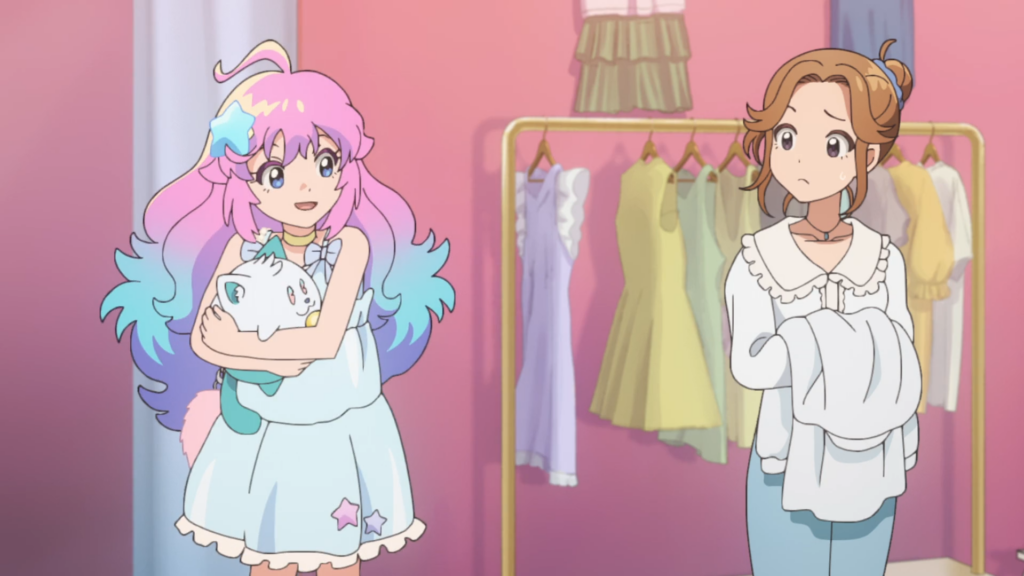
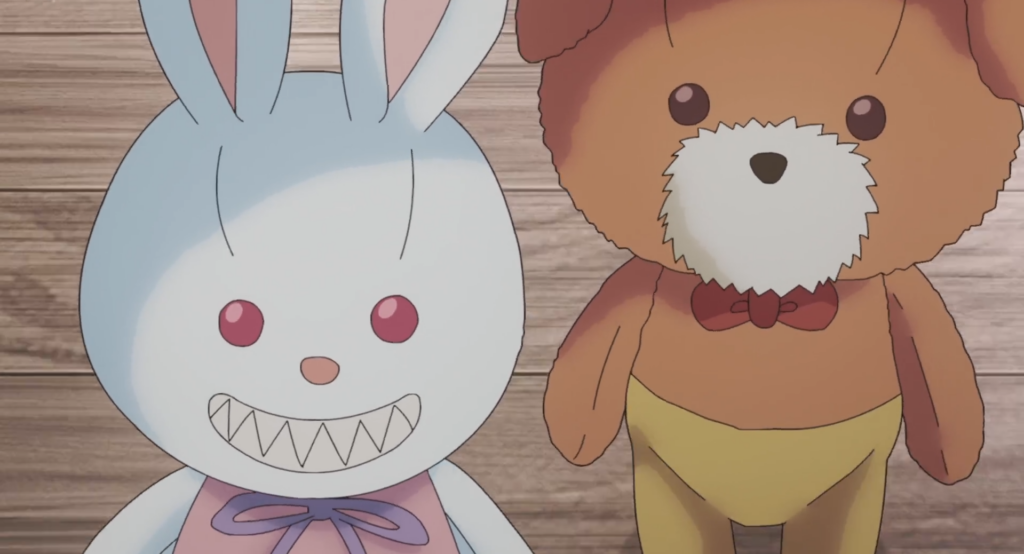
The portion of the show which truly highlights the dichotomy between personal and altruistic use of magic comes in a trilogy of episodes: episode five with its quiz show gone wrong, and episodes six-seven with its “closed circle haunted house” horror. The former goes awry when Fuu/Lilly uses her magic to try and make the quiz show more exciting. As if a metaphorical switch was flipped, a pit of lava opens underneath everyone and the show starts taking on far more macabre and dire conditions. With the latter, Fuu uses magic to make it so she and Rui/Lulu can go on their summer training camp trip with Sena and Touko. In both cases, because the wish is tied to something that’s pretty selfish (even if it could be argued to be for the betterment of other people too), everything starts to turn. The fun time quickly becomes a nightmare as Touko’s uncle can’t be reached, there’s a thick fog encircling the house, and stuffed toys come to life holding knives and other utensils. What Touko assumes is a prank show is anything but.
Yet during this crisis, Fuu/Lilly manages to eke out one more spell to save Rui/Lulu when she’s in trouble, and Lulu uses her own magic to get the courage to fight back against whatever is causing this mayhem. On the general “badass” side of things, we get to see Lulu holding an axe ala Stanley Kubrick’s The Shining. More importantly though, we see how in both circumstances, the magic spells did exactly what they were supposed to. Pair these moments, for instance, to when Fuu/Lilly wished for the fireworks in the first episode, or the final episode where Rui/Lulu enchants the cart so that it can be even more beautiful and glorious. The message conveyed is that, when magic is used on someone else’s behalf, to make OTHERS happy rather than just yourself, the girls become proper magicians. The bit of dialogue just before Rui/Lulu enchants the cart, about how they all made it together, is the compass that orients the show’s magical thesis. It utilizes Fuu’s immaturity and Rui’s maturity to make its message clear.
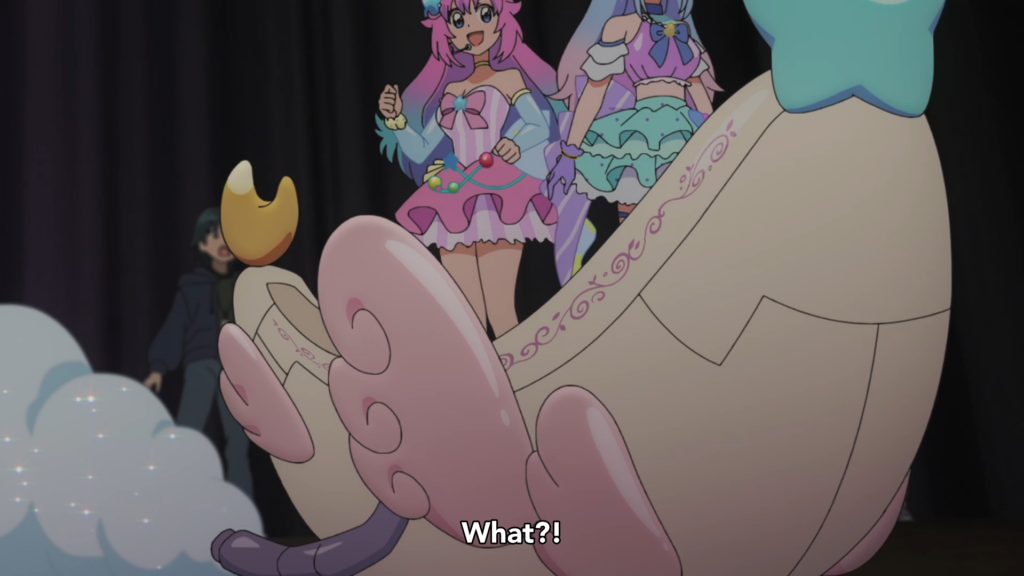
What’s also clear is that, as far as the show is concerned, there isn’t really any hiding of the magic despite the need to keep it secret. Whether it be in Fuu/Lilly transforming for the dress after JUST talking to the worker, or Rui/Lulu changing the cart with everyone there who knows what the cart is supposed to look like, magic is far more out in the open. Similarly to a couple of instances in Creamy Mami, the other characters seem to acknowledge the unusual happenings around them, though they’re at a loss to explain it. After all, magic is not a thing in the “real world.” And it’s not just primary / main cast members, either; Lilly’s performance itself transforms with the power of magic, basically taking a lot of the color and bombast nondiegetically used in something like Love Live! and making it more concrete. Even Meeter, the one who gifted Fuu and Rui the magic, isn’t out of the picture. He, and other residents of Felix Star, make themselves comfortable at Dubdub, the café near the agency. And Mari, the owner, seems to be keenly aware of magic’s existence. Whether she could say anything to Fuu and Rui’s mother—as they are acquainted—is anybody’s guess.
And of course, there’s the countdown to one year before Meeter takes the magic back, and that giant cliffhanger that concluded the season…
The Look: A Duct Tape Production
I’ll be brief: the one aspect of the show that I cannot give much praise to is its base aesthetic language and technical competence. I expressed a worry in the original article about the rather flat layouts. Unfortunately, but all-too-predictably, Pierrot could not mask all of the cracks in the production pipeline. There are a few moments of glaring animation errors or jarringly poor walk cycles, just to name a few of the overall problems. If there’s one thing that I’ve realized though from learning about anime production, it’s that the staff involved in making this series were certainly not given the furthest deadlines in the world for making LuluttoLilly. Especially because of the music which I’ll briefly talk about in the next section, I imagine that everyone involved worked as hard as they could. For that, they deserve our sympathies. But sympathies do not visually a good show make, and sad as it is to say, but LuluttoLilly seriously has mishaps.
The Music: A (Better) Duct Tape Production
When I talked about Creamy Mami, I noted that for being a show as long as it was, and for the sake of making a star of an upcoming idol, there were surprisingly few songs featured in the course of its run. LuluttoLilly operates in much the same way, which I was quite happy with. Especially with the abundance of gacha-inspired music anime that always seem to have a quota of songs dictating the script (not a complaint, just an observation), this show kept its focus mostly on Fuu/Lilly and Rui/Lulu and navigating that instead. As I indicated earlier in this article, there’s only three songs that are given marquee value. It therefore illustrates that, more than anything, this show is meant to be about the characters than the songs. The music therefore is kept appropriately “measured,” coming up only when it’s really relevant and having entire stretches of time where music is not a focus.
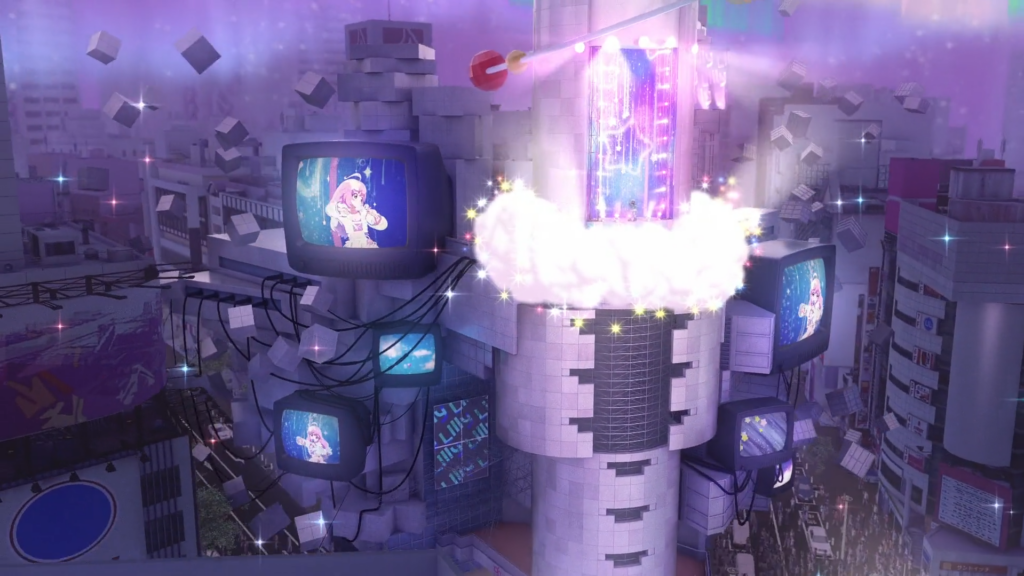
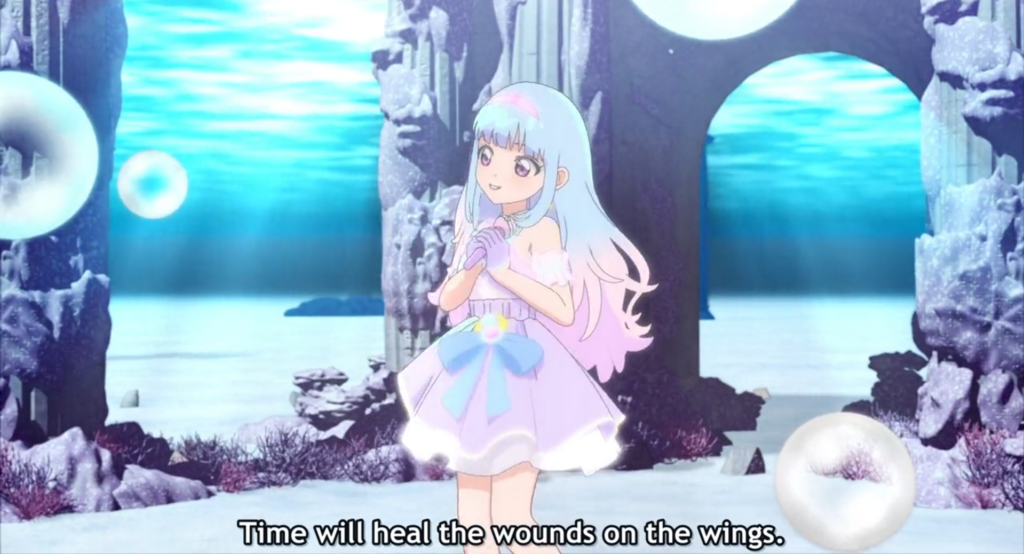
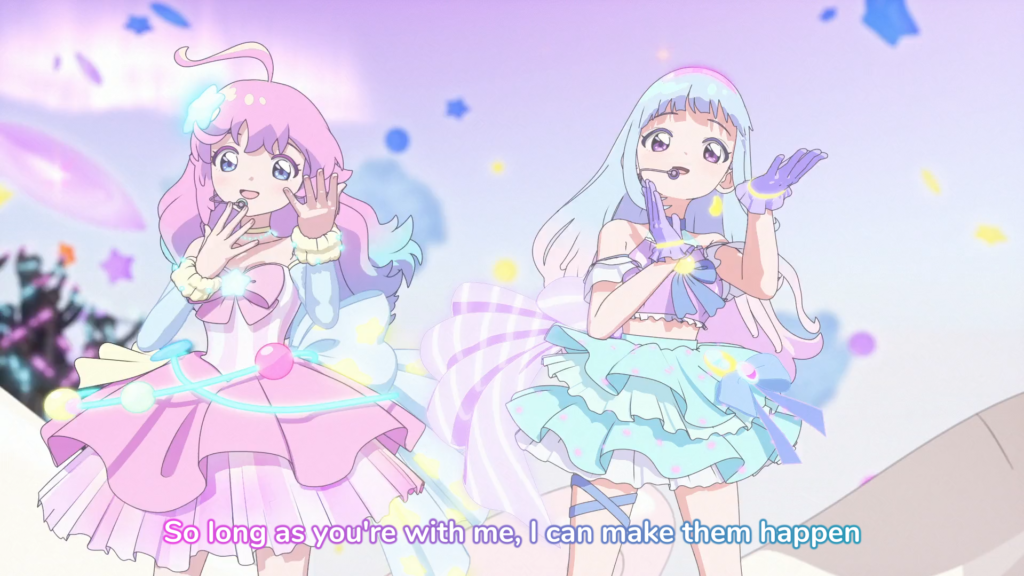
When music IS the focus, that’s when the show tends to be at its most aesthetically vibrant (even if it can’t fully escape that dead-eye look every once in a while). Much of the simple shot compositions or lackluster layouts are markedly more ambitious, in no small part thanks to the camera being allowed to more freely navigate 3D space. The CGI is not always the smoothest or the most well-composited, but the additional effort is notable and helps to sell that, at least within this show’s universe, the performances are indeed something out of the ordinary. The same sadly cannot quite be said of the songs themselves. Both in the immediacy of the listening experience and as actual pieces of music, they aren’t particularly distinguished. Lyrically, one could pull at a thread to find autobiographical significance if you really wanted to, as in Lulu or Lilly are singing about aspects their Fuu and Rui selves are feeling. But to be fair, you could do that with a lot of music anime, so that’s not really an accomplishment in and of itself. They sadly fall into that ever-expansive abyss of J-Pop that is perfectly fine but doesn’t impress. As for the OP, though? I’d rather not say how many times I put that on repeat…but it was a lot!
The Future: What is Left?
In some ways, LuluttoLilly season / cour one is the quintessential “7/10 anime with a million asterisks attached” – it’s something that has some serious glitching up in its machinery, but still managing to have its pockets of fun and love come through. It has a sense of seeking heights that I was delighted by, even though some of it may not be written with the greatest finesse. It is not thematically challenging, but it knows what it wants to do and commits with more charm than one would assume. I smiled when Fuu/Lilly and Rui/Lulu had fun, or it felt like their connection was strengthening both as idols and as sisters. Twelve episodes remain, presumably, to wrap up the show, and I don’t expect every single idea or hanging thread I’ve mentioned, or that the show proposes to be concluded or even addressed in a satisfactory manner. As fun as the show might be at the moment, there’s always the chance that it might bungle itself in the moments when the drama is supposed to take centerstage beyond just the magic screwing up with a hoopedy-doopedy.
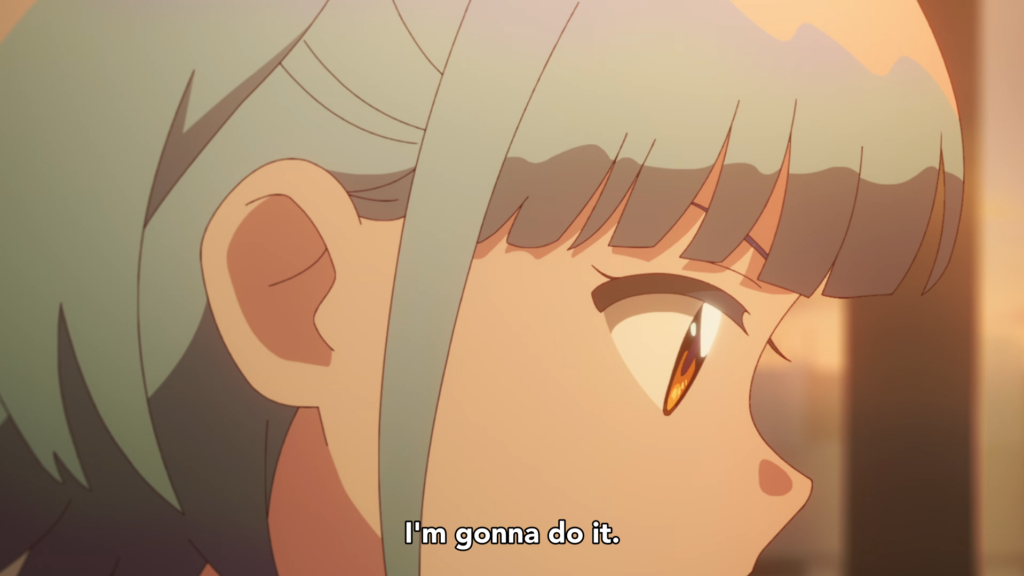
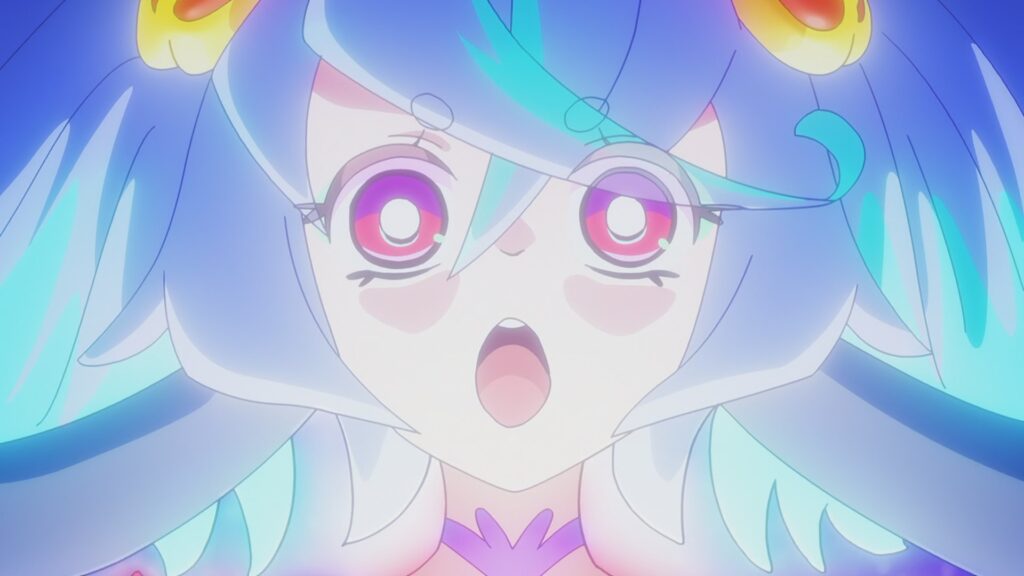
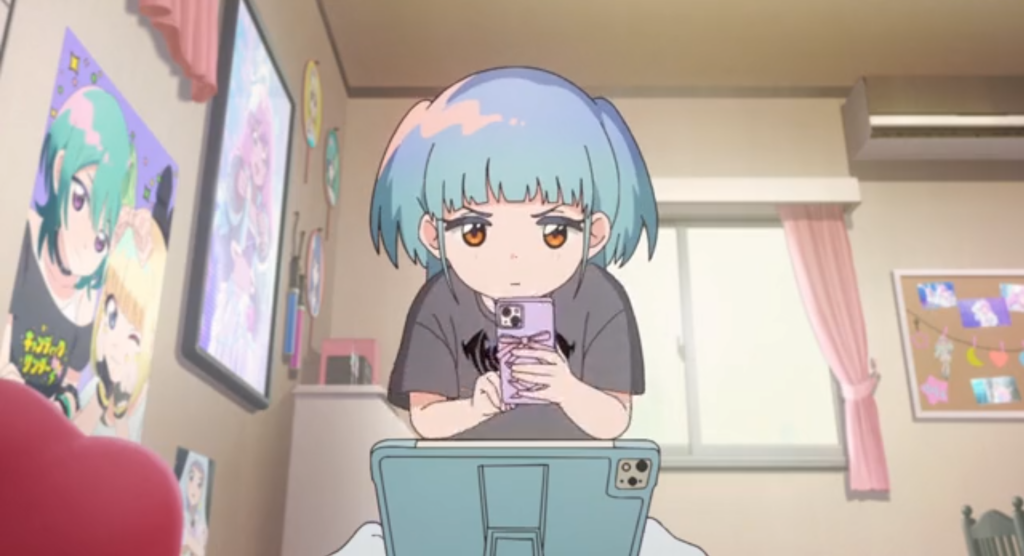
So, what exactly do I expect? Aside from the obvious things such as the sisters’ relationship mended and the magic leaving (I’ll return to that momentarily), it’s indicated that the girl seen in the two above screenshots is going to be a bigger presence in the show. She pops up during the show’s concert moments when a performance is happening, and the camera spent an inordinate amount of time on her “superfan” sensibility and reactions in the final episode. I don’t think it’s outside the realm of possibility for her to become a new major character, possibly joining Once More as another idol that Touko hears. Her finger quivers over the audition button before committing to doing so. Or, in an interesting twist (and perhaps one that would send her heart into the stratosphere), Lilly and Lulu might possibly get her a job at the agency, even if not as a singer. In a certain sense, it could be thought of as Rui/Lulu taking to heart what Lilly did for her – inspiring her to go beyond and break out of the shell that she had built for herself. If Lulu can inspire someone else to sing, what would that look like? If this is combined with Touko and Sena’s renewed desire to sing and dance, there could be five major characters in the coming season.
And then there’s Shota. Enough said.
But as far as the sisters, we know that eventually the truth is going to come out concerning both using magic. The last cliffhanger implied that Rui was starting to put the pieces together because of Fuu’s carelessness and overt hint-dropping at numerous points. While that’s all fine and dandy, what the series could seriously use though are more moments of Fuu and Rui as themselves, away from the personae. They’ve had so few interactions over the course of the season / cour that it feels like the one dimension of their relationship that is in desperate need of more time. The nature of the story and the magic’s secrecy means that some of the ways they do this are a bit limited, but the final walk with them by the river is a prime example of the show not needing the magic and music to make it happen. Of course, magic and music is what propels the show forward, so I fear that this is the one component that I feel is essential but won’t be given enough.
Added to that, the show seems to be skipping along its merry way with Rui’s gradual transformation into a happier and healthier character. Since we’ve seen so little of the back-and-forth between Fuu and Rui in her more dour moments, if there is to be a “moment of reckoning” between the sisters beyond a simple episode nine argument, it needs to be appropriately built up. Rui’s dependency on magic is certainly a way that the show can do this, but even then, it would help to be propped up by some core element of her being around or interacting with Fuu. It doesn’t need to be the most melodramatic thing that ever happened in mahou shoujo (or even Pierrot mahou shoujo for that matter), but it’d be strange for the show to subject its characters to cosmic horrors from magic gone astray than letting frostiness into their relationship.
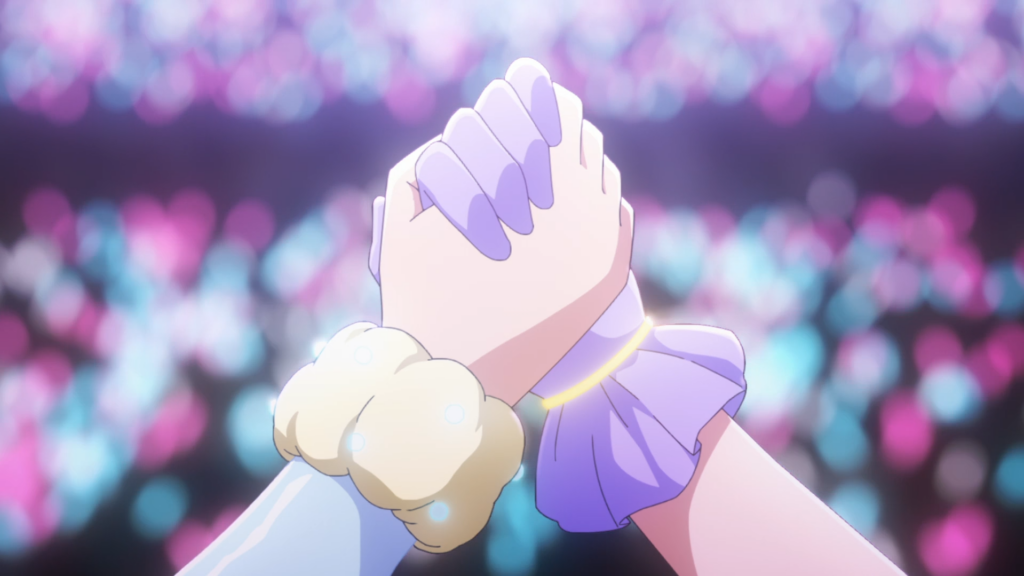
I will, however, express one very selfish desire. If LuluttoLilly ended on a screenshot similar to this one, with Fuu and Rui holding hands as their regular non-magical selves and singing together, that’s about as good a finale as I can imagine.
…and by the way, what exactly is a “BUBEE?”