Hello everyone, I hope you’re all enjoying Jaadugar: A Witch In Mongolia so far! We’ve got Chief Director of the show, Naoko Yamada, talking with Jaadugar’s original author, Tomato Soup in this article! I personally haven’t had dinner with Tomato Soup for a while now because it’s summer time and it’s more appropriate to have in the colder months.
This isn’t really an interview per-se and more of a bit of a chat between the two of them. Obviously the chat wasn’t about the hot weather they’ve been having recently, or why British supermarkets sometimes have clocks on top of their buildings or this wouldn’t have been published.
Oh yeah, before I pass over to Yamada and Tomato Soup, let me also link the production notes from the Sakuga Blog here too! You know, just in case you have a spare hour or two to read more on Jaadugar!
Translation by “nui”, Editing by me – TV Anime Jaadugar: A Witch in Mongolia – Special Talk with Naoko Yamada and Tomato Soup was originally published on Souffle in July 2026. Link: https://souffle.life/topics/souffle-special/tenmaku-jaadugar-tomato-soup-yamada-naoko-taidan/
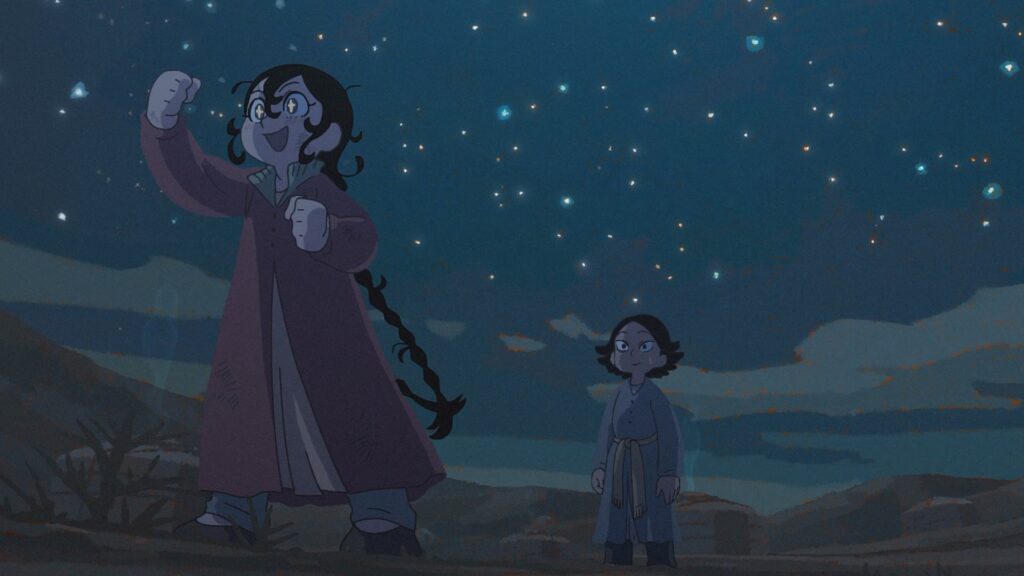
“Ah, this isn’t something I can just brush off as ‘cute’!” That is how I got drawn in.
Naoko Yamada: To be completely honest, at first I thought this was a really difficult work. There are so many complex and deep elements that you cannot fully grasp just by reading it quickly. But first, you immediately get drawn in by how cute the art is, and every single panel is genuinely fun to read as a manga.
Tomato Soup: I have always liked drawing in this kind of style, but I actually think highly stylized, deformed art pairs really well with historical stories. Because the art is not too realistic, it actually makes the reality of the content stand out more.
Yamada: And as I kept reading, I thought, “Ah, this isn’t something I can just brush off as ‘cute’!” That is how I got completely drawn in.
Tomato Soup: Thank you so much. When you showed me the finished animation, I was so happy. You respected my art while packing it full of the unique charm that only anime can provide, and there were so many expressions that I could never have produced myself. The way “movement” is captured in manga versus anime is completely different, isn’t it?
Yamada: Director Abel Gongora really values making the “movement” fit the characters you drew while also making it appealing as animation, so that is our main goal.
Tomato Soup: Also, you added scenes that fill in the eight years after Sitara arrives in Mongolia, and you added everyday life scenes in Tus from before that. It is hard to do that kind of depiction in a manga, so seeing that “flow of time” in the anime made me feel an even stronger attachment to the characters. You showed me something truly wonderful.
Yamada: What an honor! The core of the story is such a thick and powerful world, so for the anime, I wanted to depict things down to the level of, “Well, what was Sitara touching, feeling, and smelling at that time?”
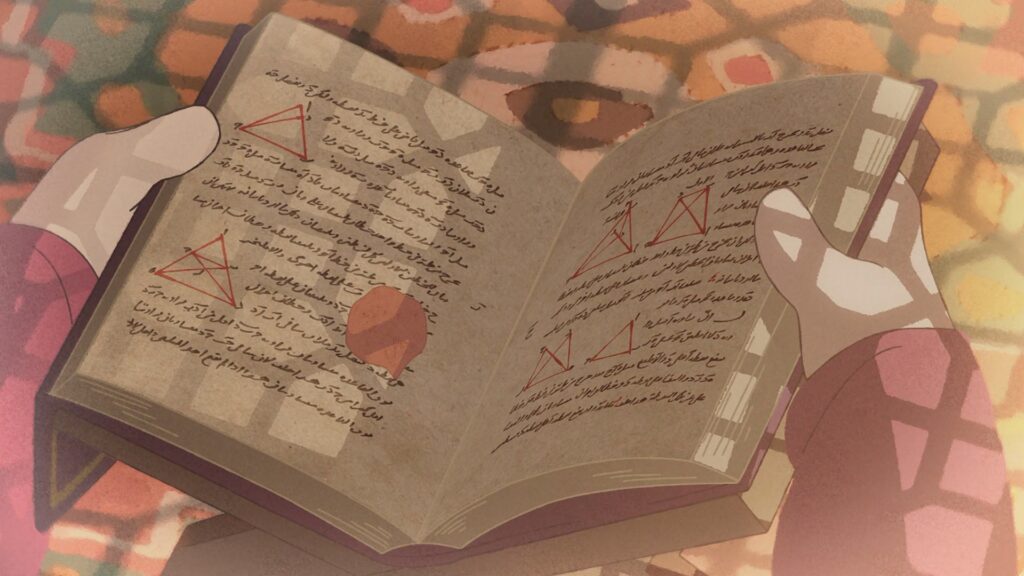
When you treat a single piece of animation as “music”, it makes drawing the storyboards easier.
Tomato Soup: Watching your works, Director Yamada Naoko, I always feel like your depiction of everyday life is so meticulous. I think if you insert those kinds of scenes poorly, it can kill the pacing of the work. But the way they come in at the absolute perfect timing is amazing. How do you acquire that kind of sense?
Yamada: Ever since I started, my goal has been to draw storyboards like a musical score. It is like turning a suite’s score into a storyboard. When you treat a single piece of animation as “music”, it makes drawing the storyboards easier.
Tomato Soup: I might be similar to that. I decide on the emotional line within the larger flow. For example, figuring out the structure of “make them anxious here, then give them catharsis here,” and then I fit historical events into that framework.
Yamada: I think the biggest difference between anime and manga is the “presence of time”. With manga, you can stare at your favorite panel forever, and you can flip back through the pages. But with video, we control the time, and it just flows by. That is exactly why we pay the utmost attention to not destroying the passion and aesthetics of the original work by letting time flow. It is the feeling of “slowly expanding a single panel”, allowing space, time, and breathing to exist right there. I hope we can match our breathing with the viewers.
Tomato Soup: Those eight years that I skipped over in an instant in the manga are depicted in the anime so that the viewers can share those years with the characters, and I was so happy about that.
Yamada: I am so relieved to hear you say that.
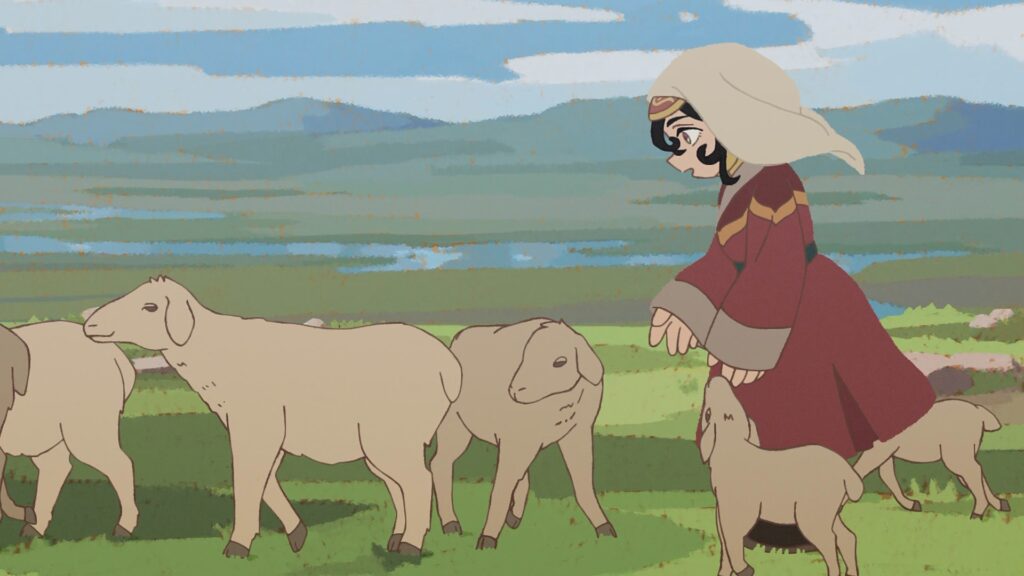
Since I am borrowing the lives of real people for entertainment, I do not want to distort them for my own convenience.
Tomato Soup: In putting this work out into the world as an animation, what kind of message or goals did you put into it?
Yamada: What Director Abel Gongora and I share is definitely depicting the world through the eyes of a single woman, Sitara. She is a real historical woman, and if you do a little research, you can figure out her final moments. So it is not going to be strictly positive. But Sitara, while holding strong convictions, also has the flexibility to adapt her body and mind to wherever she is placed. She must have had not only negative emotions like revenge, but also hope and much more complex feelings. I strongly felt that the production side should not selfishly judge or make assumptions about her as she tried to walk her own path.
Tomato Soup: For me too, since neither Mongolia nor Iran is my own country’s history, I always have this feeling of “borrowing something belonging to others”. As long as I am borrowing the lives of real people and turning them into entertainment, I do not want to distort them for my own convenience. I do not like portraying things too uglily or making them too comical, so I try my best to actively depict the parts I found fascinating.
Yamada: We really want to depict Mongolia and Persia, their respective countries, cultures, histories, and characters with respect. I do not think it is just a simple “revenge play” or “tragedy”.
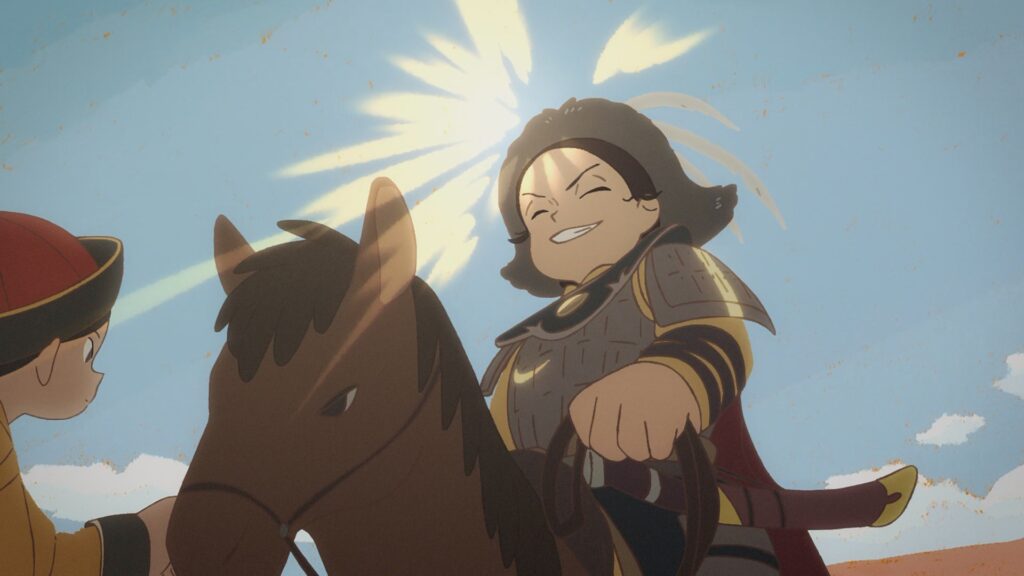
I am irresistibly drawn to that “softness” and “precariousness”.
Tomato Soup: Both countries were drawn so beautifully in the anime. Not just Sitara’s group, but Tolui, Ögedei, and Boraqchin were all so appealing. I was so happy that they became characters where anyone could become a fan of someone.
Yamada: I absolutely love how you make Boraqchin’s character stand out, Tomato Soup. In reality, even if you look through the materials, there are not many descriptions of what she actually did. And yet, she gets involved in so many major events in this story in a way that just makes you nod and say, “That makes sense.” It is truly amazing.
Tomato Soup: The lack of reference material for Boraqchin was my biggest headache. The only thing we know for sure is that “she had Daoist scriptures made.” From there, I expanded my imagination, thinking, “She must have been someone interested in these kinds of things,” and constructed her personality.
Yamada: This is strictly in my imagination, but the Boraqchin in this work must have been a very transparent person. That is exactly why she absorbed so many things straight on, and ended up the way she did. If she had been in a different place, she might have chosen a completely different path. I am irresistibly drawn to that “softness” and “precariousness”.
Tomato Soup: She is one of my favorite characters too, so I am so happy to hear you say that. The story needed a strong woman to stand in the way of Sitara and the others, so I decided to have her play a massive role there.
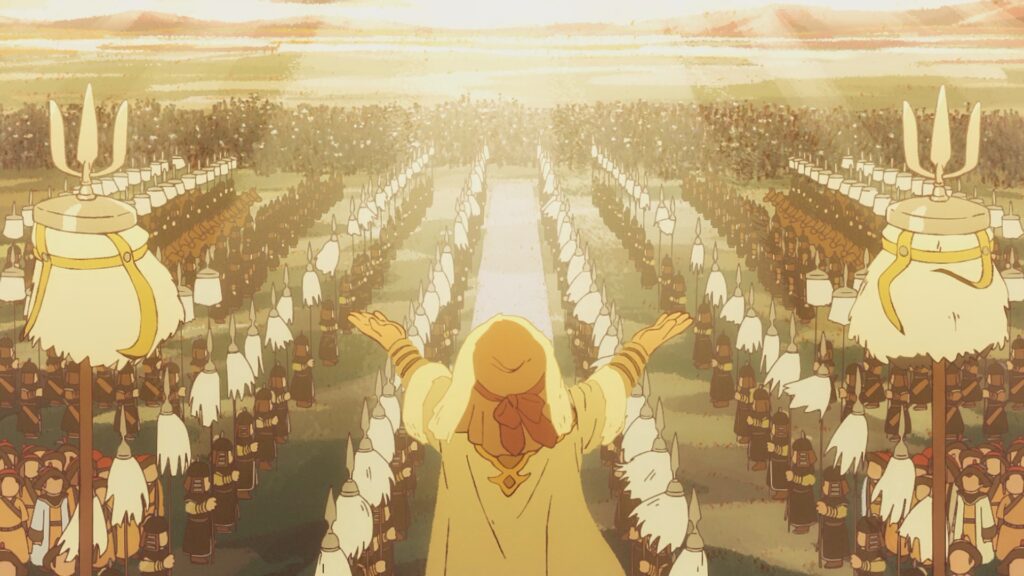
When there is too much reference material, it actually becomes restricting.
Yamada: When you look into medieval Mongolia and Persia, you can really tell that “Jaadugar: A Witch in Mongolia” is solidly based on historical facts. On top of that foundation, you take the blank spaces in history not found in the documents, like Boraqchin’s personality, and build up these characters with incredible power, using your imagination, and probably even putting your prayers and wishes into it. It is truly wonderful how seamlessly all of that blends together as a historical manga.
Tomato Soup: Honestly, I would love to have as much reference material as possible. But it is a strange thing, when there is too much, it actually becomes restricting. When you get to the modern era, there are so many documents and testimonies that you cannot write without researching exhaustively. The medieval period has just the right balance of “what we don’t know” and “what we do know”, which gives me the courage to write.
Yamada: I imagine you must read through a massive amount of material to draw this, but how on earth does your memory capacity handle it all?
Tomato Soup: It is deteriorating every single day! (laughs) If you know any good training methods, I would love to hear them. But for historical stories, it might be effective to center things on a specific person, like “what happened when this person was this age,” and connect things together like a string of beads.
Yamada: Thank you so much for today. Every time a new chapter comes out, I read it with so much excitement, but it always stirs up incredible emotions in me. I am looking forward to reading more!
Tomato Soup: I am also really looking forward to the rest of the anime. Thank you so much!