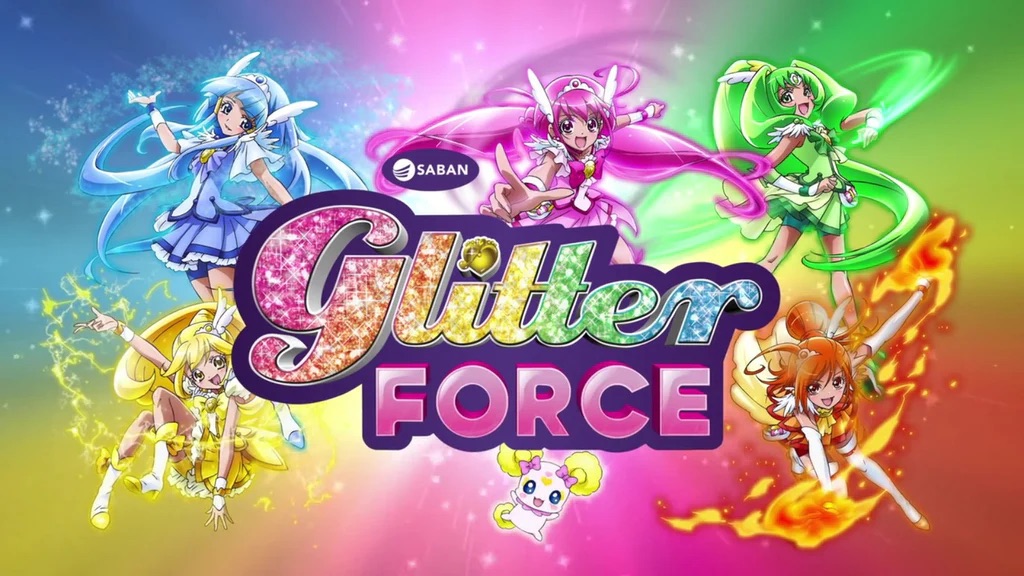
Much like many western Precure fans, my introduction to the franchise was Saban’s Netflix exclusive dub, Glitter Force. This dub has a fascinating production history, though not much of it is actually documented.
On a mission to learn more, I reached out to the show’s producer, Melissa Flores, for a Q&A session!
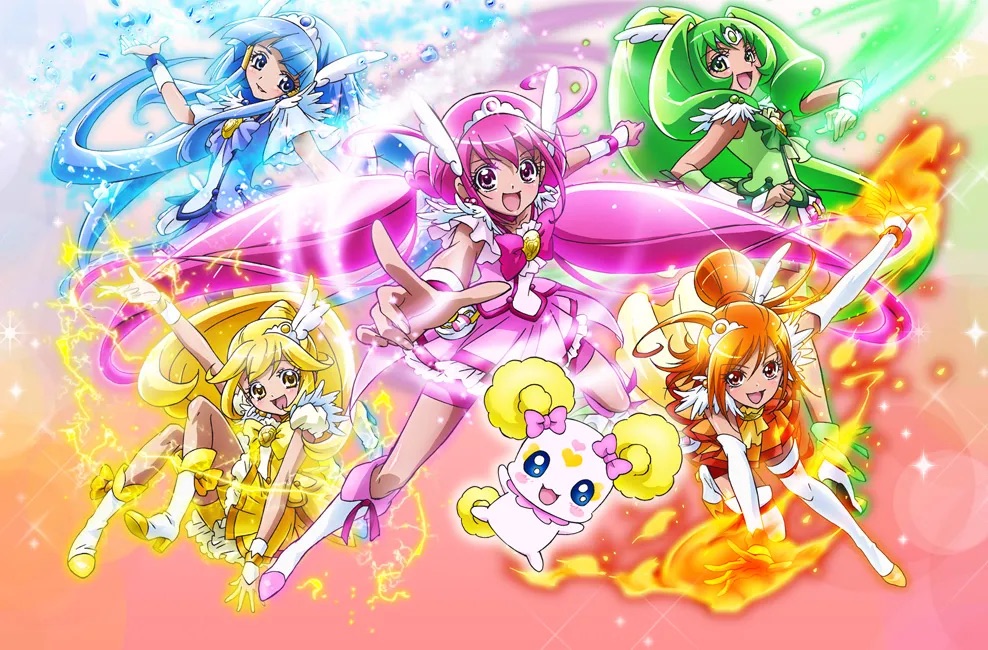
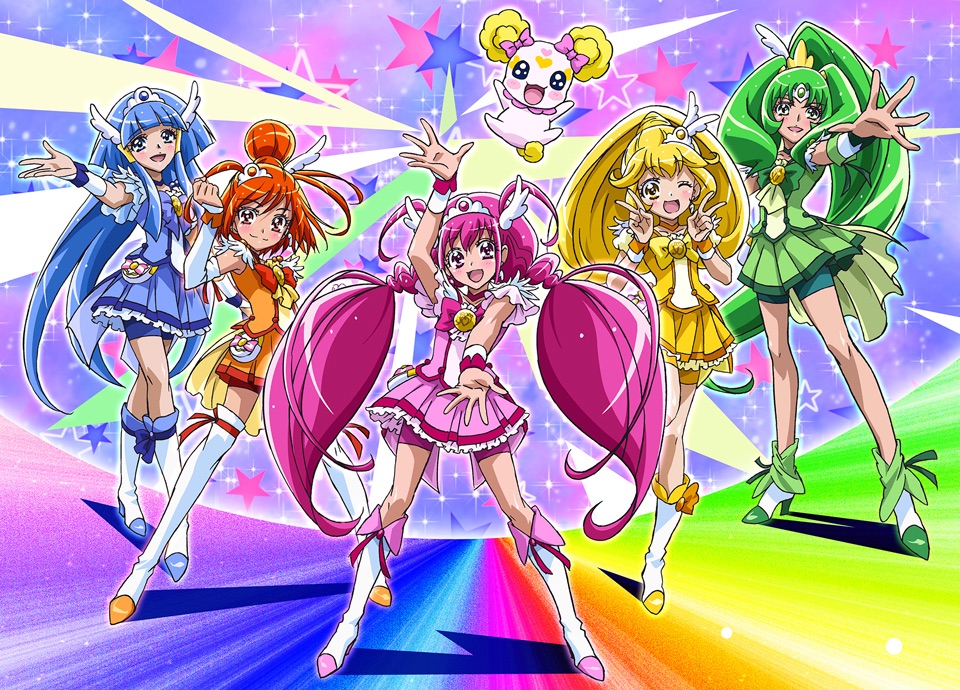
Something I’ve always really wondered is about the name changes – Cure March becoming Glitter Spring makes total sense, but I’ve always wondered why Happy became Lucky, and Beauty became Breeze? And where did the idea of calling it Glitter Force come from? I think there’s been a general assumption it wasn’t able to be dubbed as Pretty Cure due to the existing dub of the original season, but again, this is speculation from fans!
We loved Pretty Cure as a franchise, and were completely aware and appreciative of the fans it already had here in the west. But the young audience here that the show was going to be intended for, had zero brand awareness of it. They didn’t know Pretty Cure and had no concept of what it was.
We tried really hard to keep as much of the naming conventions as we could, but some didn’t translate very well to the young audience. We actually ran focus groups when we began the series, trying to explore if we could keep Pretty Cure as the name. But the mothers didn’t respond well – without them knowing what the brand actually was, they thought it placed too much focus on beauty standards.
Overall, Pretty Cure as a name was very confusing to those young girls and their mothers – one of the comments said it reminded them of hot nurses! When we changed the name to Glitter Force it allowed them to focus more on the show. It tested by far the best.
The same could be applied to Cure Beauty – without context and with zero awareness of the brand, they felt it was too much of a focus on beauty standards, especially when combining that with the makeup compacts of Smile Pretty Cure’s transformation sequences.
With that in mind, we did our best to keep what we could, but we treated this as a truly separate adaption – it’s own thing.
I know some episodes were cut from the dub for a variety of reasons, and that some scenes and plots were altered a little, how were the decisions on what to remove made? I know the series was originally intended for Nickelodeon, so I’m curious about how it ended up as a Netflix original!
I can’t speak too much to that process, since I’m still under NDA. What I can say is that US Broadcasts and Standards are very different compared to those in other countries. What works in Japan may not necessarily work in the US, especially when it comes to programming that is meant for children. To that extent, we were limited and we did our best to work around it.
Other cuts were made for budgetary reasons, etc.
Did any of the Japanese staff from Toei have much involvement with the production of Glitter Force?
I can’t speak too much about the process due to NDA, especially when it involves other companies, but I really enjoyed working with our Toei colleagues and we made sure they were aware of all decisions made.
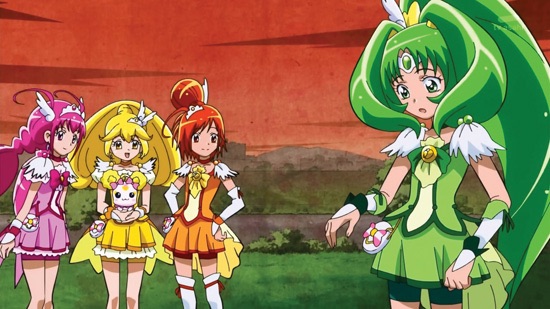
Leading on from this, was there much direction on how to adapt the show? Glitter Force really stands out as a dub because it’s so reminiscent of 4kids dubs from the early 2000s – I know Michael Haigney and Norman Grossfield worked on the show (I’m a huge fan of them, I grew up watching 4kids Pokémon and Mew Mew Power!) so I’m interested to know if this just occurred organically because of their writing style and past experience, or if there was directions to go for this style?
I’ve heard of the 4K comparisons, and honestly that wasn’t something that we were trying to do. We were approaching the series as its own thing. Given the challenges when it came to adopting the series, the intention was never to just dub Pretty Cure Smile as a one to one show. This was always treated as an adaption into a new show called Glitter Force.
To that extent, we definitely made some creative changes. But every change was always done with an incredible love and respect for the source material and with passion to create something that children here would love.
But I also know that it was a polarizing decision to a lot of the fans that already existed for the franchise, and I understand their frustration. I hope the entire franchise can eventually come to the US properly subtitled and dubbed faithfully as Pretty Cure. But the decision was back then to focus on the younger children, the ones who couldn’t read subtitles, the ones that were watching the show with zero context of what Pretty Cure was.
I’ve heard so many stories of Glitter Force being a Young Person’s first foray into anime, with them going on to discover Pretty Cure, and other anime, and that makes me happy.
I REALLY love the voice cast of the series, they all sound like they’re having fun playing their roles and all suit the characters really well, is there anything at all you could tell me about the casting or audition process?
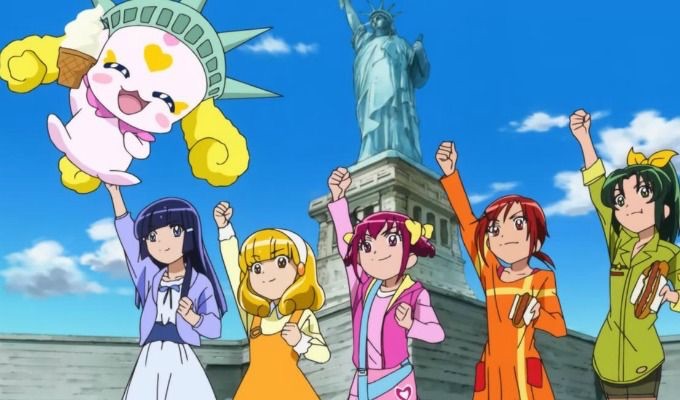
Honestly, I still can’t believe we managed to cast who we did. And honestly, recording those cast members in the booth were some of my favorite memories of working on Glitter Force. We had an incredible voice director named Mary Elizabeth McGlynn, and together with her and Jamie Simone, who ran the company, Studiopolis, that helped us record and produce the series, we had access to some amazing voice actors. We honestly got incredibly lucky that these amazing actors believed in the project, came on board and gave everything they had.
The magic had everything to do with Mary, and the chemistry of the cast. Like I said previously, our goal was to create the best version of Glitter Force possible. Knowing the level of talent we had, we did our very best to make sure they felt creatively fulfilled, and were given the freedom to really do as much as they wanted with the lines they were given. Some improv was involved, and that’s I think where you get a lot of the fun.
It’s really hard honestly to cast five different girls because they all have to sound very different in order for each of them to feel distinct. Four of them we found almost immediately – Laura Bailey as Lucky, Colleen O’Shaughnessey as Sunny, Danielle Judovits as Spring, Kate Higgins as Breeze. Debi Derryberry was our Candy, but casting Peace was a bit harder. We needed a voice in the lower register. We got lucky when Debi Derryberry recommended a young woman who was taking her voice acting class, and stood out. That’s how we found Alex Cazares. Seeing her be so successful in her field today makes me so happy for her.
For our villains, Mary was our wonderful witch and Keith Silverstein was our MVP doing three different characters, Brute, Rascal and Ulric!
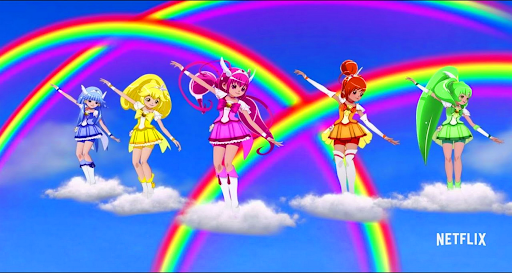
Something that gets talked about by fans a LOT are the CGI dances at the end of each episode- specifically the ones that were specially made for Glitter Force. Why were the extra ones made? There were two seasons of the show and two original ending sequences from the original Japanese show so this always stood out as an interesting choice!
Remember we were adapting Glitter Force as one season. so we really wanted to do everything we could to make little girls feel as invested as possible. We loved those original ending sequences but two just didn’t feel like enough. We wanted more dance routines that little girls could follow, enjoy and mimic. Additionally, thanks to our music supervisor, we also teamed up with a fantastic band called Blush, who sang the theme song for us and also recorded new songs for us.
The goal was never to try and match those incredible CGI performances. We didn’t have the time or the budget for that. It was always to create extra content for little girls to be able to dance to at the end of the episodes. We did the best we could given our timeline and our very limited budget. Thankfully, I saw plenty of videos of little girls dancing to those sequences, and that’s what mattered to me. It was always for them.
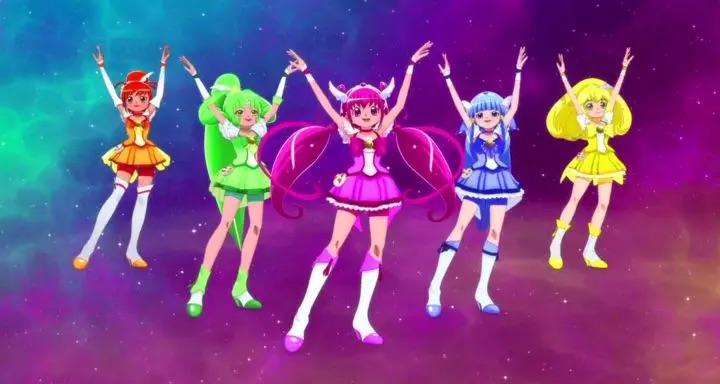
And finally, I’d really just like to know whatever thoughts and feelings you have about working on the show! Do you have any good memories or experiences from it?
Glitter force will always have a special place in my heart. I truly loved making Glitter Force, and it’s something I remain proud of. To this day, I have little girls who tell me how much they loved it as children, and I hope more people discovered Pretty Cure as a result.
Honestly, truly, everyone on the production side of Glitter Force loved the series and truly worked hard on it. We loved the source material, and we all wanted was make it as engaging as possible so little girls and their families would love it and want more.
At the end of the day Pretty Cure (and Glitter Force) is so special: superheroes that little girls can look up to, while still embracing the best part of themselves – being young, strong, kind and powerful, while also being girls.
We need more of that, and I’m thankful I got to be a small part of sharing that kind of story with a generation of young kids.
Writer’s note
Hi! I’m Tee, a YouTuber who focuses on PreCure archival, history and news! My favourite seasons are Tropical-Rouge, Fresh and A La Mode, and my favourite cures are Whip, Summer and Peace!
I’m new to the team at Magical Stage, and I’m very excited to be here! I love all things magical girl related, and hope I can write lots of articles full of stuff you can’t find anywhere else!
I actually conducted this interview as part of an upcoming video on my YouTube, which will be a deep dive into the many attempts at dubbing PreCure into English. It was an absolute pleasure to be able to talk with Michelle, and to learn so much about a series so dear to me.