Hello everyone, you know that feeling when you dig out an old book from your bookshelf and think “wow, someone should stick this interview on the Internet!”. No? Just me? Actually, it is probably just me.
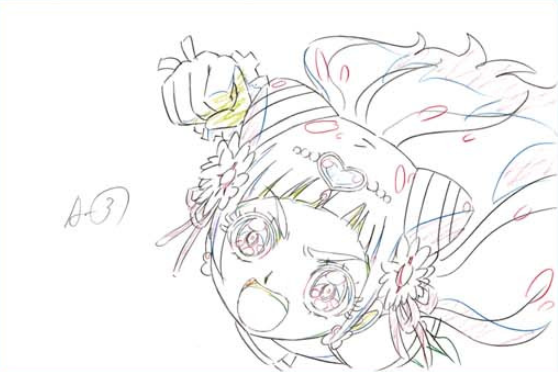
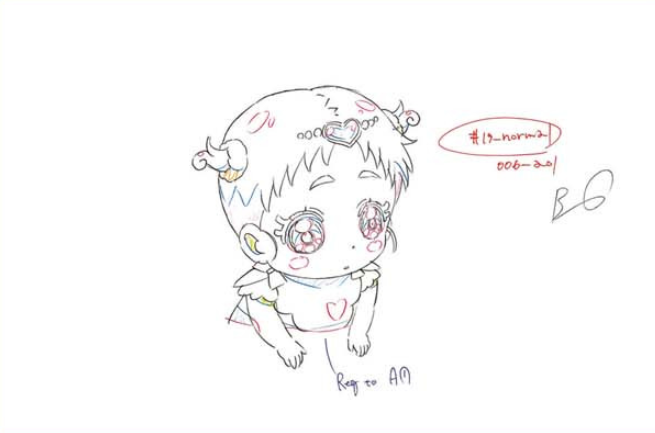
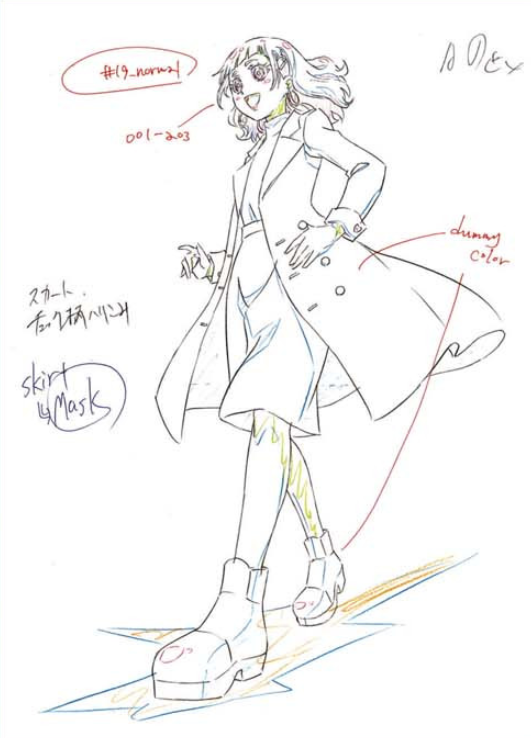
I own a copy of the Precure 15th Anniversary book, published by Febri and it is chock full of amazing artwork of every Precure up to that point, as well as interviews with Precure’s only staff members who had worked on every season of the show. One interview was with Futago Kamikita, the twin sisters who drew Precure’s manga. The other is with veteran animator, and Solo KA ace, Mitsuru Aoyama!
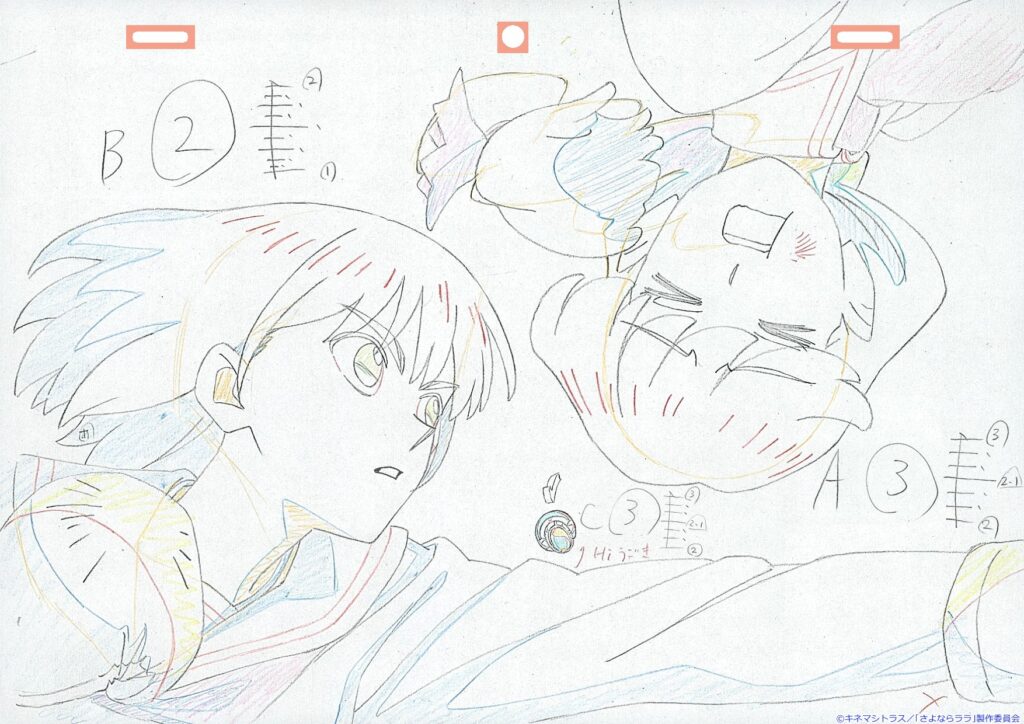
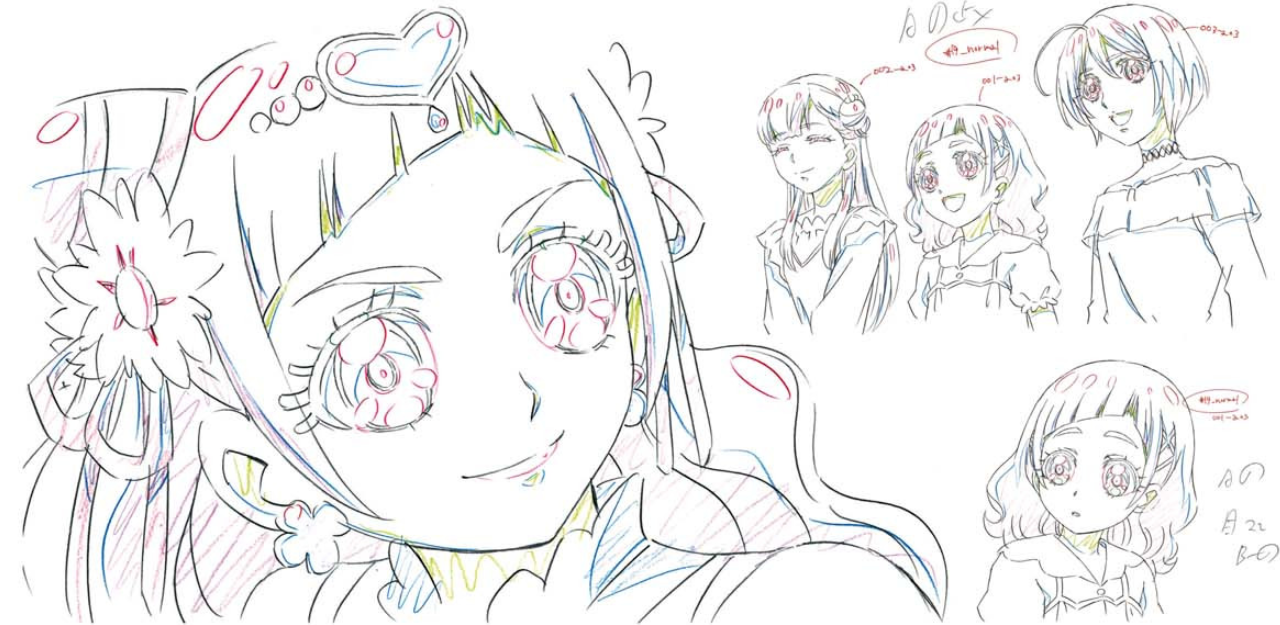
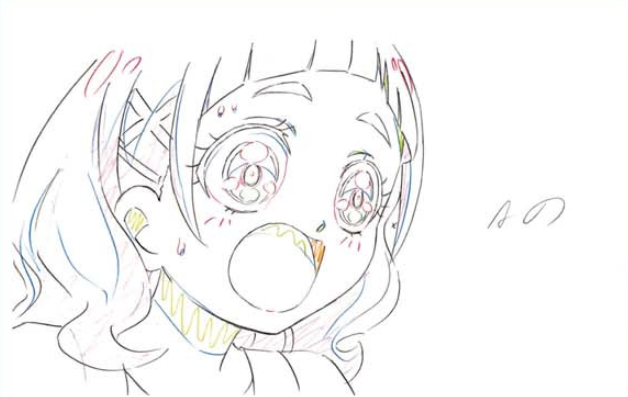
Aoyama’s interview accompanied a mini “Toei Animation Works” (a series of artbooks about the works of different character designers), where original artwork, settei and key animation of Aoyama’s were included in the book. It culminated in this interview which, if you read the previous one we published a couple of months ago, may have some similar stories being mentioned. You should probably read that interview before this one as this one was published eight years later!
Nevertheless, there’s still plenty of new stuff in this one including more on what Aoyama got up to in the eight years since that interview!
Translation by “nui”, Editing by me – Mitsuru Aoyama – Special Interview was originally published in the Febri Precure 15th Anniversary Book in October 2018.
Mitsuru Aoyama – Special Interview
Aoyama Mitsuru is a veteran animator who has been involved in the Sunday morning “Nichiasa” block since Tongari Boushi no Memole, not to mention every single work in the Precure series. He is one of the core staff members supporting the backbone of Precure, working as an animation director for theatrical films and even doing “solo key animation” for the TV series. We look back on his journey, from how he decided to become an animator up to the present day.
Interviewer: Did you always love animation and drawing since you were little?
Aoyama: I wasn’t a very healthy kid and tended to miss school a lot, so I used to draw at home. I would copy manga by Osamu Tezuka and Tetsuya Chiba, or draw actors from live-action movies.
Interviewer: When did you decide to become an animator?
Aoyama: After graduating from high school, I came to Tokyo and went to a design vocational school. But they focused on commercial design there. I did assignments on mosaic patterns, and we had drawing and sketching in class. But I started spending all my time at my part-time job and kind of stopped going to school. There were a lot of assignments, and it just got to be a hassle. Even when I was taking color theory classes or drawing patterns, I wondered if it was really meant for me (laughs). Plus, I just didn’t have a sense for color. I’d never studied color before, so when I actually tried to use it, I could only come up with colors within my own limited range and personality. So I didn’t even graduate. It was a major setback.
Interviewer: Why did you enter the animation industry?
Aoyama: I had an acquaintance at my part-time job who was an animator, and they introduced me to an animation studio called Studio Look. They told me, “You should go check it out,” so I took the drawings I’d been saving up, and they told me, “Please come in starting tomorrow.” I was 22 at the time.
Interviewer: What works did you handle at Studio Look?
Aoyama: I did in-between animation for Tatsunoko’s Time Bokan series, Ippatsu Kanta-kun, and Paul’s Miraculous Adventure. I became a key animator on Ippatsu Kanta-kun and Tokyo Movie’s Nobody’s Boy: Remi.
Interviewer: How long was it after you started in-betweens that you moved to key animation?
Aoyama: It hadn’t even been a year. I became able to draw quite a few frames without much struggle, so I guess I was suited for it. If the studio takes on an entire episode, there are key animators right there in the company, so when you draw in-betweens, someone in-house can check them. So you just naturally pick it up, and if you don’t understand something, you can ask the people around you. It was a really great environment. Plus, I was doing key and in-between work for a variety of different shows, so I never got stuck thinking, “I can only draw this specific style.”
Interviewer: Who would you say was your master who first taught you about in-betweening and key animation?
Aoyama: Hiroshi Iino-san was my first master. I felt like I learned the ABCs of animation at Studio Look, but I was only there for about three years. In terms of people who really took care of me, it would be the animator Shigetaka Kiyoyama-san and the episode director Masahiro Sasaki-san. Sasaki-san was originally from Look, but he went freelance and started a company with Kiyoyama-san. I said, “Well, please let me join too,” and became a part of it. The place was called Studio Aton, and we took on whole episodes with Kiyoyama-san as animation director and Sasaki-san as episode director. We worked on Toei shows like Moero Arthur: Hakuba no Ouji, Ganbare Genki, and Tiger Mask II. I was a key animator and got to do quite a few cuts. Since Sasaki-san was originally a Toei guy, we mainly did Toei works. I was at Aton for about a year and a half, I think.
Interviewer: That is short! What happened after that?
Aoyama: I guess I get bored easily. I decided to quit on my own, but to tell the truth, I absolutely loved Akio Sugino-san’s art. There was this company called Studio Annapuru run by Osamu Dezaki-san and Sugino-san, and I really wanted to work there. They were making the Ashita no Joe movie, and Sugino-san was doing the animation work with a few other people. I wanted to do Sugino-san’s work too, so I brought my key animation and basically said, “Please let me in.” I happened to meet Sugino-san directly, and he told me, “Sure, that’s fine.” But Dezaki-san was often away working on the movie, so I couldn’t really meet him… And while I was waiting, I got a call from Toei. Because I’d been working under Kiyoyama-san, it seems they had been keeping an eye on my work. The person in charge at the time was someone named Saeki-san (佐伯), and he told me, “We have a theatrical movie called Queen Millennia, and we’re creating an ‘assistant animation director’ position. Do you want to do it?”
build note: “Saeki-san” is referring to Masahisa Saeki a Production Manager/Production Desk at Toei Animation who worked there from the mid-70s to the mid-90s. Saeki was Production Manager on Queen Millennia. The original text of the interview only refers to him as “Saeki-san”.
Interviewer: So, in the end, you didn’t go to Annapuru?
Aoyama: I didn’t go. I had to eat, and I was leaving my company. If that call hadn’t come, I probably would have gone to Annapuru.
Interviewer: So you hadn’t worked directly with Toei until then?
Aoyama: Right. I wasn’t that big of an animator anyway (laughs). Ever since Queen Millennia, it has been Toei all the way. But going back a bit, I really learned the true ABCs of animation during my time at Aton. Sasaki-san taught me how to look at layouts, how to cut them, perspective, all sorts of things. Look was great too, but I am where I am today because of Aton.
Interviewer: When was the first time you worked as an animation director?
Aoyama: After Queen Millennia, I spent about four years on the theatrical team working on things like Arcadia of My Youth, Final Yamato, and Kenya Boy, constantly doing assistant animation director and key animation. Once the theatrical stuff settled down, they started calling me for TV shows. I did Bemubemu Hunter Kotengu Tenmaru, and after that, they let me do Tongari Boushi no Memole. Following that, I did animation direction and key animation for Hai Step Jun, Maple Town Monogatari, and New Maple Town Stories: Palm Town Chapter. Then, with Bikkuriman, I handled character design for the first time.
Interviewer: You were in charge of animation direction for Episode 34 of Palm Town, broadcast on September 6th. The first episode of Bikkuriman was on October 11th, so there was definitely an overlap in your schedule, right?
Aoyama: Both of them… I wonder how I managed that (laughs).
Interviewer: When did you start doing “solo key animation”?
Aoyama: Back before I was even doing TV series, someone from the Arcadia production team told me, “Why don’t you try doing a whole episode by yourself?” I didn’t think too deeply about it and just figured that is how things were, so I casually accepted, like, “Sure, maybe I’ll give it a try.” So for Tenmaru, I was already doing solo key animation. In the end, that flow continued for years, and even when I was doing Bikkuriman, when I did the key animation myself, I was usually doing it alone while creating the characters at the same time.
build note: It’s still uncertain exactly what episode of Tenmaru was the first instance of Aoyama Solo KA taking place, as no interview has got it written down anywhere. I haven’t got a copy of the show myself but if anyone does and wants to confirm what episode it was, do let me know!
Interviewer: You were drawing all the key frames alone while doing character designs!? That is way too amazing, isn’t it?
Aoyama: I guess it is a bit unorthodox for this line of work, and I don’t know if anyone else does it that way, but it was a time when I was taking on a massive amount of work.
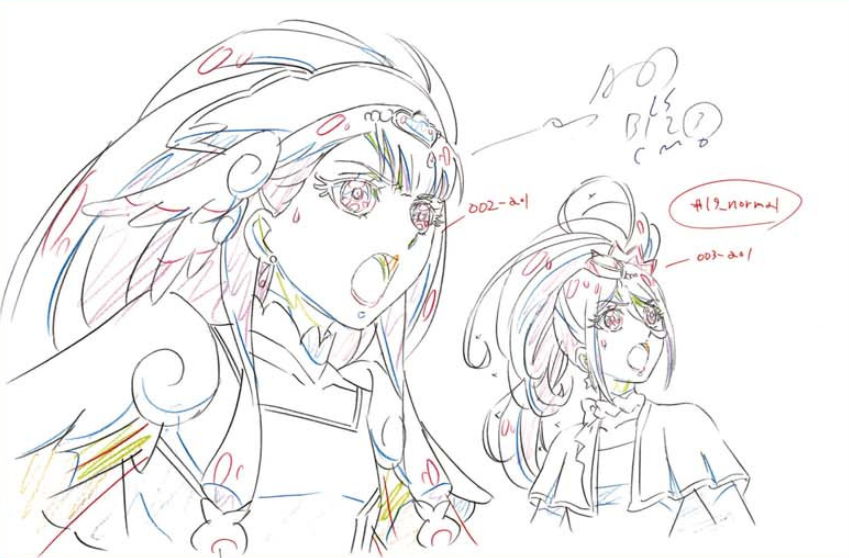
Interviewer: How many days does solo key animation take, and about how many frames do you draw? Plus, in the case of Hugtto! Precure, there are also chief animation director corrections, right?
Aoyama: For Hugtto! Precure, it takes about 45 days. I do multiple rough drafts, so I haven’t really counted how many frames I draw as final keys. As for the chief animation director corrections, I have them look over it at the layout stage. Ideally, it’s best to have them put corrections on the key animation itself, but since the schedule is tight, I try to draw the keys to match the layout corrections. It is not exactly the best workflow, though.
Interviewer: Do you have any tips for doing solo key animation?
Aoyama: Tips… I don’t think there are any? It sounds a bit presumptuous for me to say, but given the current production environment, I don’t think there are many production staff with the guts to say, “Let’s let this person handle a whole episode.” Even if someone raised their hand, I think the staff wouldn’t be able to just hand it over. Originally, I think people should try doing things like that. Even if a whole episode is impossible, maybe doing half a part. If there was an environment that offered work like that, I feel like animators would grow a bit more. In my case, they’ve let me do it since the old days, so setting technique aside, I think it is just because we have a long-standing relationship of trust.
Interviewer: Do you ever look at a storyboard and think, “There is no way I can do this alone”?
Aoyama: I’ve never once thought, “This is too hard, I won’t do it.” It is my job, after all. I have always believed that the day I turn down a job is the day I quit. I might complain later that “it was super tough,” though (laughs).
Interviewer: Since the days of Bikkuriman, it feels like you have always handled projects with a lot of characters. Including Precure All Stars.
Aoyama: I can only call it my destiny at this point (laughs). It is not like I go out of my way to ask for them. From my perspective, sometimes I wonder if they just don’t want to pass it on to anyone else… So since I don’t have a choice, I figure it must be destiny.
Interviewer: It is definitely harder when there are more people to draw, right?
Aoyama: When I am actually drawing, the number of people doesn’t really matter. To put it nicely, anyway (laughs). When the show changes, the characters and the number of people change too, so it is only natural to adjust my work to match that. I suppose easier work is better, but that is just hindsight. You only realize if it was hard or easy after you have actually tried doing it. Also, when it comes to the drawing stage, close-ups require their own specific care, and if there are a lot of people, I have to think about the composition and how to present them.
Interviewer: Is there anything you pay special attention to when drawing scenes with a large number of characters?
Aoyama: The most important thing is the director’s intention: why am I drawing this scene? I think about how to create the picture the director wants to show. You can’t just stop and ask the director to check every single thing while you are in the middle of drawing, right? When the rough draft is finally done, sometimes they’ll say, “Ah, this looks great,” and other times they’ll say, “Make this character a bit bigger” or “It’s fine to make this character smaller.” Those are directorial judgments. It is the exact same with the new illustration (the pin-up in this magazine) featuring the 56 characters. For me, that kind of underlying philosophy is the most crucial part. That is how little personal ego I have about it (laughs).
Interviewer: We were also amazed by how fast you finished this illustration.
Aoyama: There are plenty of highly original animators and animators who are just incredibly skilled at drawing, and there are tons of animators at my rank. When it comes down to a person’s individual qualities, how much you can persevere right there becomes really important. In the end, you have to do it by yourself and make it work as a professional job. Within that, knowing exactly how you need to get it done is hard to put into words, but I think it is just ingrained in my bones, including all my career experience.
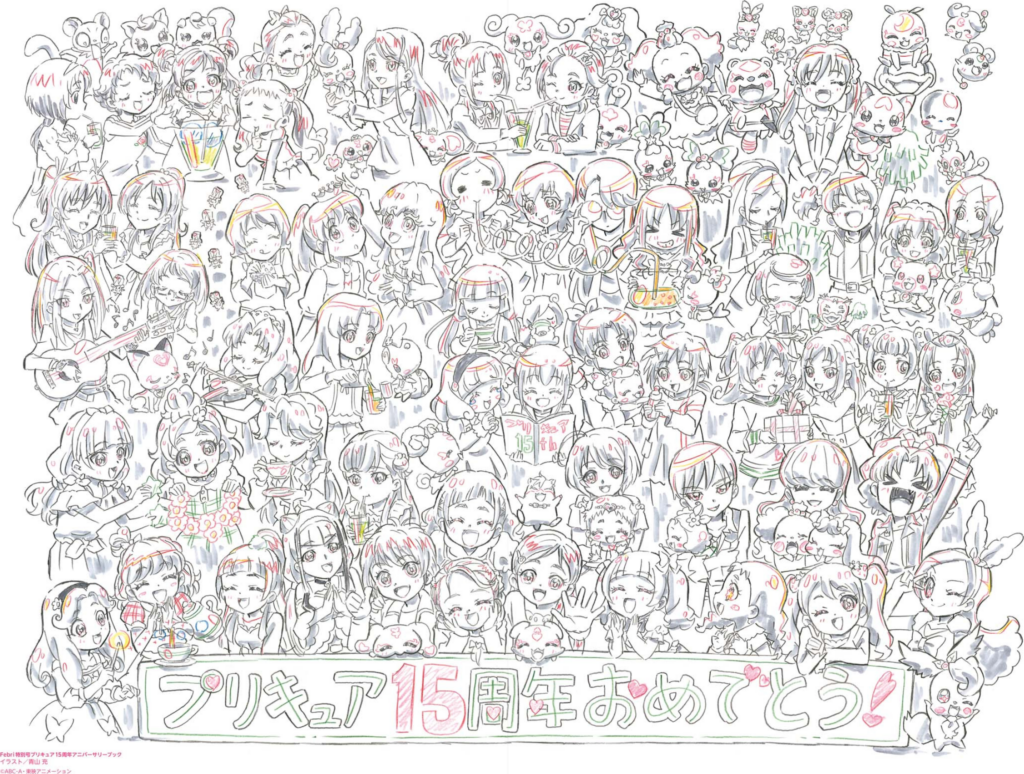
Interviewer: Do you prefer drawing key animation over doing character design?
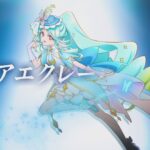
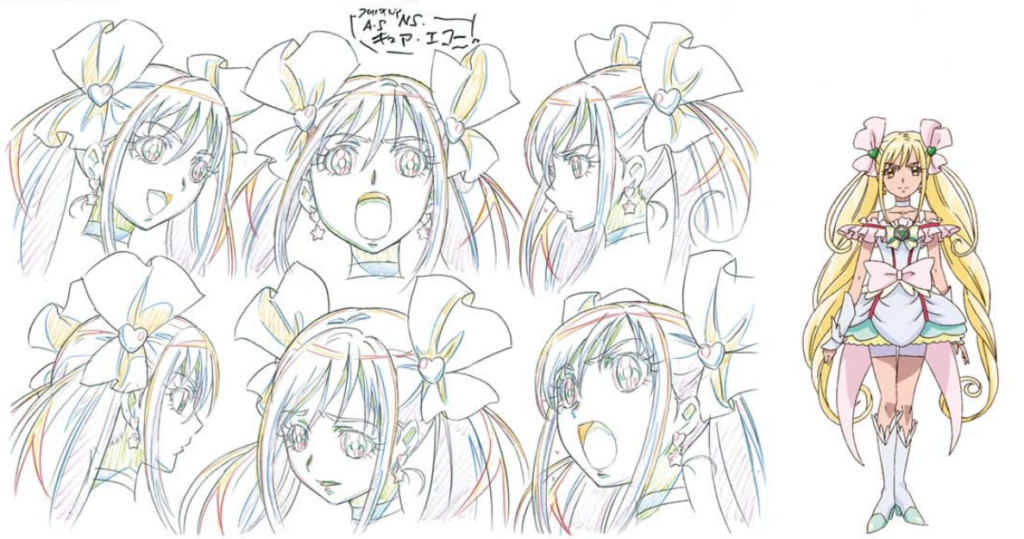
Aoyama: When it comes to characters, there are tons of people who draw them better than me. Even I think so when I look at them. For example, even though I do “character design” for All Stars, they are other people’s characters, so I can just be bold and go for it. On the flip side, with guest characters or someone like Cure Echo, I get lost… I feel like they are not fully complete at all.
Interviewer: How was Cure Echo born as a character?
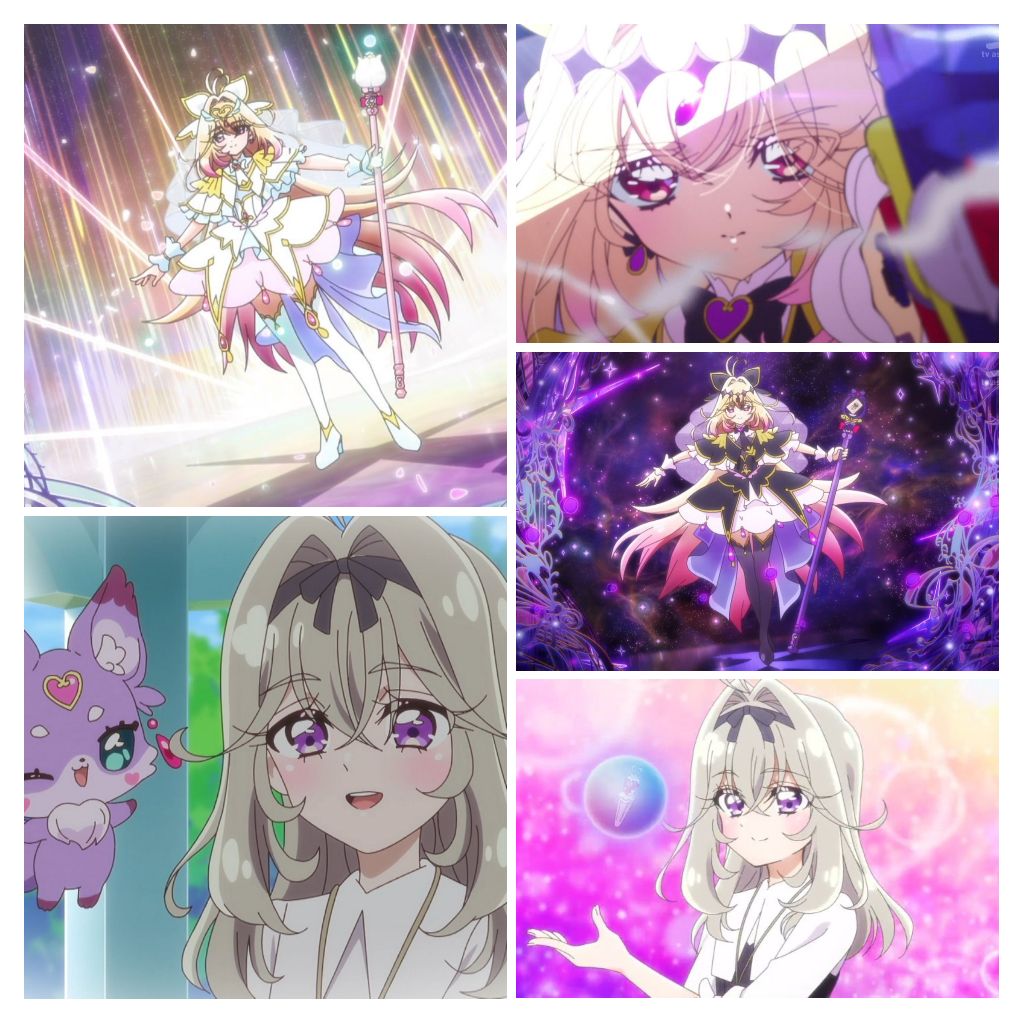
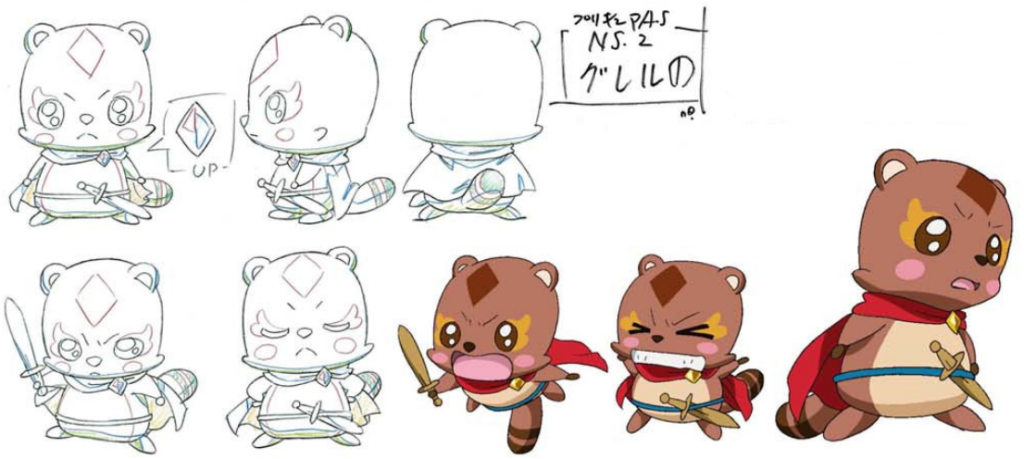
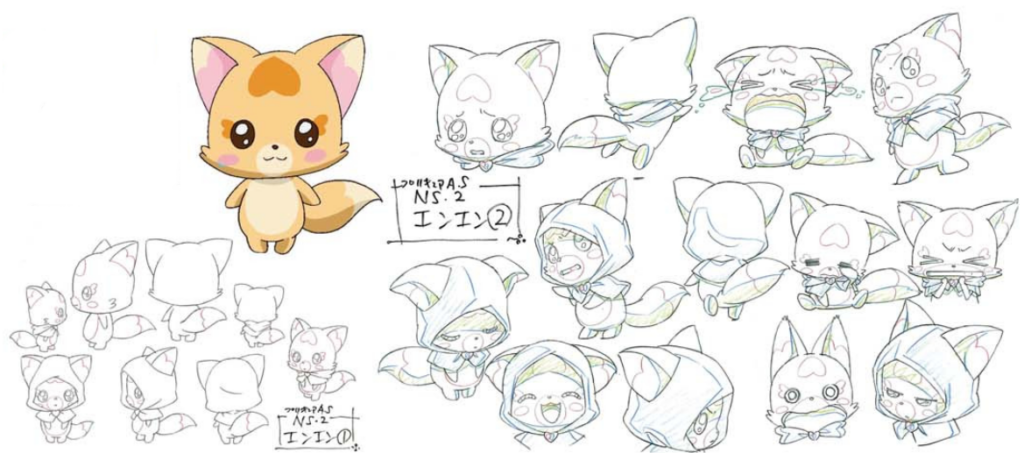
Aoyama: I drew three different designs, and the three of us: myself, Producer Atsutoshi Umezawa-san, and Yuu Kamiki-san, had a meeting asking “Which one is good?” and all of us picked the current design. But making a true original is really hard, and I just can’t draw the kind of elegant and cute characters that Toshie Kawamura-san can. As for fairies like Gureru, Enen, and Yumeta, Director Kouji Ogawa-san created all their base designs for me.
Interviewer: So that means Cure Echo, and Ayumi Sakagami, were your very first original characters with no base.
Aoyama: It was a ton of pressure. When I heard “Let’s put Cure Echo in,” I thought, “What on earth am I supposed to put in?” (laughs). Characters are definitely important in animation, but including the direction, you can’t really express a character’s true charm until they are turned into key animation. Looking at a character sheet, it is just a three-sided view, but when it becomes an animation, they have to do all sorts of acting, and sometimes they have to make expressions that aren’t even drawn on their expression sheet. So factoring all that in, in my case, I always think about whether they will become a character that can truly be put into motion when I draw the key animation.
Interviewer: The fairies you draw have great movement, but they are also just incredibly cute.
Aoyama: I don’t dislike fairies, so I like animating them too. When you are the animation director for All Stars, you’ll see people who are great at drawing humans but clearly struggle with the fairies. Everyone has their own strengths and weaknesses.
Interviewer: I really think All Stars wouldn’t have been possible without you.
Aoyama: The very first All Stars was the five-minute Cho~ Tanpen Precure All Stars GoGo Dream Live. Even back then, when I did the key animation, I thought, “Are you guys crazy?” (laughs). And it was 11 of them back then.
Interviewer: And yet, you still accepted the theatrical movie after that.
Aoyama: People today might not understand, but I’m from the generation where you are told to “be thankful you even got a job,” so my mindset is that if a request comes in, I do the work. I just kept doing that, and it ended up like this (laughs).
Interviewer: You manage your own work, so you are free to do it, and you are free to quit, right?
Aoyama: I am able to be where I am now thanks to Toei. Going to Toei allowed me to establish my own stance, taking on job after job, handling them in my own way, and eventually, it took its current shape, which brings me to doing interviews like this… So as an animator, I have had an incredibly happy life. It is not like I did things that just anyone would be allowed to do. So even as I say, “I’m gonna quit!”, I have this internal conflict knowing it is just me being selfish.
Interviewer: It is a bit cliché, but who is your favorite character in the Precure series?
Aoyama: Actually, I like Syrup from Yes! Precure 5 GoGo!. I like his human version, and I like him when he’s a bird, too. He was really hard to draw, but he is so cute in his fairy form. That being said, that fairy design is also quite complex. So getting the balance right was difficult. I would feel happy myself whenever I managed to draw Syrup well (laughs).
Interviewer: You’ll be 65 next year, right? How long do you plan to keep working as an animator?
Aoyama: It depends on how long the production side wants to keep using me. When I retire, I want to draw pictures for fans for a certain price per piece. Then I won’t have to draw key animation anymore, right? (laughs).
Interviewer: You were also an instructor at the Toei Animation Institute, so maybe there’s a path there!?
Aoyama: Am I suited for that? It would be nice to spend the rest of my life like that. Well, they will have to pull me out of the Precure series rotation first (laughs).
build note: The Toei Animation Institute was a training center for animators and voice actors operating from 1995-2011. Aoyama was a Permanent Lecturer there at the time of its closing. Notable graduates include Scriptwriter Junko Komura, Directors Atsushi Nishigori and Yuuta Tanaka and Character Designers Yuuki Hayashi, Emiko Miyamoto and Atsuko Watanabe.
Interviewer: Finally, please give some advice to those aiming to become animators.
Aoyama: You really just have to keep your feet planted on the ground and draw, one frame at a time. It is suffocating if it is all work and no play, so it is fine to have hobbies, but normally it is just a gritty grind of facing your desk every day. Drawing day in and day out is the job, after all. The ones who put in the effort survive, and whatever you do comes back to you. In the end, I think it is a profession where you have no choice but to do it yourself.
Interviewer: Please give a brief message to the Precure fans as well.
Aoyama: I always give it my all in my own way, doing a job where I continue to draw every day while constantly reflecting on my own work, so I hope you will all continue to watch and support us in the future.
Profile – Mitsuru Aoyama
Born in 1954 in Niigata Prefecture. Since Toei Animation began producing the Sunday morning 8:30 AM (Nichiasa) block, he has been single-handedly doing the key animation for one episode per show. He has worked on character designs for the Bikkuriman series, BE-BOP HIGH SCHOOL Bootleg, GS Mikami, and every single series of Precure All Stars.
STAFF COMMENT: Takashi Washio
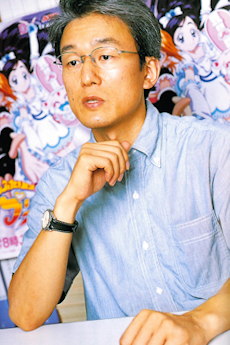
Executive Officer and Head of the 1st Visual Planning Department at Toei Animation. Born in Akita Prefecture in 1965. Joined Toei Animation in 1998. He was in charge of TV series from Futari wa Precure (2004) to Yes! Precure 5 GoGo! (2008), and movies like Precure All Stars DX to DX3 (2009, 2010, 2011). His other works include Kuuchuu Buranko, Kaidan Restaurant, Toriko, and Oshiri Tantei.
It has been a little over 20 years since I started working in anime, but right after I joined, I heard rumors going around: “There’s this extraordinary animator named Aoyama-san…” I remember thinking, “Anyone who draws all the key animation for a whole episode by himself must be super grumpy and scary…” But when I actually met him, I was surprised to find he was a quiet, mild-mannered, and gentle person.
The project where I caused that gentle Aoyama-san the most trouble has to be the Precure All Stars DX movie series. Nearly 20 Precures appear in a single movie. They all have so much hair volume, it is bouncing everywhere, and their outfits have countless overlapping layers… that is just cruel, right? (laughs).
For the first movie, I managed to surprise Aoyama-san: “14 of them? That is a huge number,” but he still drew them. For the second movie, his expression clouded over a bit: “17… it went up again, huh…” Then, during the third movie, when I called out to him in the staff room, “Aoyama-san, we’re counting on you again,” he was working but spun around and said with a remarkably serious face, “Washio-san, I have something I need to discuss with you after this job is over.” I remember thinking, “I definitely went too far!” We never did have a formal talk after the movie was released, though…
I feel like the expressions of the Precure drawn by Aoyama-san were always so bright. Of course, there are painful moments and tough scenes, but Aoyama-san’s art always oozed a sense of everyone pushing past that to see what lies beyond. I think it allowed the children watching to envision “hope for the future,” which is incredibly important. I firmly believe that was a reflection of Aoyama-san’s own good nature.
Aoyama-san always casually accepted the most gruelling jobs and continued to leave behind results that exceeded everyone’s expectations. Please continue to guide the way for us as our pioneer for a long time to come!
STAFF COMMENT: Takashi Ootsuka
Born February 23, 1981. He spent 12 years at Toei Animation, and worked alongside Aoyama-san for a large part of that time. They notably teamed up on all three films in the Precure All Stars DX series. According to himself, he is one of Aoyama-san’s biggest fans, right up there with Yoshihiko Umakoshi-san, Toshie Kawamura-san, and Tatsuya Nagamine-san.
My first encounter with Mitsuru Aoyama-san was probably about 30 years ago with the Bikkuriman anime. For some reason, I just remembered the name “Mitsuru Aoyama” from the opening credits. Then, about 16 years ago, I was blessed with the opportunity to meet him at Toei Animation. Back then, rookie assistant episode directors were often paired up with Aoyama-san first, and the memory of marveling at Aoyama-san’s sheer volume of work and technical skill right before my eyes is still vivid in my mind. While falling in love with his soft yet strict personality, he really trained me in many ways on the job.
After that, on Precure, he put up with my selfishness as a rookie episode director over and over again, and when I was appointed as a movie director for the very first time, Aoyama-san was the one I asked to be the animation director. I asked the veteran Aoyama-san to take the front lines and lead the animation for a “movie where all the Precure assemble,” something completely unprecedented in terms of animation. I’ll never forget how incredibly humble he was at the time, saying, “If you’re really okay with someone like me…” And then he showed us a performance that blew past our expectations by a good two levels, which really kept me on my toes.
“As a performer (animator), I will answer the director’s requests as much as possible.” That is Aoyama-san’s stance, and it hasn’t changed no matter how much he ages. I respect him so much. As a director myself, it is the ideal way I want to be toward the directors working under me. Also, his kindness and consideration toward the staff are incredibly polite, and he has always been my role model.
Even after I went freelance, whenever I go to Toei Animation for work, he always says hi, and he’ll invite me out for tea after my meetings are done. He still treats me so well. When I look at Aoyama-san’s animation, I can feel this incredibly comforting kindness, and I just love it. It is almost like a father drawing for his daughter or grandkids; there is zero malice in it. There are very few artists like that, and I think it is precious. I want him to keep on drawing for a long time. But, as just one of his fans, I’d be absolutely thrilled if he could continue to work as long as possible while taking good care of his health and not pushing himself too hard.