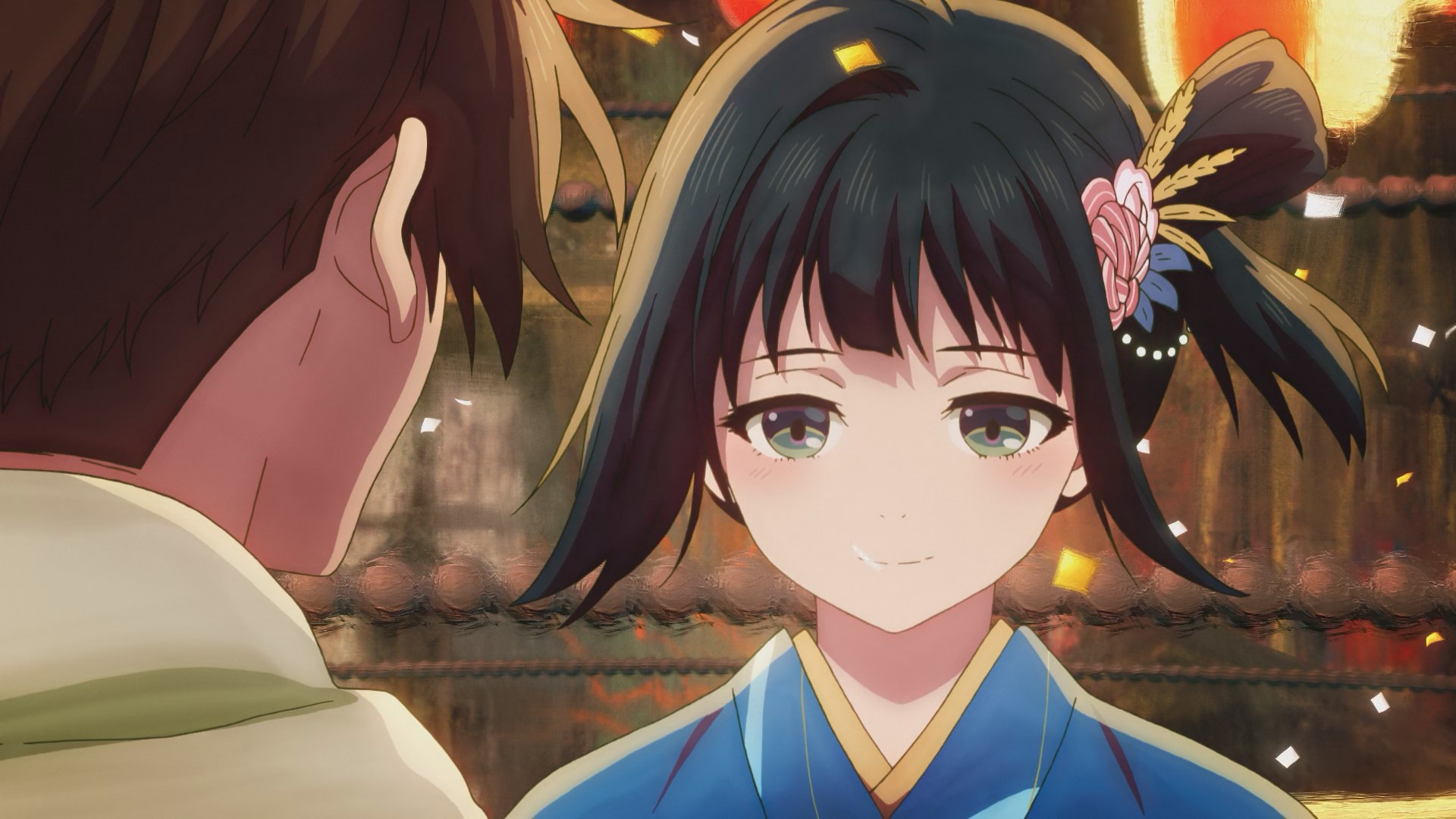
Hello everyone, if you’ve been following along with Sparks of Tomorrow (Denmoku), you’ll now be caught up to where I got up to during the world premiere in May (or even an episode ahead)! Finally, you can see how fantastical the world is, and how silly the faces can be!
Curiously, the staff interviews on the Japanese website continue to not be translated for some reason, so we’re still continuing publishing the translated articles on here! We will stop publishing these if the English site does end up putting them up however. Not much point otherwise.
This interview has Director Minoru Ota as well as Sound Director Youta Tsuruoka talking about how Sparks of Tomorrow grew from a PV to the anime we see today as well discussing the music and the casting choices on the show. We’ve not had any interviews for sound design yet on the blog so this’ll be pretty novel for us too!
Translation by “nui”, Editing by me. Sparks of Tomorrow Staff Interview Vol.2 was originally published on https://denkimokuroku.jp in July 2026. Original Link: https://denkimokuroku.jp/special/interview/02/
Minoru Ota (Director) x Youta Tsuruoka (Sound Director)
“A world connected to the Kyoto we know”
Interviewer: First off, I would like to ask Tsuruoka-san. When you first came into contact with the planning and scenario for Sparks of Tomorrow, what kind of work did you think it was?
Youta Tsuruoka: For this project, the anime adaptation was announced about 8 years ago, and thinking back to the PV1 after that, there was a pretty long span of about 4 years. That PV gave off a rather heartwarming vibe, but as it took concrete shape, Director Minoru Ota told me, “It is steampunk and horror.” I thought, wow, it sure changed a lot! (Laughs) I realized the amount of work I had to do just blew up.
Minoru Ota: It definitely got a lot more chaotic, right?
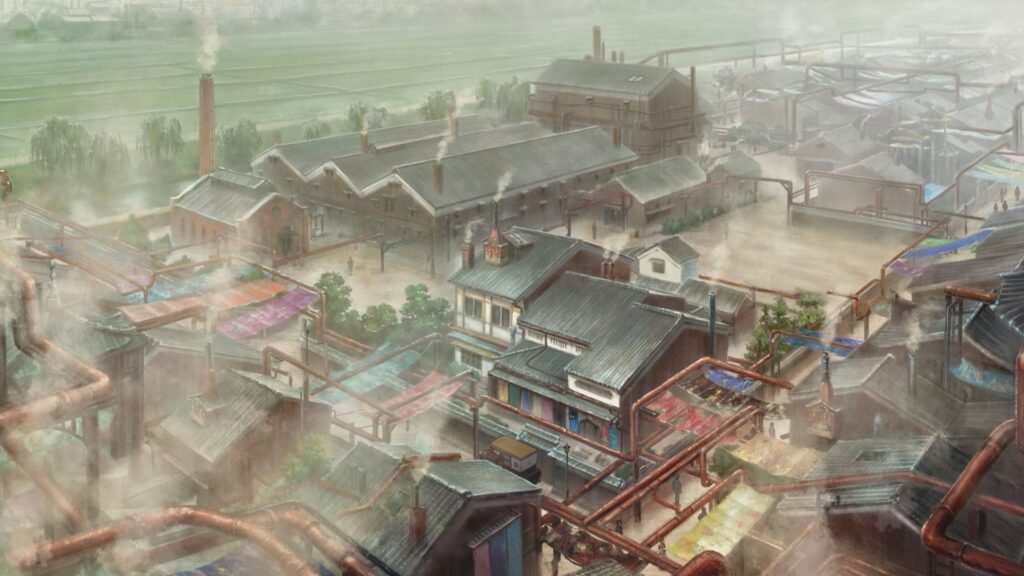
Tsuruoka: Yeah. But that “steampunk” is a bit different from your typical steampunk tropes. There is billowing smoke, and the world is dark, so it is steampunk in that sense, but it is actually closer to the literal “steam” of steam power. So it is not the kind of steampunk with gears and high-rise buildings everywhere.
Ota: That was intentional. I wanted to make it a world that is connected to the Kyoto we know today, but just slightly off.
1: Kyoto Animation Corporate CM “Meiji Edition”
Interviewer: What exactly did you mean by “horror”?
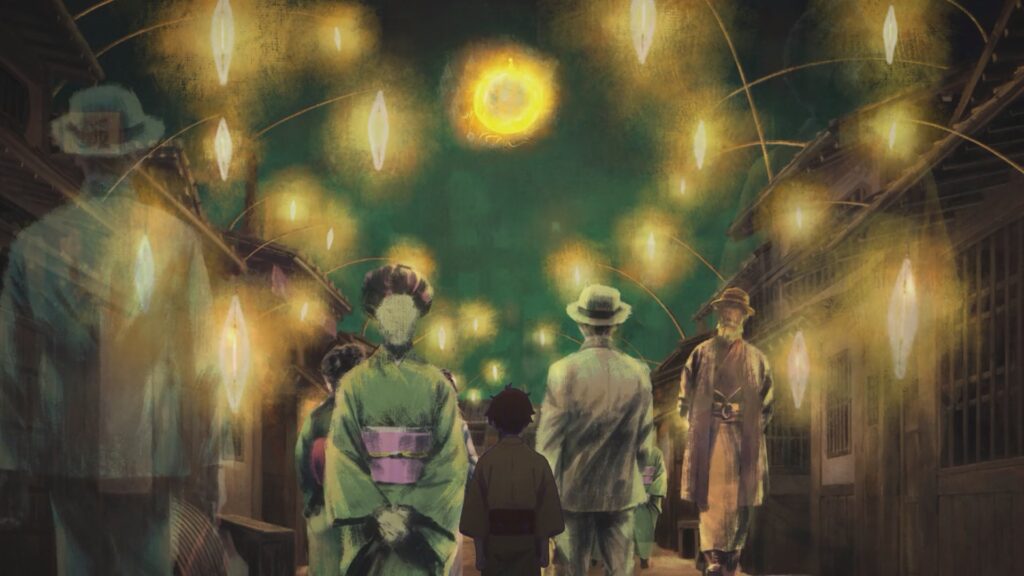
Ota: For me, I definitely wanted to create some dark elements in the background art. Things like gloom and darkness, parts that are a bit mysterious. Compared to the brightness that electricity symbolizes, I wanted to show the darkness of an era without lights. Kihachi’s future sight is like that too. I used the word “horror” in that sense, but maybe it wasn’t the most fitting word! (Laughs)
Tsuruoka: It is also the era; the darkness really stands out against the brightness of electricity. Without lights, everything is just dark. I completely understand wanting to properly contrast that. But it is not horror. (Laughs)
Everyone: (Laughs)
Interviewer: Ota-san, in another interview you mentioned wanting to take on new challenges with Kyoto Animation. Did you convey that specific direction to Tsuruoka-san?
Ota: I don’t think I explicitly told Tsuruoka-san that I wanted to make something “new.”
Tsuruoka: But you did have the intention of not just doing what has already been done, right?
Ota: Yeah. I probably didn’t put it into words, but I feel like you kind of picked up on that intention.
Tsuruoka: The storyboards, including the visuals, were very ambitious. Some of it might have been tough to actually pull off, but direction-wise, I felt it was an approach trying to break out of Kyoto Animation’s usual shell.
Ota: Thank you. But it was a lot of trial and error, basically fumbling in the dark. Thanks to Tsuruoka-san’s musical support, though, I think we were able to bring it all together nicely.
Tsuruoka: We were really feeling our way through it. That is exactly because we were purposely avoiding our usual routines. But as the series went on, it felt like the core of the show gradually came into focus. It wasn’t crystal clear from the start, but rather a work where the precision deepened as we explored it
Interviewer: So rather than the director giving you specific requests, was it more about Tsuruoka-san picking up on things from the storyboards?
Ota: Right. I think all I really told him was that it is a “boy meets girl” story and, looking back, the somewhat misleading “horror” label. The rest was just my impression that Tsuruoka-san read between the lines. While I was talking frantically, I could see Tsuruoka-san next to me making a face like he was already building his own interpretation. (Laughs)
Tsuruoka: It is not like I wasn’t listening to you! (Laughs) But tying into the trial and error we just talked about, things weren’t completely set in stone from the beginning. That is exactly why we needed that initial process of exploration.
Interviewer: I heard that music played a massive role in that exploration process. Tsuruoka-san, you apparently gave Ota-san a “music line proposal”. First off, what exactly is a music line?
Tsuruoka: Simply put, it is a plan where I look at the storyboards and say, “I will add music from this cut to this cut.” On top of that, it includes the meaning behind the music, like, “The purpose of this track is this.”
Ota: You even gave titles to each scene, right? I was constantly fumbling around, but Tsuruoka-san gave titles like “The Future Seen in Meiji” to the scenes in Episode 1, and that is when the meaning of the scenes finally clicked for me.
Tsuruoka: I end up explaining the meaning of the storyboards to the guy who drew them. (Laughs)
Ota: That is exactly how it was! Since I was doing everything by trial and error, having Tsuruoka-san label things helped me finally understand the meaning of my own storyboards.
Tsuruoka: It is a pretty common thing when planning music. If you can’t see the thread of the narrative, putting music over it is pointless. You can’t put music where there is no meaning. Conversely, when there is meaning, you think, “I want music here.” You connect those meanings through music.
Ota: Up until then, I just had this image of music playing over visuals, like a climax track playing during a climax. But Tsuruoka-san attached music to the meaning of the scene. That was a really fresh discovery for me.
Tsuruoka: If you don’t do that, it stops being music and just becomes background noise. Sure, there are scenes that just need hyping up. But there is a difference between what needs hyping and what doesn’t. For Sparks of Tomorrow, it was crucial not to add music where it wasn’t needed.
Ota: Thanks to the music, I think the work gained a lot of depth.
“The Creators Were Also Constantly Experiencing ‘Eureka Evrika'”
Interviewer: What kind of orders did you give to Hitomi Koto-san, who handled the music?
Tsuruoka: This time, I specified the placement of the music on the storyboards quite concretely in advance. Like, “I am placing music here, and this is what it means.”
Ota: The exchanges between Tsuruoka-san and Koto-san were really interesting, too. Their emails got forwarded to me, and Tsuruoka-san would send back these very sharp, compact comments. Watching from the sidelines, it was fun seeing Koto-san get trained, so to speak. Also, having the scene’s meaning written out in detail gave me hints to adjust my own direction. Being able to read those exchanges was amazing.
Tsuruoka: I went back and forth with Koto-san a lot. Towards the end, our talks got even more specific. Naturally, as a musician, there is a desire to show off the music… to really hype things up. But sometimes that clashes with the story, so I wanted to keep that balanced.
Interviewer: So you received a lot of feedback from the musical direction, Ota-san?
Ota: It was huge. My whole way of thinking changed. I realized I should probably think harder before drawing my storyboards. (Laughs)
Interviewer: (Laughs) Did you mostly draw storyboards based on feeling before?
Ota: Yeah, I relied a lot on feeling. It is about what I want to show with the characters and how to grasp the theme of the scene. I was always just chasing the characters or the plot, but instead, I really needed to think about what I wanted to convey. For example, just saying “This is a scene where Inako is the protagonist” isn’t enough. To go further, I have to find the next layer of the theme, like, “This is a scene where Inako overcomes her conflict and grows.”
Tsuruoka: Finding the theme is tough. Plus, if you just flat-out say “This is the theme,” sometimes that is the end of it. Like, if you stop at “boy meets girl,” you are just describing the situation.
Ota: “Boy meets girl” is just the packaging.
Tsuruoka: In this case, it comes down to what ultimately drives those two, Inako and Kihachi. At first, we were constantly searching for their goals and the reasons they had to end up there.
Ota: We searched forever. The subtitle is “Eureka Evrika,” but on the creator side, we were constantly going “Eureka Evrika” too.
Tsuruoka: That subtitle, “Eureka Evrika,” is actually very thematic. Put simply, it connects to curiosity and a spirit of inquiry. Inako and Kihachi will explore a lot of things from here on out, but that exploration is depicted on a human scale. The title of the show is “20th Century Electricity Catalog: Eureka Evrika”, but it could just as easily have been “Eureka Evrika: 20th Century Electricity Catalog”. (Laughs) Thinking about it that way, Luna Goami-san’s opening song was truly a “theme” song.
Ota: Actually, the coined term “Eureka Evrika” was proposed by Luna Goami-san, and she included it in the lyrics. I remember when we were completely lost, we all said, “This is it!” and made it the subtitle.
Tsuruoka: We were only able to reach that point because we thought it through so thoroughly.
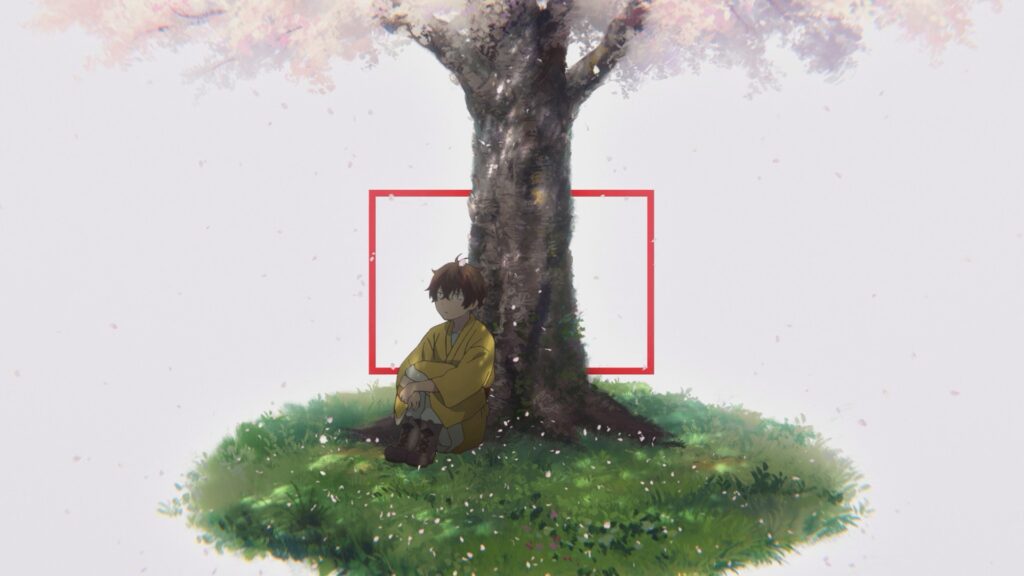
Interviewer: What kind of direction were you thinking of for the background music?
Tsuruoka: During our first music meeting, the director casually dropped “wind orchestra” to Koto-san. I was like, wait, what? (Laughs) We had prior consensus, of course. But the director’s main concern at the start was not making the target age feel too high. So, a wind orchestra made sense. And he was absolutely right. Strings tend to make it feel older and add a sense of luxury. With that in mind, brass and woodwinds are great. Winds alone can perfectly function as an orchestra, and it is different from a typical brass band.
Ota: Once the wind orchestra idea came up, every other idea just paled in comparison. You can feel the expansiveness of the world, and most importantly, I wanted the core music to feel like a boy meets girl story.
Tsuruoka: Yeah, a setup with just strings and piano might not have quite fit.
Interviewer: Episodes 1 and 2 have been broadcast and streamed. Looking back, how do you feel about the response?
Ota: I think every choice was the right one. Especially in Episode 1, when the background music kicked in as Yousuke was about to trash the Momokawa household, I felt a huge sense of relief. It fit perfectly, and it was just good. This was my first time directing, and that was the moment I felt everything we had talked about and planned totally clicked, including how the visuals and sound layered together. It was the moment I thought, “We are going to be fine.”
Tsuruoka: Rather than a response, it is more of a feeling that things went exactly as intended. It is still early on, so it was a good reassurance of our plan. The track count might be on the lower side for a TV anime, but including that, it confirmed that this was the right way to make Sparks of Tomorrow.
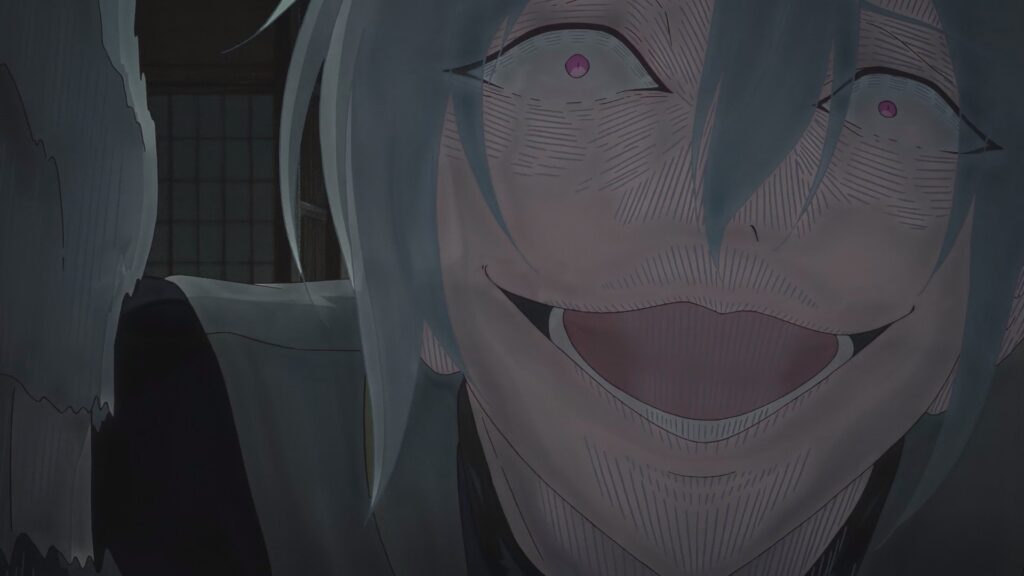
“To a New Frontier for Kyoto Animation Unlike Anything Seen Before”
Interviewer: Let’s talk about the acting. Can you tell us why you cast Yuma Uchida as Kihachi and Sora Amamiya as Inako?
Ota: First, they fit the characters perfectly. Kihachi is the protagonist, but he has a dark side to him. There is a sort of shadow there. On the other hand, I wanted someone with an incredibly strong core to their voice for Inako. On top of that, both of their responses to Tsuruoka-san’s direction were incredibly accurate. I felt I could completely trust these two.
Tsuruoka: Feeling like you can trust them is huge. This is Ota-san’s first time directing, so I am sure he was anxious about everything. You want to eliminate as many anxieties as possible, right? Knowing you can leave things to them and that they will pull you along is really important.
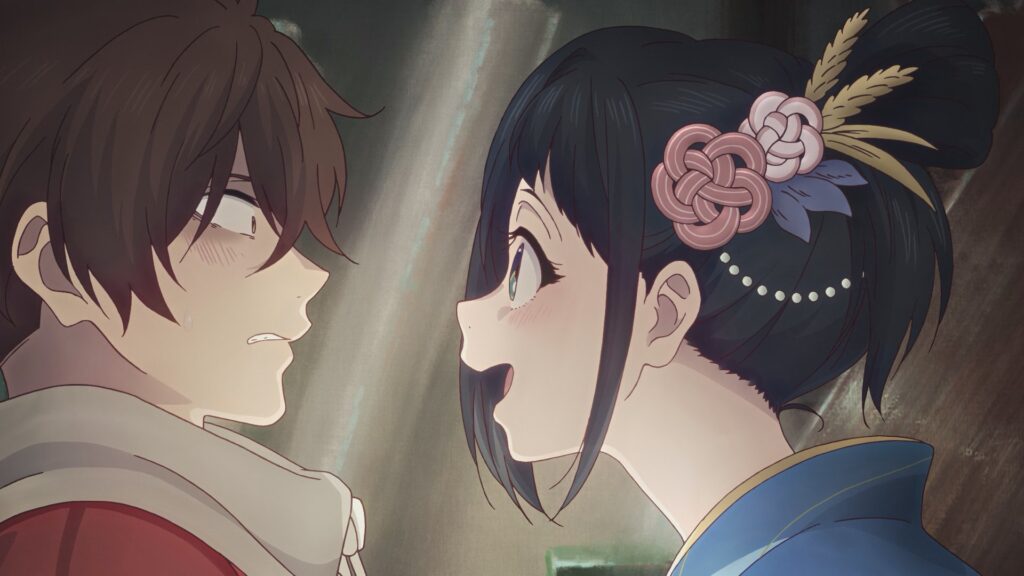
Interviewer: What aspects of the cast’s acting were you paying attention to, Tsuruoka-san?
Tsuruoka: The fact that it is not a modern drama. I went in thinking, “We are making a period piece.” However, it wasn’t about having them say “gozaru” or anything, but rather making sure they didn’t use modern intonations. Basically, everyone performed very naturally and flatly. “Flat” doesn’t mean monotonous; it means no weird habits or modern inflections. First and foremost, I am glad we had people who could pull that off.
Interviewer: I heard from the cast that there was a direction to give it a “period piece vibe.”
Tsuruoka: If modern people act, they naturally talk like modern people. But voice actors are properly trained, so they all have the foundational skills to act naturally. If you truly play it flat, it won’t sound “modern.” Getting that starting point secured was the first step. “Meiji” is basically a period piece from our perspective today. We didn’t want to make a strictly historically accurate period piece, but we definitely wanted to convey that it is not the modern era.
Ota: In that regard, Hiroshi Yanaka (playing Jinemon Momokawa) helped us out tremendously. Even down to a single intonation, he studied so hard to speak in a way that fit the era.
Tsuruoka: He really did his research.
Ota: The staff and cast all sat up a little straighter at every recording session. I really hope people pay attention to how Inako’s dad talks.
Interviewer: I heard Kouki Uchiyama was specifically chosen for the role of Yousuke Mizoe rather than auditioning.
Ota: The reason we asked Kouki Uchiyama to play Yousuke was that, even from the character creation stage, while it wasn’t quite written for him, I just couldn’t imagine anyone else doing it. (Laughs) I figured it was natural to prioritize that image.
Tsuruoka: But Yousuke is just screaming the whole time, right?
Ota: Yeah. Uchiyama-san doesn’t do a ton of roles with such intense screaming, so Tsuruoka-san was like, “Really?” In fact, Uchiyama-san would go home every time saying, “I am exhausted…” (Laughs)
Tsuruoka: At first, it was like, “This is gonna be rough, so we are counting on you.” Even at the studio, we would start with, “Sorry to do this to you so early in the morning.” (Laughs)
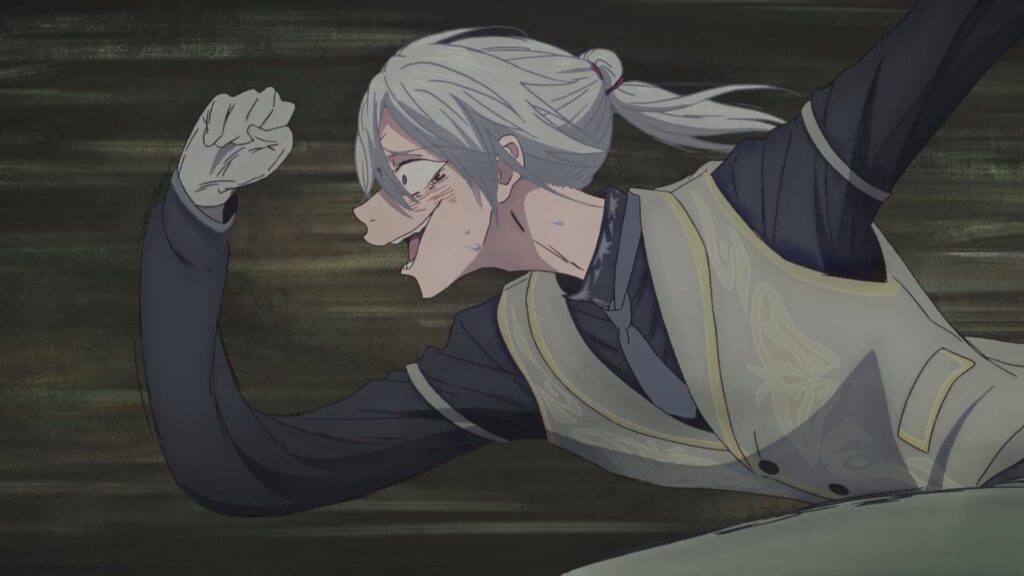
Interviewer: Yousuke has a lot of highly comical scenes, including his facial expressions.
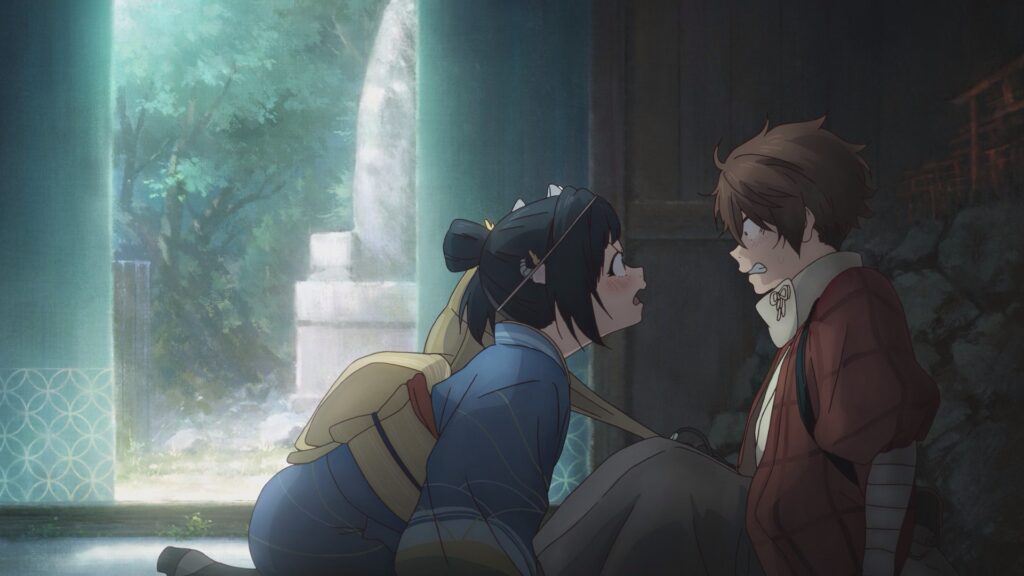
Ota: As a direction for everyone, not just Yousuke, I told them that while the characters might make funny or weird faces, they aren’t actually fooling around. They are living earnestly. So I asked the cast not to force their acting to be overly comical just because the character’s face changed.
Tsuruoka: It was a great decision not to highlight every single funny face. Kihachi and Inako are a parade of weird expressions, too.
Ota: Yeah. If we highlighted all of them, it would have gotten way too noisy.
Interviewer: For a Kyoto Animation work, there are a surprisingly large amount of deformed expressions.
Ota: I think you can feel a bit of Tatsuya Ishihara-san’s2 blood in there. While we are exploring new territory, I didn’t want to just suddenly push viewers away. It is not about whether the face is cute or not, but the timing of throwing in a weird face. Sometimes they just pop up in places with no real meaning.
Tsuruoka: Ota-san really inherited that aspect well. But things like Kihachi’s fast talking are something we haven’t really seen before. The fast talking as a way to express his personality was really interesting.
2: Director and Chief Director of the “Sound! Euphonium” series / “Sound! Euphonium” Official Website.
Interviewer: Finally, please tell us the highlights for Episode 3 and beyond, including the sound design.
Tsuruoka: Episodes 1 and 2 were stages where the trial and error process was still pretty evident, but from Episode 3 onwards, some very distinct musical approaches start coming through. The precision is much higher, and by the end, I think we reached a point where I could just give it an unconditional OK.
Ota: From here on out, Hitomi Koto-san captures “Eureka Evrika” from her own perspective, and the precision just keeps going up. I think the beginning, middle, and end will sound quite different. All the staff members are doing their own “Eureka Evrika”, so I would be thrilled if viewers could feel the precision of everything levelling up towards the second half.