Hello everyone, it’s him again. Isao Murayama has decided to talk about his hit anime Star Detective Precure to another anime magazine. Looking forward to someone spilling the beans on the extraordinary lengths they’ve had to undertake to keep this guy in the studio away from the offices of the media.
Anyway, this time round, he’s summarising the first cours of the show. Including a bit more about everyone’s favourite Precure, Cure Arcana Shadow! As well as the evil organisation she’s aligned with, PHANTOM. Before we start though, may I also mention that I’m now as of Ep.21, helping out with gathering staff credits for Star Detective Precure alongside some very cool people. Do check out the staff lists on KeyFrame Staff List and support our work on there!
Without further ado then, let’s start reading this interview!

Translation by “nui”, Editing by me – Interview – Isao Murayama was originally published in Animage in June 2026.
Helping Children Understand the Concept of “Time”
Interviewer: What went through your mind when you first received the offer to be the series composer for this project?
Isao Murayama: Well, first off, looking at old-school “detective stories,” the detectives themselves actually don’t have much personal drama; they aren’t really the main characters. The drama usually lies with the clients and the culprits, which is where all the conflicts and motives are portrayed. Of course, just having the title of Precure gives them a massive presence, so I figured we could definitely make them stand out as protagonists. Still, I thought it was going to be tough to put together. For example, characters like Kindaichi Kosuke or Sherlock Holmes don’t have personal drama, but they make up for it by being highly eccentric or quirky, which makes their stories work. We can’t exactly write “Precure” characters like that, though.
Interviewer: On top of that, I imagine you had some struggles on the mystery-solving side of things as well.
Murayama: I definitely felt that a “whodunit” story would be difficult for our main target audience of children. However, I really wanted to stick to the concept of “using logical deduction,” so we are aiming to create mysteries that even small children can just barely manage to solve.
Interviewer: Considering the viewing age, I think it’s also necessary to find ways to avoid making it a cynical story where you “start by doubting the people around you.”
Murayama: We handle that by making the culprit “the Phantom Thief Guild’s doing” in every single episode. Phantom thieves are unrealistic entities that pop up in movies and novels. They don’t have any heavy human drama as suspects. Since they are that kind of phantom thief, we can treat them almost like symbols. It feels closer to a quiz where we say, “The phantom is among these people, so please guess who it is!”
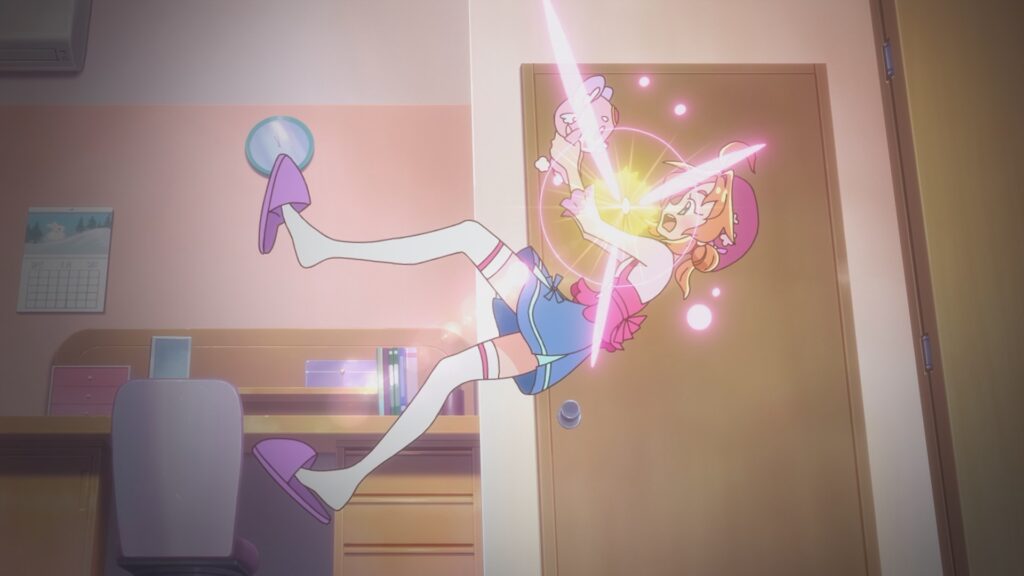
Interviewer: Time slipping is also a very defining element.
Murayama: I made it a rule to avoid time slipping in the Precure series I’ve worked on. The concept of time is just too hard for small children to grasp, you know.
Interviewer: And that’s exactly why in Maho Girls Precure! ~MIRAI DAYS~, which has an entirely different target demographic, you were able to freely use time as a central theme, right?
Murayama: Exactly. However, since this current series is a detective story, we are intentionally doing something a bit more complex by scattering foreshadowing and mysteries throughout. We’ve set up various narrative tricks like, “Why did Anna come to 1999?” “Why did Mikuru know about Precure?” “What’s the reason Ruruka is in the Phantom Thief Group?” and “Who is Cure Eclair?” We hope everyone looks forward to finding out all the answers.
Interviewer: It seems like you’re building the story for a broader target audience, including the time slip aspect.
Murayama: Of course, we are taking great care to ensure small children can enjoy it too. For instance, if someone says “I want to go back to 2027” using the specific year, it might not really click with them. But if they say “I want to go back because there’s an important birthday party,” I think they’ll completely understand.
Interviewer: Speaking of the future, wouldn’t Mikuru and Jett-senpai be interested in Anna since she’s a time traveler from the future? We haven’t really seen interactions like, “What’s the future world like?”
Murayama: That would also get a bit too complicated for the kids, so we try not to put too much weight on it. We just operate on the assumption that “they talked about it off-screen.” Overall, we intentionally keep the depiction of the era gap subdued as well. For example, keeping it at a simple level of “facial recognition isn’t common yet in the 1999 world.” We keep it just enough to lightly tickle the nostalgia of the parents watching.
Would a Cool-Type Villain Be Too Scary?
Interviewer: What kinds of things did you discuss with the Series Director, Kouji Kawasaki-san?
Murayama: First, the characters and the stage setting. The setting I initially proposed was an inland, newly developed residential area. In 1999, the town Anna lived in hadn’t been developed yet and was just an empty field, and the detective agency was in a town a short train ride away. That setup actually made all the narrative tricks I planted work perfectly and kept things logically consistent, even more so than the current setting of Makoto Mirai City. However, Kouji Kawasaki-san suggested that “A coastal town might look better on screen,” so we kept the narrative tricks alive while shifting the setting to the current city.
Interviewer: As a result, it gave off a bit of a London vibe, which I think fit the detective concept perfectly.
build note: London is not a coastal city. It’s about an hour’s drive to Southend (East Coast) or Brighton (South Coast) which are actual coastal towns.
Murayama: Another major thing was the core theme I wanted to tackle. I really wanted to focus on “lies.” Nowadays, you see people who insist they are telling the truth even when they are obviously lying, or people who swallow easily obtained information as the absolute truth without a shred of doubt. Or conversely, someone telling the absolute truth gets completely branded as a liar. I wanted to make “lies” a theme just like that. I actually tried to do something with “lies” during MIRAI DAYS too, like a “being suspected as a witch” storyline, but it didn’t fully materialize and I could only include it vaguely. This time around, since it’s a detective story, I felt we could tackle the theme head-on.
Interviewer: Speaking of witches, that definitely brings to mind medieval witch hunts.
Murayama: Yes, which totally connects to modern-day internet lynchings. Looking at social media recently, I really feel that the line between lies and truth has become incredibly blurry.
Interviewer: Fake information being accepted as truth and taking on a life of its own is quite dangerous, isn’t it?
Murayama: I feel that a lot these days. The idea of “don’t be misled by lies, look and think for yourself” is honestly so obvious that it probably wouldn’t have worked as a theme a little while ago. But right now, I felt it was a message we absolutely needed to convey to children through “Precure.”
Interviewer: In episode 11, when the Makoto Jewel resided in a fake item, Cure Arcana Shadow mockingly said, “Lies aren’t entirely a bad thing,” and Cure Answer completely rejected that. It felt like a perfect symbol of the conflict between truth and lies.
Murayama: Yes, I was very conscious of that when writing. That was a line only Cure Arcana Shadow could deliver, and this axis of conflict is something that will definitely continue to appear moving forward.
Interviewer: Did you introduce the Makoto Jewel into the story to specifically symbolize that conflict?
Murayama: Yes, exactly. As a result, I intentionally wrote it to conclude with the message, “It was exposed as a fake to the public, and the real one ended up being displayed.” We structured that specific episode more in the format of a phantom thief genre rather than a standard detective story.
Interviewer: It was a very Arsène Lupin-esque episode, where the phantom thief uncovers the mystery behind the incident.
Murayama: The underlying question of “Is what Ruruka did really entirely wrong?” is a theme we generally explore in the episodes where she attacks as a phantom thief.
Interviewer: In episode 12 as well, she tries to think of a way to get only the Makoto Jewel without hurting the feelings of the friendship bracelet’s owner. It gives the distinct impression that she isn’t just blindly after the Makoto Jewel.
Murayama: That’s the one thing I’m most careful about when writing Ruruka. I want to show that she isn’t just a bad girl who commits theft. To put it bluntly, I want the kids to like her! So I’m really glad we placed her on the enemy side as someone who challenges Anna and Mikuru with the question, “Which is right, lies or the truth?” It also perfectly highlights Anna’s character, since she is totally incapable of lying.
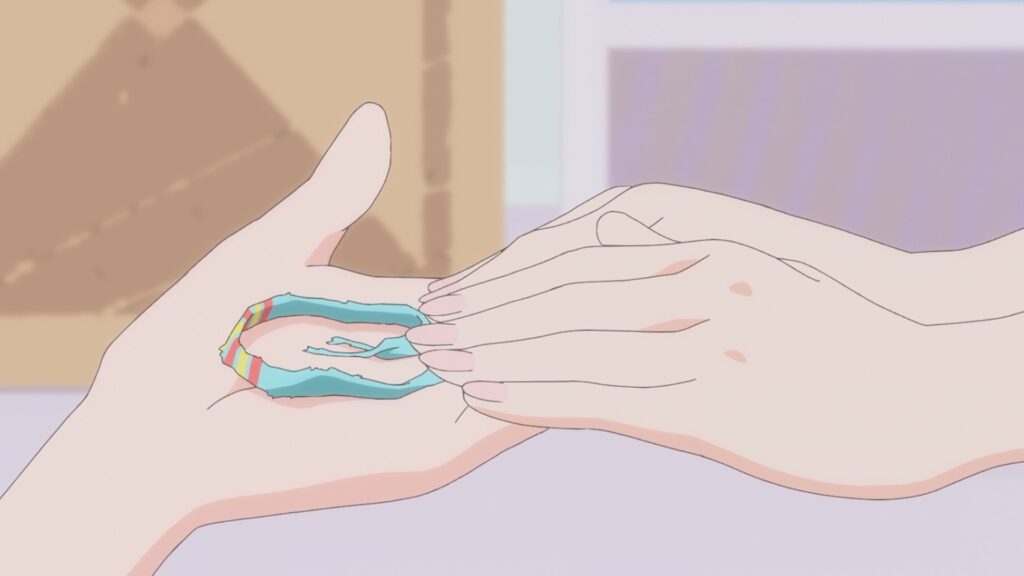
Interviewer: From episode 11 onwards, Cure Arcana Shadow’s attack where she pokes Cure Answer and Cure Mystic’s cheeks during battle is incredibly cute.
Murayama: That’s really more of a gesture than an attack (laughs). Especially in episode 11, since it was Arcana Shadow’s big debut, we wanted to show that she wasn’t just powerful, but also playful. We paid incredibly close attention to her movements and dialogue to make sure the kids wouldn’t end up hating her.
Interviewer: It’s a lot of fun, she has a very mischievous kid vibe.
Murayama: I think she turned out to be a very charming character. A hardcore cool character is awesome, but if an enemy character is entirely cool and detached, children might just find them scary. We kept that in mind while crafting her personality and unique traits. There have definitely been cool Precure in past series, but that was strictly within the context of them being allies.
Viewers Can Solve Mysteries During Commercial Breaks
Interviewer: We touched on the difficulty level of the deductions earlier, but what do you actively keep in mind when actually turning them into plots and scripts?
Murayama: I figure out the right balance as we go. Basically, I come up with the tricks for every single episode myself first, and then I send out the requests to the writers (screenwriters) for each episode. If I didn’t, it would just be way too much of a burden on them. We absolutely cannot use scientific knowledge, math, letters, or time tricks that are hard for small children to grasp. On the flip side, we also actively try to avoid making the puzzles too simple, like basic spot-the-difference games or simple mazes. So it’s quite a challenge.
Interviewer: So you try to aim right in the sweet spot between those two extremes?
Murayama: Exactly. We aim for a line where, if a parent and child are watching together, “the parents might figure it out” and “the kids might realize it during the commercial break.”
Interviewer: Looking back up to episode 19, which episode do you think hit that target line the best?
Murayama: Let’s see, the trick with the bride’s tiara in episode 1 really set the baseline standard for the series. If it’s a simple physical issue of whether a tiara fits into a box or not, it’s extremely easy for kids to understand visually.
Interviewer: The mystery with the toy robot in episode 13 was an irregular pattern that started right off the bat with guessing the culprit.
Murayama: The robot was actually a stretchy plushie all along (laughs). In episodes like 13, where there is a massive amount of information tied to the overarching plot, the viewers’ brains would completely short-circuit if the puzzle part was also difficult. So, we intentionally made the mystery easier. We also balance things out by simplifying the tricks or lowering the difficulty in episodes where we really need to focus heavily on character development.

Interviewer: How do you handle the actual requests and plot creation for each episode?
Murayama: Whether it’s the request sheet for the writers or the actual plot, I always start by figuring out the core theme of that specific episode. Then, I decide on the rough story, and on top of that, I figure out the trick for the case, what the Makoto Jewel will reside in, and whether we’ll feature any phantom thief trivia. On a broader scale, there’s the overarching plot for the entire series. We might say, “One of the series’ main mysteries will be solved in this episode,” and the specific trick for that week fits into that mold. Whether it’s individual episodes or the main overarching story, I just lock myself in my narrow, dark room and agonize over it, begging my brain to “Come up with something!” Days exactly like that have been continuing for over a year now (laughs).
Interviewer: (Laughs). I get the distinct impression that things are being fleshed out much more thoroughly at your stage compared to the previous series you’ve handled.
Murayama: When I send out requests to the writers, I don’t just give them the core trick. I sometimes write out the story flow, scene breakdowns, and even specific dialogue in much more detail than a normal plot. In that sense, you could definitely say it’s more tightly constructed than past series. Once a script reaches the final draft, I immediately have to make the request sheet for the next episode for the writers. Sometimes I honestly have to churn out four or five stories in a single week. The writers are so incredibly excellent that they crank out final drafts incredibly fast. Because of that, during script meetings, I sometimes secretly pray, “Please don’t let anyone’s script reach the final draft today!” (laughs).
Interviewer: As for the format of each episode, a major defining feature is that Anna and the others figure out the culprit at the end of the A-part, right before the commercial break.
Murayama: That’s entirely because we want to give the audience “thinking time” to figure out who the culprit is and reach their own conclusions. I really want them to think about it while watching the commercials. Of course, there are definitely episodes where we intentionally break that format to serve the story.
Interviewer: In episode 13, Anna and Mikuru said “You are the culprit!” right before jumping into the opening theme. I thought it was brilliant how you strictly stuck to the same format as the commercial break cliffhanger.
Murayama: We did do that, didn’t we (laughs). In episode 13, since Usonoir attacks, the absolute only way we could make it work was to put the incident and deduction part in the avant-title prologue. Even so, I figured we should still stick to the established mold.
Even With a Book of Prophecy, the Future is Like an Illusion
Interviewer: I heard it was Producer Masaya Aramaki-san’s idea to incorporate the motif of “Nostradamus‘ Great Prophecy.”
Murayama: That’s right. We hadn’t decided exactly how to utilize it, but if the story is heavily set in 1999, we really can’t avoid the “King of Terror coming in the 7th month.” So, we decided on a plotline where the enemy actively tries to become the Great King according to the book of prophecy.
Interviewer: The major key point that shakes up the Phantom Thieves’ side is that Anna and the two Star Detective Precure aren’t mentioned at all in that Tome of Mirages (Book of Future Freedom), right?
Murayama: Since we’re heavily using the Nostradamus motif, we absolutely had to introduce a book of prophecy. We made it something Usonoir possesses and places his absolute trust in. Then, we set up a cool conflict structure where Anna, who isn’t in the book at all, takes a brave step forward and says, “I will decide my own future without following a prophecy.”
Interviewer: I also love how you write “Mirai Jiyu” (Future Freedom) but read it out loud as “Mirage” (Illusion).
Murayama: The little middle-school boy inside me came up with that name (laughs). And he whispered that using the old traditional kanji for “Future” (未來) would look super cool, too (laughs). Essentially, the future is something akin to an illusion, right? Mashutan is the “Fairy of Fortune Telling,” so we tied it directly to her by establishing that the book was written by her ancestor.
Interviewer: Was Mashutan being an expert at fortune telling established from the very beginning?
Murayama: Not from the very start. When we were initially creating the character settings, I proposed that Jett-senpai be the “Fairy of Invention” and Pochitan be the “Fairy of Space-Time.” By the way, Mashutan’s fortune-telling accuracy is actually incredibly high!
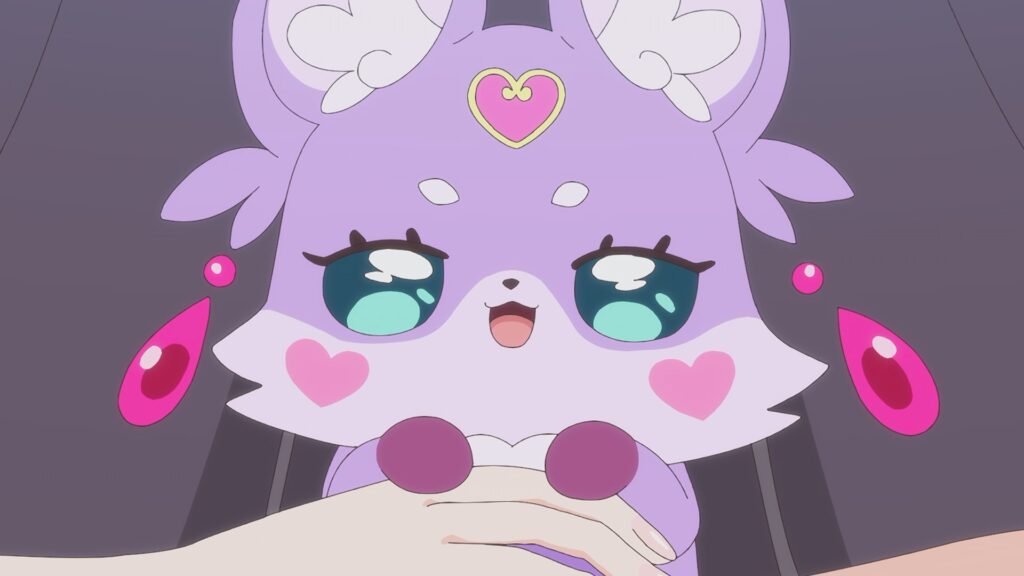
Interviewer: She’s completely hit the mark every single time so far. Also, Usonoir appeared in episode 13, which felt surprisingly early.
Murayama: To keep the viewers from getting bored, we roughly section the story into six episode chunks. Then, there’s generally a larger narrative milestone every cours. We brought Usonoir in to wrap up the first cours with a bang and deepen the mysteries a bit. Besides, the act of stealing gives off a very raw, insidious vibe. That uncomfortable impression gets even stronger when you can’t actually see the person pulling the strings. So, we had the big boss appear early. The name is a combination of “Uso” (Lie) + “Noir” (Darkness), but it can also be playfully read as “Uso no Waru” (The Liar Bad Guy). The little boy inside me totally named him, too (laughs).
Interviewer: I’d love to ask about the other members too. The very first one to deploy was the flashy phantom thief, Nijee.
Murayama: I definitely wanted one handsome executive character in the mix. His name comes straight from “Nijumenso“.
Interviewer: Generally, he ends up disguising himself as a woman quite often, doesn’t he?
Murayama: I thought going from a man to a woman gives off a much stronger “in disguise” visual vibe, making it way easier for kids to understand. It’s not that he’s specifically a cross-dressing character or anything (laughs). We definitely have him disguise himself as men normally, too.
Interviewer: Regarding the gyaru phantom thief, Ageseine, is that purely because the 90s were the absolute golden age of gyaru culture?
Murayama: Exactly. But when I actually looked into it, there weren’t really any catchy 90s buzzwords that Ageseine could use naturally. So, we made her a character who leans into even older slang like “Choberiba” (super very bad). Her name obviously comes from Arsène Lupin.
Interviewer: The third one, Gouemon, has a really strong sense of camaraderie towards Ruruka. He totally dotes on her as his junior, but conversely, he also cries to her for help.
Murayama: Goemon’s name comes from Ishikawa Goemon, as you’d probably expect. I didn’t want another disguise character, but rather a highly pleasant, loyal character with physical strength and a good disposition. It’s true, he takes great care of his people and is totally willing to bow his head to his junior. He’s actually a pretty great phantom thief (laughs).
Interviewer: He doesn’t disguise himself. Instead, his specialty seems to be creating illusionary puzzle spaces, like in episode 7.
Murayama: If we strictly stick to the “Who’s the culprit?” pattern every single time, we might eventually hit a creative wall. Aramaki-san threw me a massive lifeline, suggesting, “It’s tough to come up with pure deduction segments every week, so wouldn’t it be way easier if we included some one-off quizzes or escape-game type puzzles?” I seriously thought, “Is the producer an actual angel?!” But that joy was incredibly short-lived. We had to create multiple short puzzles to properly fill the runtime, and making short puzzles was surprisingly difficult! It ended up being way more work for me! (laughs).
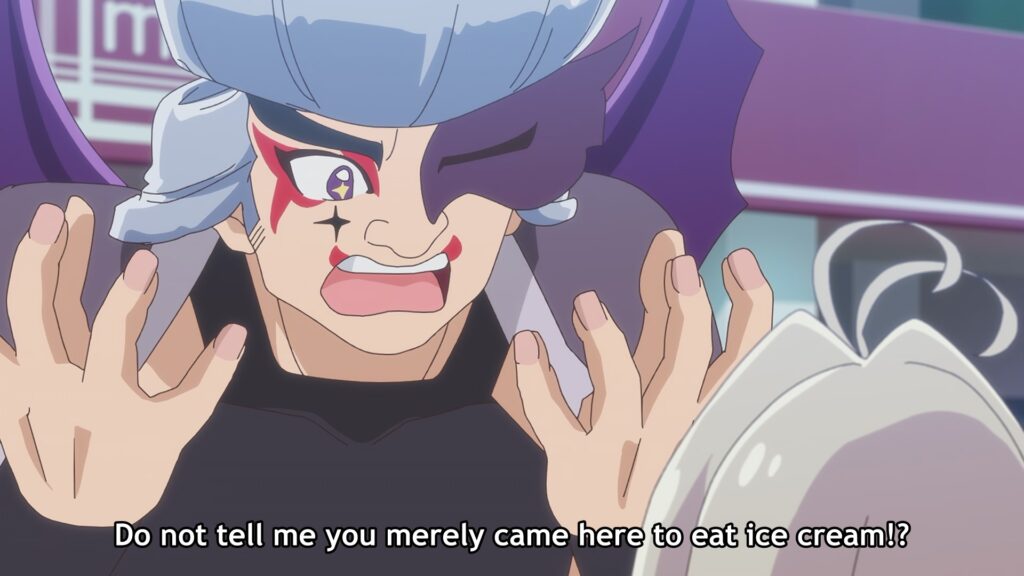
Interviewer: Since late May, we’ve had a fun daily life continuing alongside cool collaboration episodes. And now, the “7th month” is finally approaching.
Murayama: As the “7th month” approaches, the story will start to move in a massive way, so please look forward to it. The major mysteries we’ve been dropping hints about all along will finally be revealed. Then, the curtain will officially rise on the third cour, which brings the next big development. Please be incredibly excited for it!