When I was graciously asked to write an article for the Magical Stage, there were a plethora of ideas that buzzed in my head clamoring for attention. Of course, that isn’t new for me. If anything it is a detriment to my creative capabilities because of how difficult it becomes to focus and provide clarity to any one of my thoughts in a manner I feel happy with. And while there was no pressure for me to write something relatively soon after being asked, I felt compelled to get out of this creative rut.
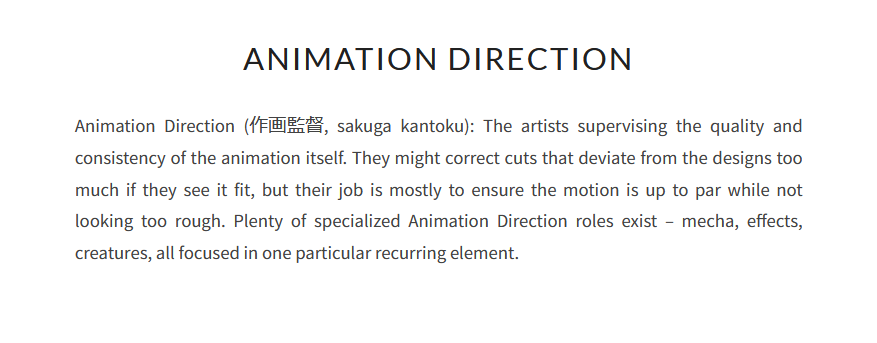
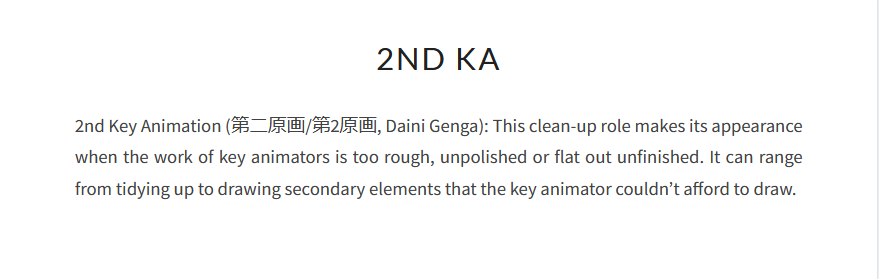
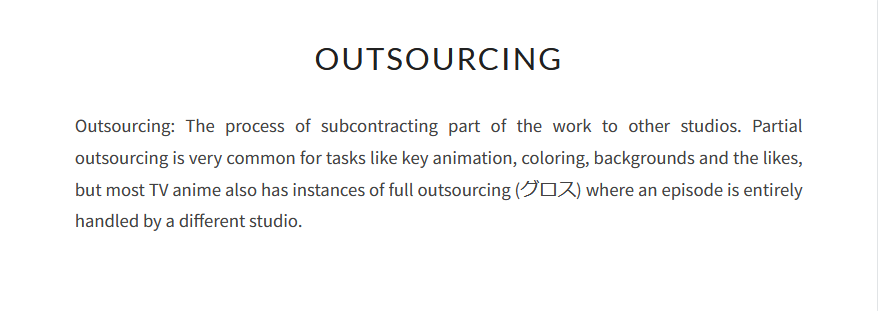
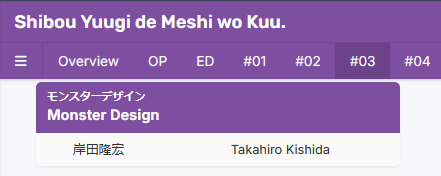
Hi, I am Tech. Like at least a few of you reading this, I am a bit of a seasonal warrior. No, not to a degree where I will watch almost every single thing airing, but the number of shows I juggle can often range in the double digits. That said, what has become a habit of mine when following a lot of shows, is keeping up with their credits! It’s often just a cursory glance. Modern anime credits are depressing to follow at the best of times with ballooning lists of Animation Directors, increasing demand of 2nd Key Animators and a reliance on gross outsource to carry the load of productions that are far greater than what the studio has the manpower and time for. Still, there are interesting bits of trivia to be found if you keep at it long enough. Like seeing cool names pop up in unlikely places. Seeing a certain animator appear on the umpteenth show of the season like he is an omnipresent being. Or, for instance- noticing multiple episodes of TV anime being produced by a group of less than 20 people with no 2nd KA credits, while maintaining a level of polish and care that makes said episodes indistinguishable (and sometimes stronger!) than the established quality bar of the show. Wait what?

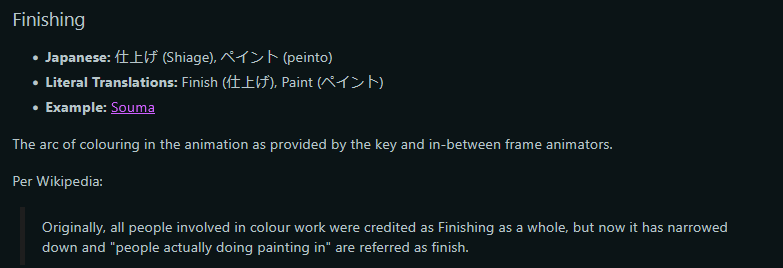
Founded in 1992, and established as a corporation in 1999- Studio Add has primarily been an outsourcing studio based in Sakado, Saitama, Japan. Led by representative director, Shigeru Katou (加藤茂), the studio boasts an impressive list of credits in their body of work. Odds are you have seen at least a handful of shows and films where Add has participated in Finish Animation (sometimes simply called ‘Finish’), In-Between Animation, 2nd Key Animation, etc. This is not uncommon of course. A significant number of studios start off and continue to work as helping hands of the industry. Add specifically have been at it for a while, with their first known credit in the form of Finish Animation going all the way back to an OVA produced by Ginga Teikoku in 1987 called ‘The Samurai‘.
…
Odd, isn’t it? There is a big chunk of credits the studio accrued from 1987 to the fall season of 1999 that is simply absent in the company’s website. There are endless ways to theorize why that could have been the case, but that falls outside the purview of this article. Still, this discovery led me down the path of cataloguing the studio’s body of work accounting specifically for the ones where Add‘s affiliated artists were credited. It’s quite fascinating looking back at the history of this unassuming little studio and stumbling into all sorts of cool details. Let’s start at the beginning.
The uncredited era: 1987-1999
Kazuko Katou (加藤和子) is one of the earliest name that pops up when you look through Add‘s first works. The studio exclusively handled Finish Animation for quite a while, and Katou was a persistent presence until 1993. Present on works such as the aforementioned ‘The Samurai‘, Sunrise’s original mecha show ‘Brave of the Sun Fighbird‘ in 1991 and its cousin show ‘The Brave Express Might Gaine‘ in 1993. Add participated on several episodes of these shows, and it’s fair to say that this is where their long-lasting relationship with Sunrise began. Another key figure during this time is Shizue Shibusawa (渋沢しずえ) whose first credit appeared in ‘Brave of the Sun Fighbird’ and they remained an active figure in almost every Add venture throughout this era.
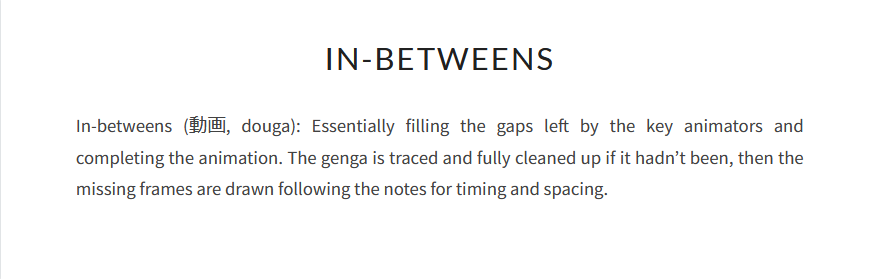
In 1993, Add did Finish Animation for ‘Girl from Phantasia’ or more commonly called, ‘Fantasia‘. An OVA produced by Production I.G. with designs by the legendary Kazuchika Kise. Add’s participation here is notable, by virtue of it being the start of Mayumi Sawame’s (沢目まゆみ) career at the studio. A tenure that continues to this day, making her the studio’s longest affiliated artist at 33 years and ongoing. This is also a time when Add started participating in fairly high-profile productions. Production I.G.’s cult classic OVA ‘Boku no Chikyuu wo Mamotte‘. Studio Ghibli’s ‘Pom Poko’, and ‘Whisper of the Heart‘. A fairly unknown show called ‘Neon Genesis Evangelion‘ and its sequel film ‘Neon Genesis Evangelion: The End of Evangelion‘. Add’s participation on Eva in particular is notable as the studio’s first credit for In-Between animation, specifically on the director’s cut episodes: #21 and #22. It was also Masaaki Hino’s (日野正秋) debut as Finish Animation artist and he is notable for being yet another long time presence at the studio to date.
Trivia time: 10 Finish Animation artists were credited to Add in the credits of ‘The End of Evangelion’. Amongst those 10, only 2 survived…

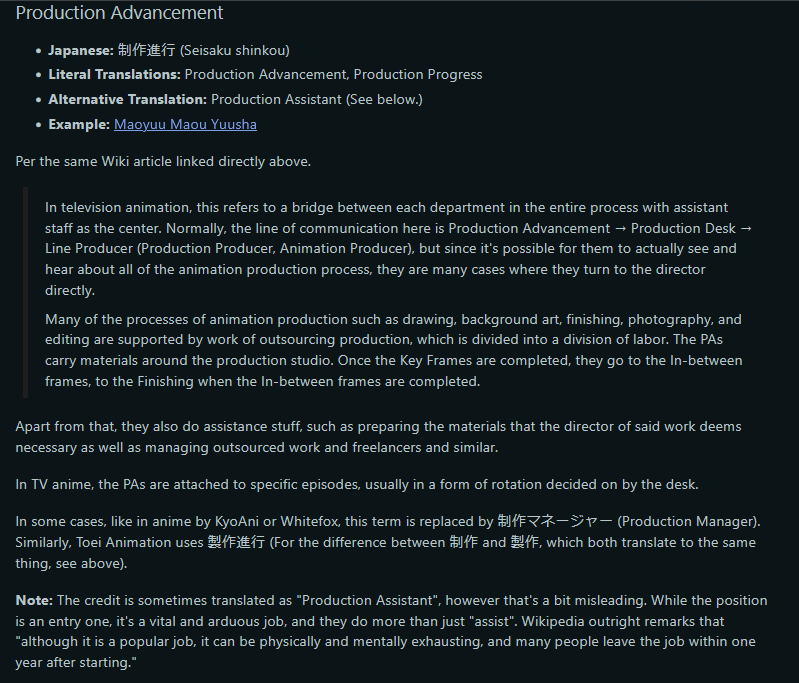
In 1999, Add were credited for ‘Production Cooperation’ on #03 of ‘Masou Kishin Cybuster‘, produced by Ashi Productions. What does ‘Production Cooperation’ even mean though? In brief, these are episodes produced (usually) by a bespoke studio that are managed outside of the existing production line. If a series has individuals X, Y and Z helming the production desk of a certain number of episodes to ensure their smooth production- an episode with Production Cooperation to studio A will have all of this work assigned to the Production Assistant (PA) of studio A. Additionally, the work will (usually) have a bulk (if not all) of the Key Animation, 2nd Key Animation, In-Betweening and Finishing handled by the studio. Thus in turn, returning close to a finished product. Unfortunately I was unable to find the full credits for the episode in particular, but notably it marked Shigeru Katou’s (加藤茂) first work at Add as Animation Director.
The final, and perhaps the most important work of this era was Add’s participation in ‘Tenchi Muyou! in LOVE 2: Haruka Naru Omoi‘. A sequel to the film ‘Tenchi Muyo! In Love‘, produced by AIC. This was Takahide Ogata’s (緒方隆秀) debut as an In-Between artist at the studio, where he remains a prolific figure and director. But we will get to that later. It also marked Shizue Shibusawa’s final contribution to the studio before the Add as we know now truly took shape.

The Beginnings: 1999-2012
Late 1999 marked what is considered Add’s first work according to the company website, in the form of ‘Infinite Ryvius‘. A mecha original produced by Sunrise and directed by Gorou Taniguchi. It also marked Add’s first creditedparticipation in Key Animation, led by Yoshiaki Kameda (亀田義明) and Kazuhide Shikama (鹿間一秀). In-Between artists who had joined during Add’s work on Evangelion and stuck around. The turn of the century marked their work on another Sunrise original- ‘The King of Braves: GaoGaiGar Final‘. Artists like Chieko Abe (阿部千恵子) and Takayuki Onoda (小野田貴之), debuted as In-Between artists here and continued to stick around till the end of this era. In 2001, Add participated in yet another Sunrise original called ‘s-CRY-ed‘. Kenji Tanabe (田辺謙司), Ai Katou (加藤愛) debuted as In-Between artists here and while unaffiliated they continue to remain a presence in recent Add shows. Daisuke Nakajima (中島大輔) also debuted here, and was active at the studio throughout this era.
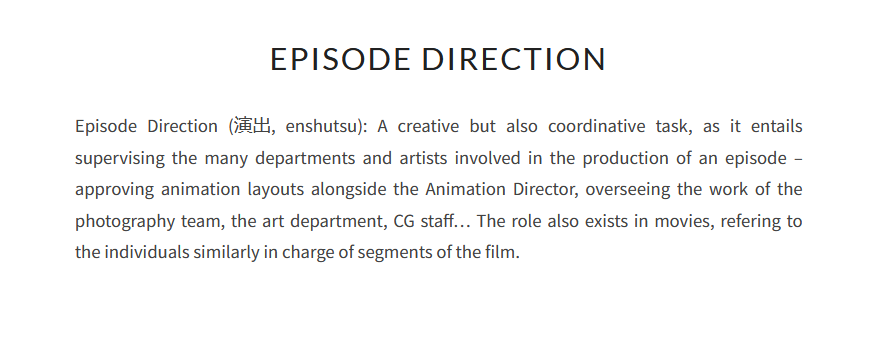
2001 marked Add’s participation in the spin-off film to a little known indie gem ‘Cowboy Bebop: The Movie – Knockin’ on Heaven’s Door‘. This was the start of Add’s credits in bones works and it is easy to theorize that their work on several Sunrise shows prior was what led to this connection. Be it the Animation Producer at hand, the Production Desk or just the artists involved. The same year, they produced #06 of the Ashi Productions show ‘OFFSIDE‘. Shigeru Katou participated as Episode Director and Animation Director on the episode, Keiko Saitou (斉藤恵子) debuted as Key Animator and Yoshikazu Yamada (山田義和) debuted as an In-Between artist on the episode.
In 2002, Add briefly participated in 1st Key Animation (第一原画: it’s a strange credit, I have never seen anything like it) and In-Between Animation for the bones’ original ‘RahXephon‘. In 2004, Add produced #07 of the bones original series ‘Kurau Phantom Memory‘. Yukari Takano (高野ゆかり) debuted here as an In-Between artist and remained a key presence throughout this era. It also marked the debut of Muneaki Nitta (新田宗昭), Hironori Takenaga (竹永拡功) and Yuuichi Motegi (茂木雄一) who served as In-Between artists and were regulars at the studio till the late 2010s. Yoshikazu Yamada’s (山田義和) work as a Production Assistant also started here, and he remains active at the studio till date.

Trivia time: Tsuneo Ninomiya (二宮常雄) was most well known for being the Character Designer for the ‘Sonic the Hedgehog’ animated film. He pops up multiple times in Add projects, and while I don’t think he was ever affiliated, it speaks to a long term connection with Shigeru Katou which presumably started from the early 1970s where a lot of their early works coincide. Ninomiya worked on #07 of ‘Kurau Phantom Memory‘ where he participated as a Key Animator and Animation Director. He would later appear as an Animation Director on every single Add produced episodes of ‘Kouchuu Ouja Mushiking‘, and work as Key Animator on #09, #12, #16, #19, #25, #31. Further along, he did Key Animation on #35 of ‘SKET Dance‘ and #03 of ‘Danshi Koukousei no Nichijou‘. Both episodes were produced by Add. His final work with the studio would be on ‘Isekai Maou to Shoukan Shoujo no Dorei Majutsu‘ where he did Key Animation on #03.
2004 also featured Add’s contribution in Key Animation for the first episode of Studio Gallop’s show ‘Yu☆Gi☆Oh! Duel Monsters GX‘. I found it interesting to mention since (almost) all of GX was outsourced to Dongwoo Animation, Gallop’s priority subcontractor with the first episode being one of the rare exceptions. Add continued their streak of ‘Production Cooperation’ credits in the coming years. In 2005, they produced #15 of the Sunrise adaptation ‘Yakitate!! Japan‘. The same year, they also produced episodes: #05, #09, #12, #16, #19, #25, #31, #40, #44, #50 of ‘Kouchuu Ouja Mushiking: Mori no Tami no Densetsu‘, a joint production led by TMS Entertainment and Actas. Finally, they produced episodes: #05, #10 of Radix’s ‘Akahori Gedou Hour Rabuge‘. Quite the workload for a single year!

Trivia time: In 2008, Add produced episodes: #06, #10, #17 of A-1 Picture’s original sequel to Persona 3- ‘PERSONA -trinity soul-‘. #17 in particular features Tomoko Sudou (Character Designer of Solo Leveling) and Miyuki Kuroki (Prolific animator and Director of shows such as Akebi’s Sailor Uniform and The Fragrant Flower Blooms With Dignity) on In-Between duty, which is neat to me.
In 2008, Add produced episodes: #02, #08 of SynergySP’s adaptation of ‘Zettai Karen Children‘. Notable for being Takayuki Onoda’s debut as Animation Director and also marking the start of Add’s relationship with SynergySP that persists to this day. In 2011, Add produced episodes: #05, #12, #20, #35 of Tatsunoko Production’s adaptation of ‘SKET Dance‘. Artists such as Yuusuke Teraguchi (寺口祐輔) and Yayoi Udou (有働弥生) debuted as Key Animators on these episodes and they continue to be affiliated to the studio. #05 in particular is notable for being Daisuke Nakajima’s debut as Episode Director. This also marked the start of Tomoya Ishikawa’s (石川智也) work as Production Assistant (he had been part of the Finish Animation team since Add’s work on ‘Kurau Phantom Memory’) and he remains active at the studio to date.
In 2009, Add produced #03 of SynergySP’s adaptation of ‘Cross Game‘. Takahide Ogata participated as Episode Director, and Kenji Tanabe worked as Animation Director. Mika Iemura (家村美佳) debuted as an In-Between artist here, and he remained a presence in the subsequent years of Add. In 2012, Add produced episodes: #03, #08 for Sunrise’s adaptation of ‘Danshi Koukousei no Nichijou‘ and episodes: #02, #05, #08, #11 for Sunrise’s adaptation of ‘Good Luck Girl!‘. While the staff rotation remained mostly consistent, Good Luck Girl is notable as the only work of Yoshimitsu Yamagishi participating as Production Assistant at the studio. They were an In-Between artist prior to this.
Trivia time: Manamu Amasaki (天﨑まなむ) is a Character Designer. He joined Studio Add in September, 1996, switching to Bee Train in December, 2005, and became a freelancer in May, 2009. Because of this I wasn’t able to find any of his works from his time affiliated at Add. However, he participated as Animation Direction for #05 and Key Animator for #05 and #12 of ‘SKET Dance’. He did the same for #03 and #08 of ‘Danshi Koukousei no Nichijou’. Neat!
Bonus Trivia: Director and Animator Yayoi Takano (高野やよい) was an In-Between Artist on the Add produced episode of Cross Game. You may be familiar with her extraordinary work on the recent Shoshimin Series.

The lull: 2012-2017
I can only consider this era a transitionary period for the studio, as they took a step back from producing episodes and instead, focusing their efforts on participating in a large quantity of shows in some capacity. Similar to their work during the uncredited era, a huge chunk of their credits at the time were Finish Animation, Digital Coloring, In-Between Animation, 2nd Key Animation, and occasionally for Paint. Still, there remained steady Key Animation participation on various projects.
In 2014, Add participated in Key Animation on #04 of ‘Cross Ange: Tenshi to Ryuu no Rondo‘, produced by Sunrise. It was Kaoru Uno’s (宇野馨) first and only work at the studio. It also marked Akiko Matsubara and Yuuichi Motegi’s final work at the studio. In 2015, Add participated in Key Animation on #06 of ‘Akagami no Shirayuki-hime‘, produced by bones. In 2016, Add participated in Key Animation on #08 of ‘SERVAMP‘, a joint production led by Brain’s Base and Platinum Vision. It marked Muneaki Nitta’s final work at the studio. The same year, Add were credited for In-Between Animation Cooperation in A-1 Pictures’ original film ‘Garakowa -Restore the World-‘. Soushi Nezu (根津壮志) debuted as an In-Between artist here and continues to be an active figure in recent Add productions.
2017 was markedly odd as Add participated in Key Animation for two shows, made by different studios and yet remained uncredited as a studio for both. The only reason I found out was because the shows were actually listed on the company’s website. It’s quite strange. TYPHOON GRAPHICS’s original TV short series ‘Room Mate‘ credited Add artists on #03 and #04. Chiemi Kishi (岸智恵美) debuted as Key Animator for the show, and continues to work for the studio. Meanwhile, ‘Atom: The Beginning‘- a joint production led by Production I.G, OLM, and Signal.MD had Add artists credited on #10.

The Exemplary: 2018-Present
2018 marked Add‘s first ‘Animation Production Cooperation’ credit in quite a while, with a newfound connection to the studio Ajiado. They produced #03 of the Ajiado adaptation ‘Isekai Maou to Shoukan Shoujo no Dorei Majutsu‘. It marked the debut Ken Kaneko (金子剣) as an In-Between artist, who remained a strong presence at the studio till 2022. Yukari Takano participated as Key Animator, several years after her final work at the studio in 2012.
In 2019, Add produced episodes: #03, #06, #09, #12 of Ajiado’s light novel adaptation ‘Ascendance of a Bookworm‘ and episodes: #01, #04, #07, #10 for its second season in 2020. Their most extensive creative output in several years and marked return to form. At this point, Add had already established the regular staff that we will continue to talk about for the rest of this article. Still, there shall always be new faces! Mao Fujiwara (藤原磨生) debuted as an In-Between Artist on #03 and remained active at the studio till 2021. Yukino Morita (守田有紀乃) debuted as an In-Between Artist on #06 and is working at the studio till date.
In 2021, Add produced episodes: #02, #05, #08 of SynergySP’s adaptation of ‘Taishou Otome Otogibanashi‘. Shouka Sugiyama (杉山翔香) and Yumiko Toda (戸田裕美子) debuted as In-Between Artists on #02 and while unaffiliated, makes frequent appearances in recent Add productions. Kento Yamamoto (山本健仁) debuted as an In-Between Artist in #05 of the show and has been affiliated to the studio since. In 2022, Add produced episodes: #05, #10 of ‘A Couple of Cuckoos‘- a joint production led by Shin-Ei Animation, and SynergySP. Mayu Inoue (井上繭) debuted as one of two 2nd Key Animators on #10, and they remain a frequent presence in Add productions.
It’s worth mentioning that this culture of hiring artists as In-Betweeners and slowly training them to work as Key Animators and then subsequently as Animation Director and more, is something of a lost practice in the modern industry. Of course there are still a handful of studios that hold onto it, Add being the example here, but in an industry that is bursting at the seams with demand and lacking the manpower to keep up to it, it really does make sense why most production houses generally prefer to contract artists with a baseline level of competence, instead of spending a requisite amount of time training young blood. It’s an unsustainable practice at heart, but short term profit has always been more appealing to the production committees. It’s exactly why smaller studios like Add and the artists working there are worth talking about and celebrating.

While Masaaki Hino and Mayumi Sawame have continued to hold down the fort within the Finish Animation department of Add so far, I would be remiss not talking about some contemporary figures working there now. Miyo Tsukahara (塚原美代) debuted as a Finish Animation artist in #03 of the first season of ‘Ascendance of a Bookworm‘, and remained a frequent presence till 2025. Tomomi Sakurai (櫻井友美) debuted in the same episode and was an active figure till 2022. In 2021, Shione Higa (比嘉汐音) debuted in #08 of ‘Taishou Otome Otogibanashi‘ and has continued to work at Add till date.
2024 marked a momentous year in the history of Studio Add, as they led the joint production of ‘Chiyu Mahou no Machigatta Tsukaikata‘ alongside Shin-Ei Animation. Takahide Ogata debuted as series director, with Character Designs by Kenji Tanabe, Shigeru Katou serving as the Animation Producer, Yoshikazu Yamada on Production Desk, Tomoya Ishikawa as Design Manager, and Masaaki Hino as Color Designer. If you have been keeping up with all the names I have been throwing at you (which I wouldn’t blame you if you didn’t, but hey that’s what the spreadsheet is for!) you can see how much this is primarily an Add production.

Trivia time: The spreadsheet doesn’t make it fully clear, but certain episodes of the show simply don’t have the Animation Director credit which I find amusing. On another note, the Elle outsource episode are solo animated by Sadahiko Sakamaki (坂巻貞彦) of Delta Peak Productions with 2nd Key Animation handled by another affiliate of the studio- Ai Kuwabara (桑原愛). This has been a recurring thing for Elle’s outsource work and it’s kind of fascinating.
What makes productions like these interesting isn’t exactly the highs, but the stable baseline quality. Because the series itself is never quite the sakugafest that might have put it on most people’s radar. It’s an economical show at heart, but Ogata is a resourceful director and the drawing supervision throughout the show is incredibly consistent. In an era where complex designs and strong drawings are only ever entertained as a standard in high profile works, with production lines willing to brute force their way to the required quality threshold (looking at you, Bucchigiri) and often still failing; It is genuinely impressive to see such a small group of people accomplish a feat like this.
But for me, this wasn’t the show that initially caught my eye and made me pay attention to the studio. That happened with their participation on Ajiado’s ‘Akuyaku Reijou Tensei Oji-san’, producing episodes: #08, #11. It’s a testament to the strength of the studio’s artists that they are able to seamlessly adapt to the fundamental animation principles of the shows they are working on and produce episodes that fit into that mold so effortlessly. Their participation in ‘Tensei Oji-san’ is notable for me because at least to a relatively untrained eye like mine, it aligns perfectly with Tetsuya Takeuchi’s (竹内哲也) presentational choices for the show.

In 2025, Add produced #19 of Bandai Namco Pictures’s original series ‘Mashin Souzouden Wataru’, #09 of SynergySP’s adaptation ‘Futari Solo Camp’, and #02 of Ajiado’s adaptation ‘Yano-kun no Futsuu no Hibi’. In 2026, they produced #02 of HORNETS’ adaptation ‘29-sai Dokushin Chuuken Boukensha no Nichijou’. It marked Haruto Obara’s (小原遥斗) debut as Production Assistant for the studio. The same episode featured the debut of Mitsuki Ooshima (大島美月) and Kasumi Ogura (小倉香澄) as In-Between artists. Business as usual at Add, and I am more than confident that over the coming years we will see far, far more exciting things coming out of this studio. Be it the second season of ‘Chiyu Mahou no Machigatta Tsukaikata’, or another outstanding episode they end up producing- I am eager to see what the future of this unassuming little studio holds.

Sources and references:
1) https://blog.sakugabooru.com/glossary/
2) https://www.reddit.com/r/anime/comments/5ytpxs/ever_wanted_to_know_what_the_text_in_anime_opeds/
3) https://keyframe-staff-list.com/studio/7408 (for being the coolest site)
4) https://anidb.net/creator/2467
5) http://st-add.com/