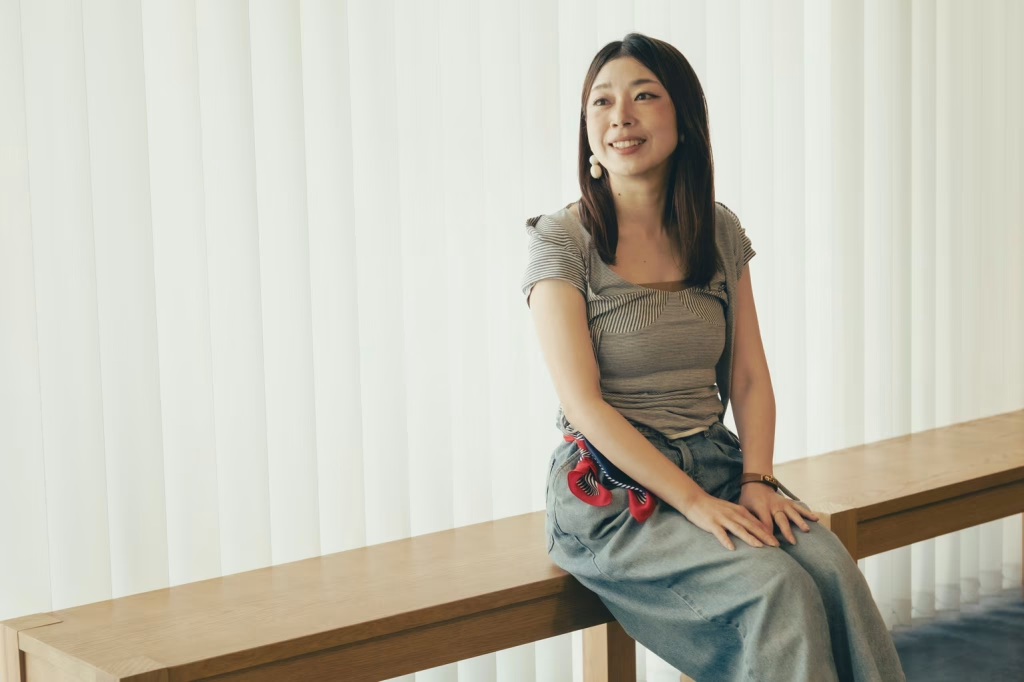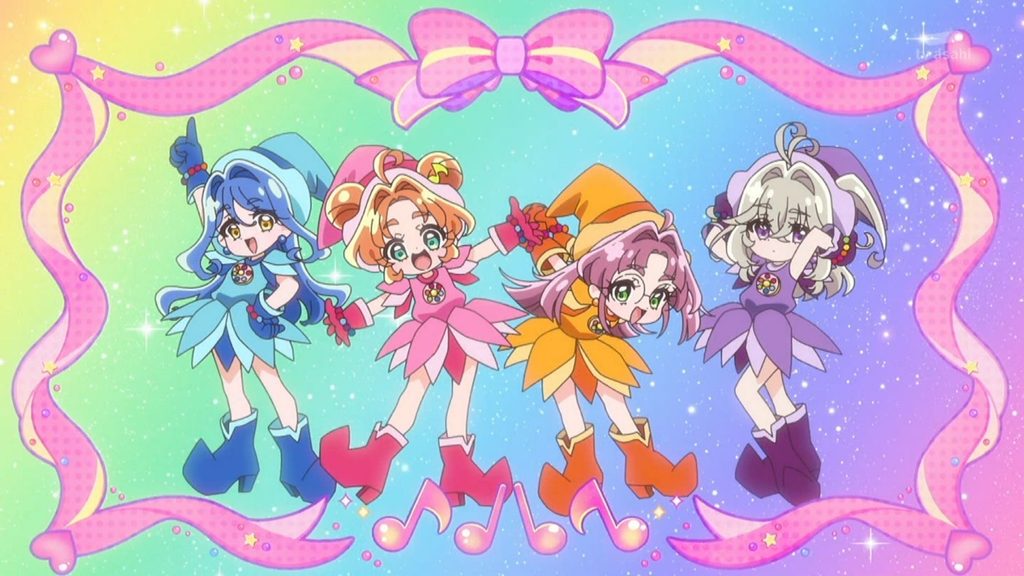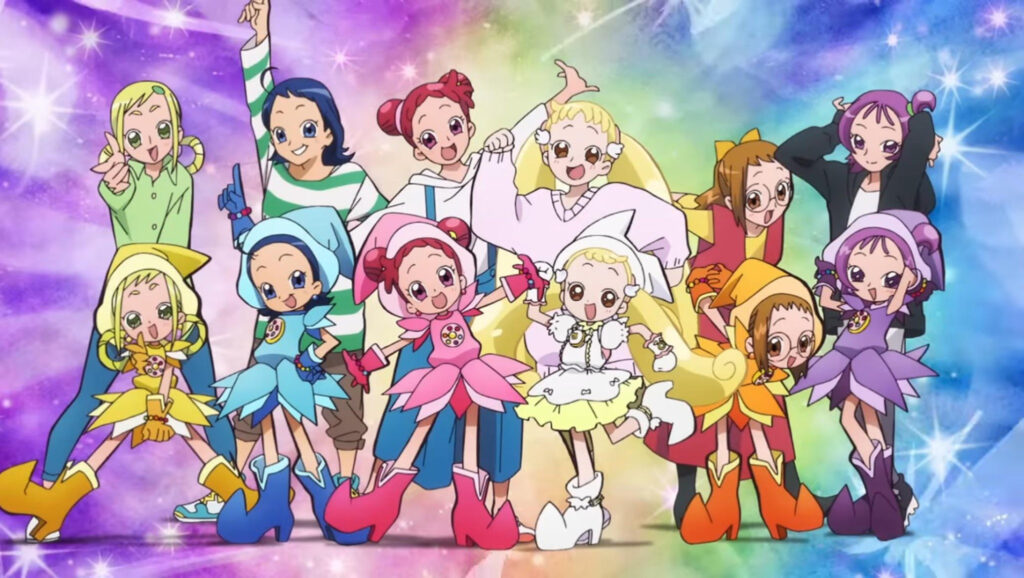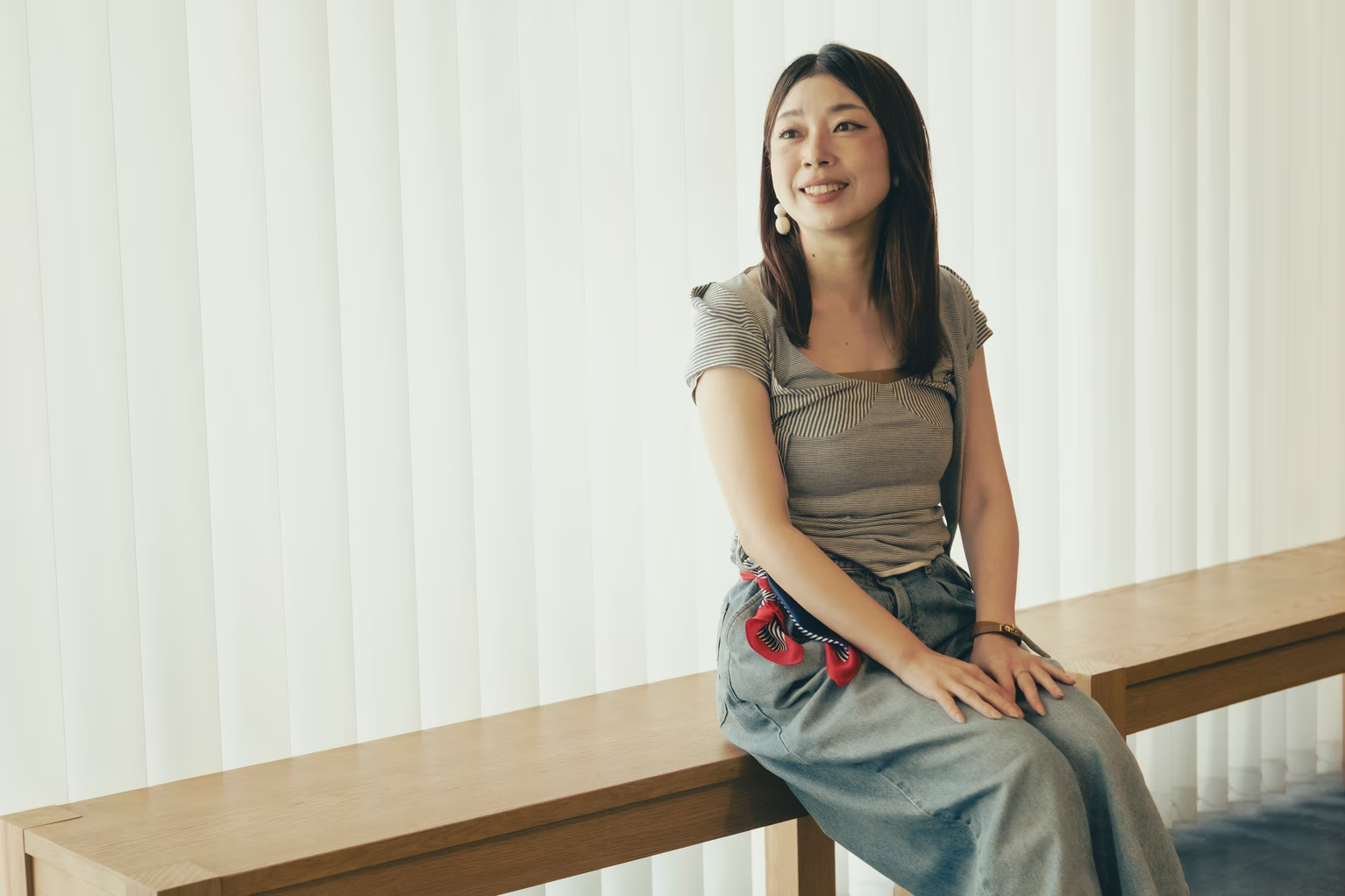
Hello everyone, we have another interview with Naoko Yamada for you lot to read! This one was from a couple months ago as Jaadugar: A Witch in Mongolia was ending. Yamada was Chief Director on the series working alongside Abel Gongora in the Series Director chair.
Naoko Yamada doesn’t really need all that much of an introduction from me, but I’m always stoked to have more of her words on the site.
So let’s start reading!
Translation by “nui”, Editing by me. Chief Director Naoko Yamada reveals her intense dedication to the highly praised Jaadugar: A Witch in Mongolia and Chief Director Naoko Yamada reveals the feelings entrusted to the final scene were originally published on CREA in September 2026.
Original Link:
Part 1: https://crea.bunshun.jp/articles/-/59960
Part 2: https://crea.bunshun.jp/articles/-/59961
Part 1: Chief Director Naoko Yamada reveals her intense dedication to the highly praised Jaadugar: A Witch in Mongolia
Right from the start of the broadcast, the TV anime Jaadugar: A Witch in Mongolia received a flood of praise from both Japan and overseas, with comments like, “It’s so incredible, I’m just thankful to be alive to see it,” and “This makes me so proud of Japanese animation.” Based on the manga of the same name by Tomato Soup, it is a historical epic set in the 13th-century Mongol Empire, where a young girl who lost everything vows revenge using her intellect as her weapon.
Helming the project is Chief Director Naoko Yamada, known for works like K-ON!, A Silent Voice, and Heike Monogatari. Why did she choose the 13th-century Mongol Empire for her next stage? We dive into the behind-the-scenes production secrets, a must-read not just for anime fans but for all creators.

Honestly, I thought this was going to be super difficult…!
Interviewer: When you first picked up the original manga, what was your initial impression?
Naoko Yamada: To be completely honest, my first feeling was, “This is going to be super difficult…!” (laughs). It’s a bit embarrassing to admit, but I wasn’t really the type to know a whole lot about history. So, when I was first reading it, I was mostly just confused, thinking, “This is tough, how am I supposed to process all this?”
But as I started looking into the characters one by one, every single one of them was just so fascinating. When you dive into a single event or person, the studying goes so smoothly, like puzzle pieces falling into place. The more I learned, the deeper my understanding got, and the feeling of my own knowledge expanding was incredibly satisfying. My intellectual curiosity was totally sparked, and I got instantly pulled into the sheer depth of the work.
Interviewer: Chief Director Naoko Yamada is widely recognized for her vivid portrayals of modern youth in projects such as K-ON!, A Silent Voice, and Liz and the Blue Bird. However, following Heike Monogatari, you have once again stepped into a historical setting, this time focusing on the 13th-century Mongol Empire. Despite such a dramatic shift in time-frame and backdrop, do you maintain a consistent core philosophy when it comes to portraying human characters?
Yamada: I think at the root of it all, I’m driven by this thirst for knowledge and a curiosity that says, “There’s so much I don’t know, so I want to know more.” And honestly, from the perspective of creating a show, there is absolutely no difference in my mind between a modern drama and a historical one. Even if the era, the setting, the clothes they wear, and the societal rules are different, it’s still the same “human beings” standing there, you know?
Everyone experiences joy, anger, sorrow, and fun. They feel affection for someone, they feel sad, they get angry. Of course, there are plenty of unique moral, religious, and value systems specific to the 13th century. But the emotional movements and subtleties of humans are surely the same no matter the era. That’s exactly why I want to cherish that “heart aspect” more than anything else.
Interviewer: Are you less focused on historical chronology and more captivated by the choices, thoughts, and voices of individuals living through those times?
Yamada: I think that’s exactly right. Rather than being interested in the raw historical facts like “this historical event happened in the year 11-something,” I have a strong interest in the raw, living humans right in the middle of that vortex. What were they thinking, what were they seeing, what kind of conversations were they having? So, just like with Heike Monogatari and again this time, it’s not like I made it because I was a history expert from the start.
My interest just kept growing as I researched things during the production process. The process of learning bit by bit is just so much fun. Experiencing that feeling of constantly running into things that can’t be measured by my own narrow experiences or modern values was highly stimulating. Because someone like me, who wasn’t originally a history buff, is involved, I think we can deliver the story in a way that’s easy to grasp for viewers who also aren’t familiar with history. I believe we can make it a show where we stand on the same level, not knowing everything, and learn together.
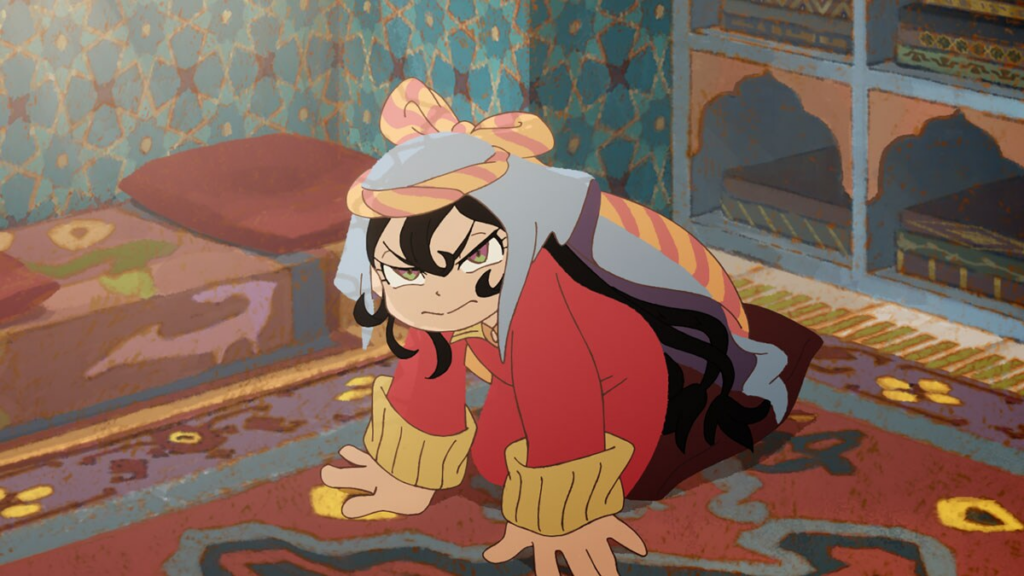
The Central Role of Belts and Headwear in Traditional Mongolian Attire
Interviewer: When adapting a historical drama for the screen, how did you handle reference gathering and historical research during pre-production, especially with history enthusiasts and subject-matter experts in mind? Did you encounter any major challenges or discover effective strategies along the way?
Yamada: For this project, having incredibly reassuring historical research experts solidly supervising everything was our biggest support. Above all else, the original author, Tomato Soup, has such incredible research skills and a fierce hunger for knowledge, meaning the foundation was already surprisingly solid right at the manga stage. So, rather than holding my head in my hands thinking “This is so hard, this is painful,” my pure interest and curiosity of “What can I learn next?” always won out. Since I had the peace of mind knowing that experts were backing us up, I was able to innocently ask whatever questions popped into my head.
Interviewer: Which elements presented the greatest challenge when portraying the 13th-century setting?
Yamada: The 13th century is an era where very few physical artifacts have survived directly to the modern day. It was the same with Heike Monogatari, but the process becomes a job of deducting and imagining things based on surviving picture scrolls and scant literary descriptions. We have to ask, “What kind of clothes did the people of that time wear, what tools did they use, and in what kind of climate did they live?” But that deduction process itself felt like it was really training our imaginations, which was super fun.
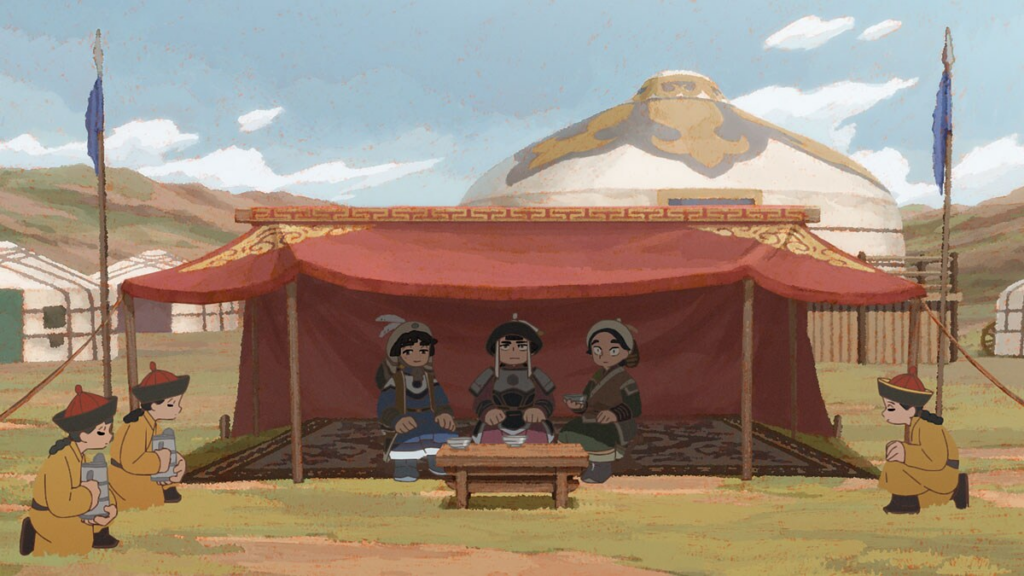
Interviewer: I understand you traveled to Mongolia on a location scouting trip to accurately depict the era’s architecture, clothing, music, and color palette.
Yamada: Yes, we got to look at precious historical materials and exhibits at local history museums. Even with just a single piece of clothing, there are tiny differences like, “This is from the 13th century,” and “This is from the 14th century onward, after it started taking influence from China (the Yuan Dynasty).”
Basically, the major premise is to faithfully depict things true to the era as much as possible, but sometimes we interweave “creation” to make the animation’s screen composition or the character’s individuality stand out. The balance between the sincerity of being historically accurate and the creativity of animation was something all the staff discussed over and over again. We kept moving forward by trial and error, sometimes almost getting lost along the way.
Interviewer: During your stay in Mongolia, was there any local experience that particularly left an impression on you?
Yamada: When we visited a local family’s home, they had us try on traditional clothing, and that really stuck with me. Before we knew it, the whole staff was dressed up in these fluffy local outfits (laughs). But when you actually put them on, they’re incredibly warm. I learned first-hand that these clothes are deeply logical, packing in all the ingenuity needed to live in such a harsh natural environment.
It was also fascinating when the locals taught us, “Anyway, the hat and the belt are the most important things.” The fabric is made so that absolutely no wind gets through, and even though it was the freezing season, you can stay perfectly warm just wearing that one piece without having to layer up a ton. Even if there are minor detail changes from the 13th-century versions, I was deeply moved to realize that the broad framework of their life wisdom for surviving that brutal climate has been continuously passed down to this day.
Omitting “Potatoes” and a “Blue Earth”
Interviewer: How did you navigate the challenge of reconciling strict historical and cultural authenticity with the imaginative license and expressive possibilities of animation?
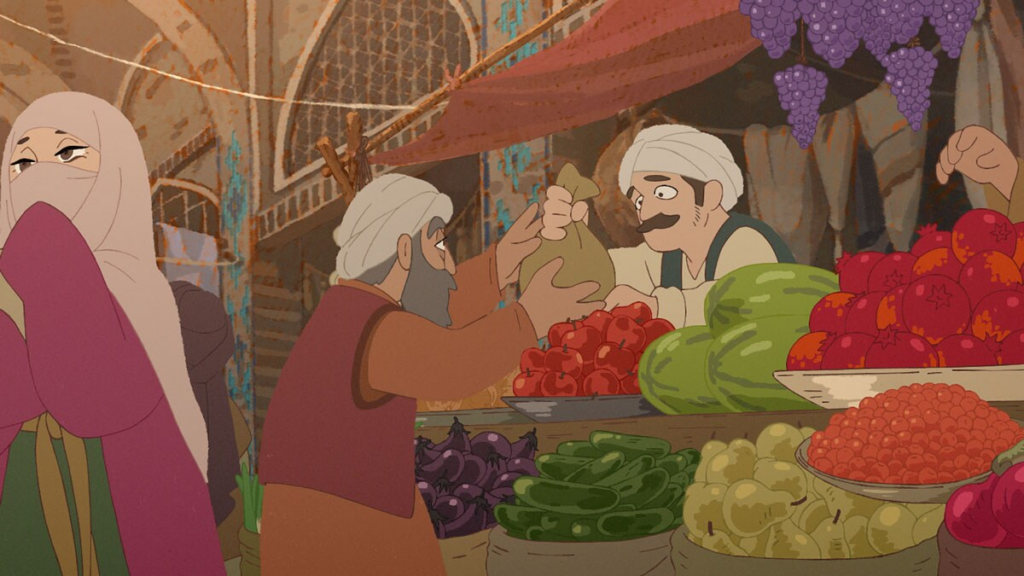
Yamada: We made a conscious effort to avoid depicting elements that were non-existent during that era and within that geographical area. When drawing, it is easy to inadvertently introduce contemporary perspectives. The “potato” serves as a prime example; while it is a staple of the modern diet, this South American crop had not yet been introduced to Eurasia or Islamic Persia during the 13th Century.
Consequently, we carefully reviewed our scenes to prevent any non-historical flora, fauna, or foodstuffs from appearing. Furthermore, setting the narrative within Islamic Persia introduced specific environmental conditions, such as severe water scarcity and a high premium on timber. Although certain directorial liberties were taken for artistic purposes, we maintained rigorous attention to detail throughout the visual design to ensure an authentic experience for the audience.
Interviewer: Since wisdom and intellect serve as weapons in this story, what methods did you use to convey the characters’ insights and cognitive processes through sound and imagery?
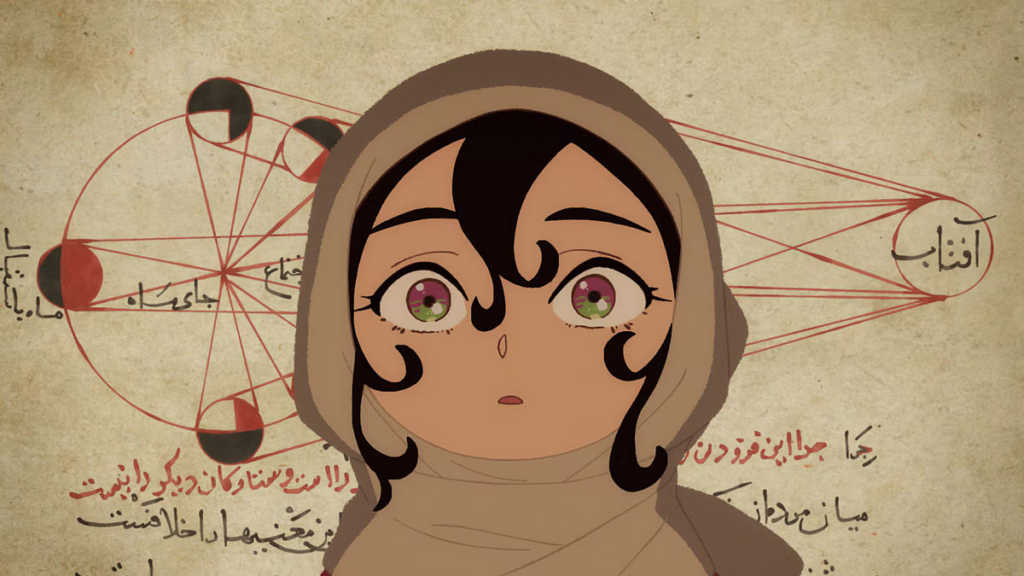
Yamada: I was deeply committed to staying strictly within the boundaries of what the characters could realistically comprehend. Consider the pivotal scene where Sitara reads and discovers astronomy along with the grand scale of the universe. As a 13th Century girl, she could gaze up at the night sky, yet she possessed no concept of space as seen through a modern scientific lens, such as a marble-blue Earth set against a dark void. Because of this, I deliberately refrained from relying on modern space imagery. We ensured her intellectual breakthroughs and realizations were portrayed using only visuals grounded in her era and derived from her own direct observations and experiences.
Grounding human drama in “everyday life” prior to conflicts and harsh destinies
Interviewer: What principle did you prioritize when adapting the original manga into the multifaceted medium of animation? Furthermore, what conversations took place between you and the author, Tomato Soup?
Yamada: Every adaptation calls for a tailored approach, but for this title, I felt the most effective strategy was to remain closely aligned with the manga’s structural core while meticulously fleshing out the gaps between frames. Consequently, rather than requesting full creative license with comments like “Please let us take liberties here,” I posed numerous questions to grasp the fundamental motivations behind her work. I asked about her specific intent behind particular scenes and sought to understand what drew her so deeply to this historical period.
Interviewer: Were there specific scenes or details you intentionally incorporated for the animated adaptation to elaborate on the implicit context and unwritten moments of the original manga?
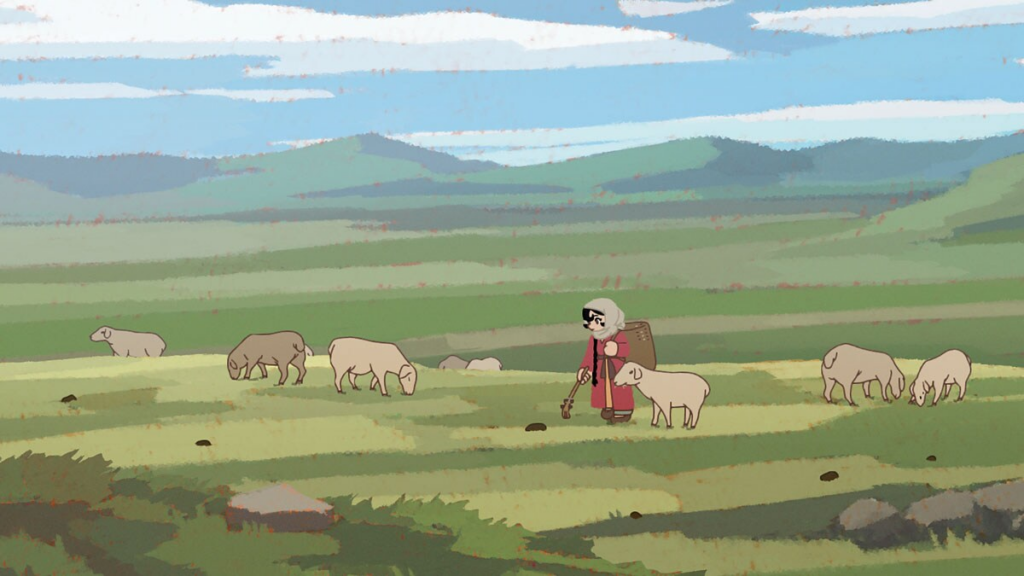
Yamada: Portraying their “routine daily existence.” I intentionally reserved dedicated screen time in the anime to capture those modest everyday moments whether it was gathering supplies at the market, preparing meals, sharing food, or conversing over a cup of tea.
Interviewer: Routine chores and daily meals are often skipped over in animation in favor of dramatic elements like conspiracies, battles, and grand schemes. What led you to deliberately emphasize these quiet moments?
Yamada: When dealing with historical or war-centered stories, it is natural for viewers to fixate on dramatic action set-pieces and major narrative shifts. However, prior to being swept up by cruel twists of fate or consumed by anger and revenge, these individuals must first navigate their ordinary routines such as waking up, eating, conversing, and resting. It is precisely through the careful depiction of these quiet, mundane routines that a character’s mindset, speech, and core principles are naturally conveyed.
Observing these daily routines allows the audience to understand them as genuine, living human beings, making sense of why they hold specific traits or choose particular paths in critical moments. Refusing to relegate them to simple plot tools, I felt a deep commitment to portray them authentically as individuals with distinct agency, actively living out their lives within that historical setting.
Part 2: Chief Director Naoko Yamada reveals the feelings entrusted to the final scene
WARNING! This part contains spoilers for the final episode. Yes, this is based on actual historical events from 700 years ago but people still care a lot about spoilers so this disclaimer is still in here.
Intentions behind representing henna and the portrayal of slaves
nui note: Henna is a natural dye made from the dried, crushed leaves of the Lawsonia inermis plant, widely used for temporary body art and hair coloring.
Interviewer: Right from the opening episode, one couldn’t help but notice how Sitara, far from being framed as a mere emblem of tragic circumstance, navigates her life as a slave with a vibrant, nuanced array of expressions as she connects with the local townspeople.
Yamada: Hearing the word “slave” today understandably evokes dark, frightening impressions and immediately puts us on guard. However, the actual lived reality and social status tied to that term vary significantly across different historical eras, geographical regions, and cultural frameworks. Upon studying the institution of slavery within Persian society of that period, we found that, contrary to contemporary assumptions, slaves maintained specific legal protections, means of subsistence, acknowledged human dignity, and defined social functions. I prioritized studying these historical realities without bias, ensuring they were presented objectively while honoring the authentic values of the era.
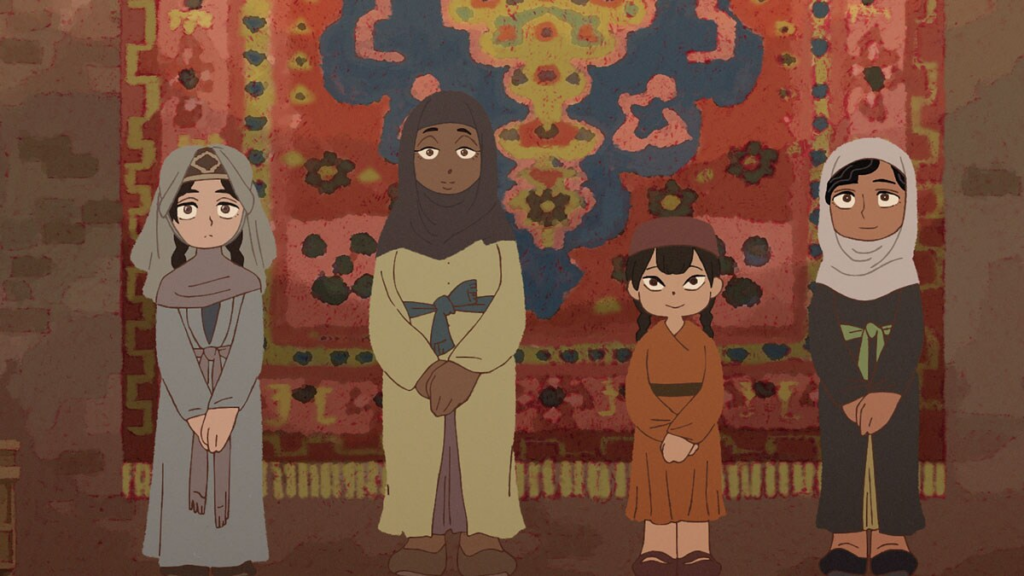
Interviewer: Even looking at the details on screen, for example, the henna (plant dye decorations) on the fingertips of the Persian women, cultural details blended in beautifully without inserting excessive explanatory dialogue.
Yamada: I’m so happy you noticed that. The henna dye is one example, but throughout the screen, we’ve scattered seeds that act as triggers to make viewers wonder, “What is that?” The fact that we could create so many rich hooks that make people think, “I want to know more about the culture of that time” or “I want to look that up” thanks to the anime, is truly a testament to the power of the original manga and the careful research of all the staff.
Capturing the Charm and Emotional Depth of Sitara
Interviewer: I would like to inquire about how you handled character expressions and emotions. When depicting women carrying heavy and tragic destinies, what subtle details in eye movements and small physical gestures did you prioritize as director?
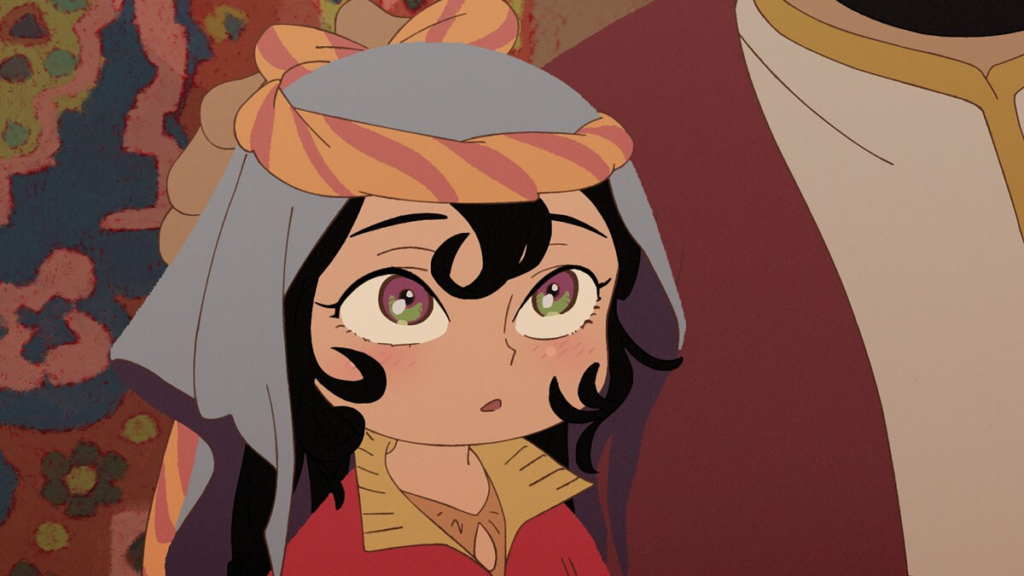
Yamada: When portraying a character, I find the direction of their gaze to be essential. The subtle choice between looking directly into another person’s eyes or casting their eyes upward toward the sky as they craft their words completely alters how their personality, emotional state, and intimacy with others are perceived.
Interviewer: On the surface, Sitara appears cheerful and accessible to those around her, yet beneath that exterior lies an intense wrath and a thirst for vengeance stemming from the loss of her homeland and loved ones. Through what visual techniques did you convey this inner conflict and duality?
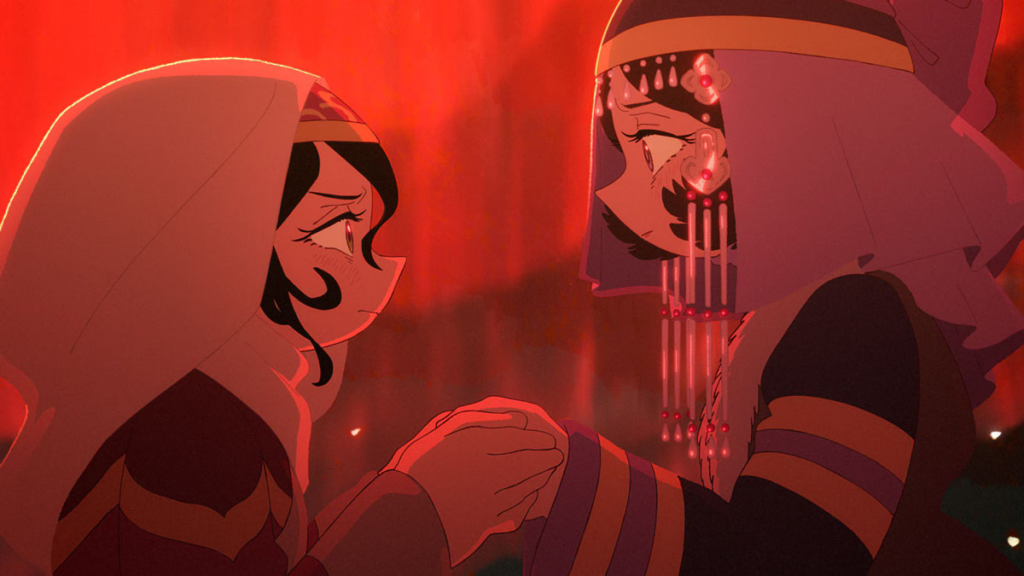
Yamada: The greatest charm of Sitara is that she never, ever lets go of the memories of her stolen, beloved homeland of Persia and her anger, but at the same time, she has the flexibility to respectfully and openly accept the culture and the logic of the Mongolian people she was brought to. She interacts with the Mongolians and is deeply moved, thinking, “Oh, this way of thinking is wonderful,” or she eats delicious food and smiles. But right after that, she corrects her own course, telling herself, “No, no, I shouldn’t. I have to hate them.” She is someone who never stops learning, noticing, and knowing, no matter her circumstances. Therefore, when directing her facial expressions, I deliberately avoided drawing her in a way that “always had the grudge of revenge seeping through.”
During truly fun moments, I drew her laughing from the bottom of her heart. Because her expressions and impressions change so rapidly moment by moment, Sitara becomes vibrant and charming, and I believe that’s exactly why the melancholy and the weight of the resolve she suddenly shows stand out so much.
Interviewer: There was a scene in the show where Sitara pours her heart out about the sadness of having moments where she forgets her hatred and revenge, and it really broke my heart.
Yamada: When you’re living through many long years, no matter how cruel your fate is, there definitely must have been times when you felt relieved eating a delicious meal, or times when you laughed together with someone. I believed that depicting that raw swing of emotions just as it is would lead to affirming the time she has lived.
The Mature Tone of the Narration
Interviewer: Please tell us about the audio aspect and the voice actors’ performances as well. In this work, the “narration” with its unique storytelling style powerfully pulled the story forward. What kind of direction did you give for that?
Yamada: The narration for this work takes on the format of “a grown-up Sitara recounting this grand historical tale to someone.” As for where to settle that tone and distance, the audio team, Director Abel, and I went through a lot of trial and error with various patterns. Is it a gentle storytelling tone like reading a book to a child? Or does it have the vibe of passing a story down to adults gathered around a campfire on the plains at night? Or maybe it’s like she’s talking to herself, not meaning for anyone in particular to hear, while speaking to the memory of someone specific? By layering directions at the dubbing recording sessions, we finalized that wonderful storyteller’s voice, which possesses that unique depth and calm.
Interviewer: Were there any specific responses from viewers that made a lasting impression on you personally?
Yamada: Whether hearing thoughts directly or reading viewers’ impressions on social media, I was truly amazed by the high level of passion. So many people took a deep interest in the history genre, and on top of that, everyone is incredibly knowledgeable, actively theorizing about the customs of the time and the cultural differences between regions. It was very stimulating, and I felt like, “We’re actually learning new things ourselves from the people watching.”
Interviewer: This work was streamed worldwide through platforms like Netflix, and has received highly passionate responses from both domestic and international audiences. It seems the response was especially huge from overseas fans, particularly those with roots in the Islamic world and Mongolia where the story is set.
Yamada: Yes, exactly. Seeing people from the Islamic world and Mongolia send in such passionate thoughts about their own culture and history being depicted in animation really warmed my heart. The thing we valued most above all else when making this work was “to depict every culture and all the people who appear with the utmost respect.” The fact that this attitude of respect crossed borders and religions to firmly reach the actual people from those regions, and that they received it favorably, was the greatest joy and salvation for us as a production team.
Interviewer: Modern female audiences have found profound empowerment in seeing women from contrasting backgrounds build meaningful bonds through shared intellect and scholarship, choosing wisdom over political intrigue or physical force.
Yamada: The environment we live in and the structure of society are completely different between the 13th century and today. But, as I mentioned earlier, the fundamental fact that we are human beings with joy, anger, sorrow, and fun remains the same. Precisely because we depicted the values of that time, which are different from modern ones, just as they were, I think people were able to feel the “fascination of learning about values different from our own,” or perhaps empathize across eras with the “importance of acquiring wisdom and thinking with your own head.” Depending on who’s watching, the points they empathize with will be different, and there might be parts they can’t fully understand sometimes, but I’d be happy if people could enjoy this work, embracing all those differences and diverse ways of interpreting it.
Behind the Scenes of the Climax: “This time, we will become the witches…”
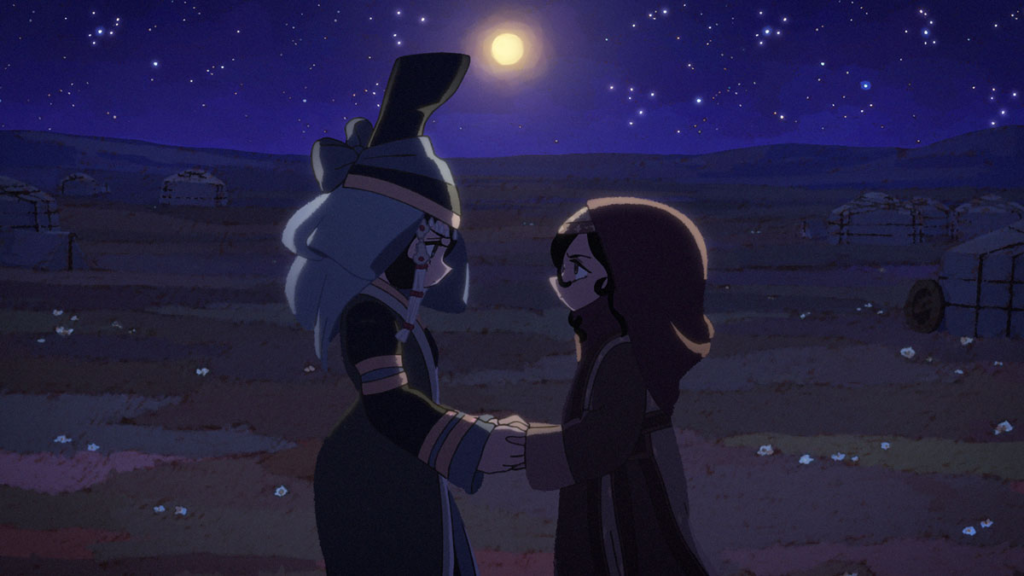
Interviewer: Now that we have reached the series finale, I would love to ask about the story’s climax: the scene where Sitara and Töregene hold hands and declare, “This time, we will become the witches,” was so powerful it gave me chills. What emotions and intentions did Director Yamada channel into crafting this final resolution?
Yamada: That line, “we will become the witches,” carries a somewhat very dangerous scent, and it makes the viewers feel a slight, stinging anxiety, doesn’t it? It might not be a completely unconditional happy ending by any means. But that moment when these two women, Sitara and Töregene, who have survived that brutal world, join hands and fix their gaze in the same direction… the precariousness of that moment, the strength of their alliance, and that momentary flash of brilliance all look irresistibly captivating to me.
Interviewer: Throughout history, the word “witch” has frequently been used as a label by those in power, or due to a lack of understanding, to exclude and demean women. Yet, they take on that word as proof of being wise sages, claiming it of their own free will.
Yamada: The title “Jaadugar” literally means “witch,” and I think we were only able to reach that goosebump-inducing, brilliant structure because Kanichi Kato (加藤還一), who handled the series composition, meticulously built up the story layer by layer right from episode one.
Interviewer: The scene where Sitara debates with Ögedei, the second emperor of the Mongol Empire, about “why the stars revolve in the sky” was also very striking. What directorial intentions were put into that?
Yamada: I think at that moment, Sitara was feeling an overwhelming sense of awe toward the unfathomable nature of the monster named Ögedei, as if she were witnessing a giant black hole right before her eyes. No matter how much knowledge she gains and tries to challenge him using learning as her weapon, it feels like she just can’t make a dent. I wondered what Sitara would do when struck by a massive sense of powerlessness, like hundreds of millions of light-years of loneliness, realizing that the righteousness she had believed in just wouldn’t work.
As a result, I thought, “Well, there’s nothing left to do but sprawl out on the grass and lie down.” Even while being at a total loss, through the figure of Sitara throwing herself into the vastness of the sky, I wanted to express the immensity of the world, the smallness of humans, and a sort of breathing moment to stand back up again from there, so I had them incorporate that into the script and storyboards.
Boraqchin Is My Personal Favorite Character
Interviewer: Rather than neatly partitioning characters into moral categories of “good” or “bad,” the story presents a nuanced view, even while portraying the brutal realities of war and invasion, wouldn’t you say?
Yamada: From the earliest stages of production, this was a core approach I established alongside Director Abel and the producing team. Our goal was not to construct a narrative that hands down moral judgements or belittles any individual. Both the Persian and Mongolian people carry their own deeply held beliefs, sacred traditions, and livelihoods that they are determined to protect. Given that this story functions as a multi-perspective human drama, I was firmly committed to avoiding any simplistic or reductive villain tropes.
Interviewer: On a side note, if Director Yamada were to choose a single character from the series that holds a particularly special place in your heart, who would that be?
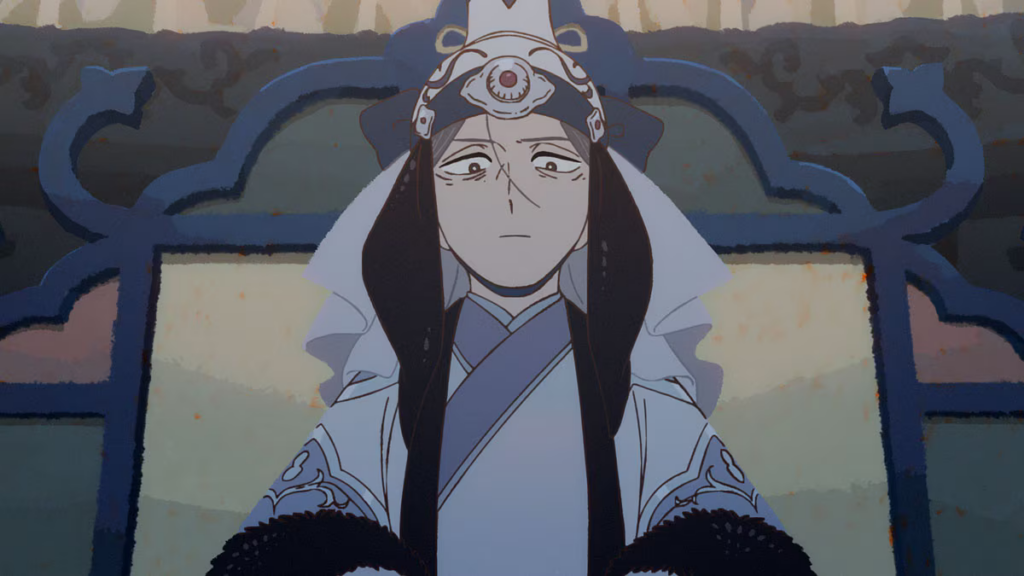
Yamada: My absolute favorite character is Boraqchin! Historically speaking, there are truly very few records left about Boraqchin. I was genuinely moved from the bottom of my heart that Tomato Soup sensei managed to create such a phenomenal character, packed with so much charm, strength, and lovability, out of such a limited historical gap. With so much respect and gratitude toward Tomato Soup sensei’s overwhelming creativity, whenever I’m asked in interviews and such, I always answer, “I love Boraqchin.”
Interviewer: Director Yamada, having brought so many acclaimed works to life, is there an unwavering core principle that consistently guides your approach to animated expression?
Yamada: Above all else, it comes down to “never treating the characters within the story with disrespect.” I approach them with genuine sincerity and reverence, viewing them as living individuals in their own reality rather than mere illustrations or convenient narrative devices. To honor them properly, I strive to thoughtfully and thoroughly capture the subtle feelings and unspoken emotions tucked away in their hearts. I feel this commitment directly reflects my dedication to the audience experiencing the work. Regardless of the project, “cherishing the characters” remains the one fundamental principle I uphold without compromise.