Hello everyone, we have an exciting interview today for you all to read. Yuta Tanaka did an email interview with a Chinese fan that was posted on weibo that had very quickly made its way to my ears and I wanted it to be on Magical Stage ASAP! Tanaka is a generational anime director that is behind some of the best episodes and films to come out of the Precure series. An interview with tanakarion cannot be skipped out on no matter the language it’s written in!
He like many others before and since at Toei Animation came into directing through their Assistant Episode Director system, something that since being asked about it when I was collating staff credits on the series years ago has always been a question at the back of my mind. I’m sure about five or six of you reading this have had this thought as well!
Finally, Tanaka reveals what actually entails in the role and also gives us an insight into the production of his first series, Go! Princess Precure as well as his final work at Toei Animation, Precure All Stars F.
Let’s get reading this one!
Translation by 5hiro, Editing by me. Interview with Yuta Tanaka: Create under “limitations”, challenge within “freedom” was originally published on weibo in September 2026.
Original Link:
https://card.weibo.com/article/m/show/id/2309405347714740388143
Interview with Yuta Tanaka: Create under “limitations”, challenge within “freedom”
In Japan’s anime industry, Toei Animation has deployed the assistant episode director system which has been well known to nurture upcoming episode directors. This system is not about being a mere errand boy/girl, but a complete talent training program: the assistant is to accompany said director to participate in all meetings, from set prep, checking camera angles all the way to late stage voice acting and sound mixing, almost like stepping into every stage of anime production. Subsequently, it was under this system that Yes! Precure 5 became the stepping stone for Yuta Tanaka’s path from Assistant Episode Director to becoming an exceptional Episode Director, finally taking the role of Series Director for Go! Princess Pretty Cure and directing the 20th anniversary movie Precure All Stars F, leading 78 Precure and a massive production team.
In 18 years, Tanaka experienced the starting point of Pretty Cure all the way to its 20th anniversary milestone, at the same time he witnessed Toei Animation’s process of narrowing down its creative scope. In late January 2024, Tanaka decided to step out of this comfort zone of 18 years in the company and experience different styles of work from Toei Animation. A year after resignation, he is gaining a fresh outlook in a new environment while overcoming struggles each day.
In this interview, Tanaka talks about his earnest opinion on the pros and cons of Toei’s system, behind-the-scenes decision making for Precure series, the challenges of directing under limited animation frames, and to the growing creatives from China as well as the young creators heading into the industry, his own observations and message.
Profile
Yuta Tanaka, born 8th July 1981, in Mie Prefecture. He is an anime Episode Director and Series Director who entered the industry in 2006 as an Assistant Episode Director for Powerpuff Girls Z and subsequently spent a long period working on the Precure franchise, rising from Assistant Episode Director to Series Director. He resigned from Toei Animation in January 2024 after a tenure of approximately 18 years. His notable works include Hugtto Precure (Storyboard/Episode Director Ep.4, 15, 26, 37), Star☆Twinkle Precure: Hoshi no Uta ni Omoi wo Komete (Director/Storyboard) and Precure All Stars F (Director and Storyboard)
build note: Also going to add Tropical Rouge Precure Ep.29 to this notable works list. Can you believe its been over 5 years since it aired?
Interviewer: You resigned from Toei Animation at the end of January 2024 after being employed for about 18 years. What was your focus after making that decision? After resigning for a year, were there any changes to your state of mind and working style?
Yuta Tanaka: The biggest reason for resigning from Toei was that I wanted to experience work that is different from Toei’s work style. During my employment, I had this feeling that Toei Animation’s direction for its production works had its limits. On one hand there are big supporting pillars like One Piece and Dragonball. On the other hand, there were production works in the past that were born free from the restraints of said works, yet in recent years I felt the frequency has greatly reduced. Nowadays there are occasionally challenging works, however the majority are made by younger staff, and those kinds of works typically have little to no chance for me to be involved with.
There were a few times where other companies had invited me for works I was interested in, but due to company affiliation I was not able to accept them. It was at those moments I realised that if this kept going on, I would be losing out on a lot of opportunities, hence came the conclusion for me to resign.
It appears that Toei now allows employees to accept outside work to a certain degree. I’m not sure why it has come to that, but if this were to happen earlier, perhaps I wouldn’t have resigned. Toei’s method in pushing forward work and time feels very much different from other companies, and that surprised me quite a bit while working. It’s refreshing, yet frustrating at times.
Interviewer: You were involved with the series since Yes! Precure 5, and a total of 13 TV series and 3 movies. Looking back at this long journey, what do you think is the reason this series has been a beloved for all these years? Was there any particular work that made you feel that “it had something different” or “it was extremely difficult”?
Tanaka: The core motive of the Pretty Cure series gets changed annually by the staff. Every year, each and every staff would start from zero brainstorming and creating what they believed to be the best thing at the time. Although it’s ultimately the same title, the nature of the work changes gradually with time. I think this is why the series is still being loved and supported till now.
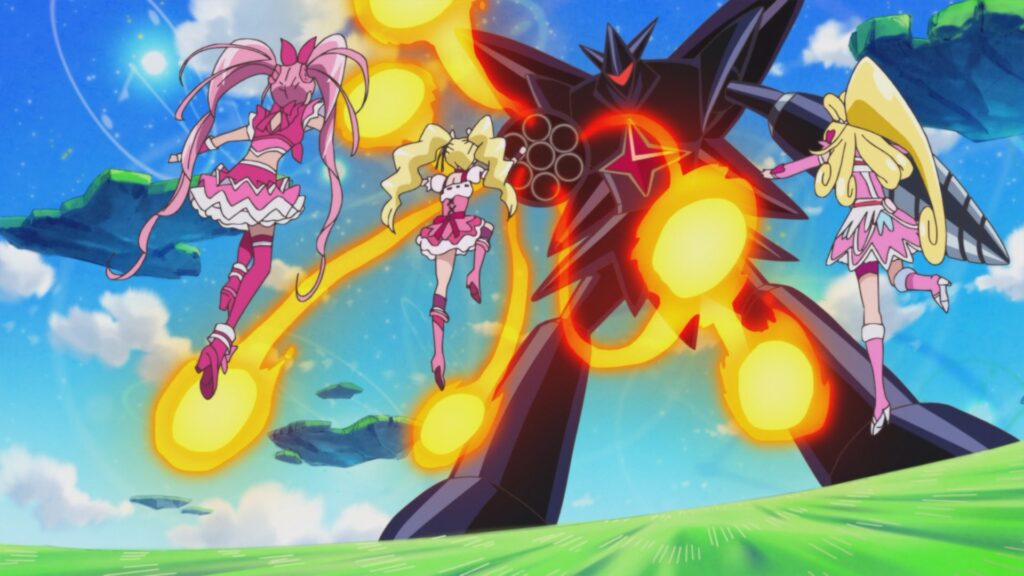
When it comes to screen time, constraining fighting moves in KiraKira Precure a la Mode and completely scraping battle elements in Wonderful Precure were quite a challenge. I think especially with these two series where it’s required to have food production and animal knowledge in consideration, it raises the difficulty to include specific themes while coexisting with action scenes.
Interviewer: Upon leaving Toei, not only did you continue participating in the Precure series, you also challenged various kinds of work. Are there any themes or genres that you’re keen on focusing on right now?
Tanaka: I want to work on an original that isn’t based on any existing source material. Right now I’m participating in a work which is challenging something in a genre that I’ve never worked on before, but it might be a while before I can reveal it to the public.
Interviewer: Go! Princess Precure uses the theme on “dreams”, Star Twinkle Precure expands the stage to outer space. While considering the main themes, what do you consider foremost? “What do kids of this generation need the most”, or “this time I’m doing what I want”, which would you prioritise?
Tanaka: If it’s an original work, the main theme is not solely decided by an individual. The producer, series developer, and staff would all come together to figure it out.
In the case with the Pretty Cure series, the main topic is typically decided first hand, but there are works where the theme is unclear.
The first thing to consider when coming up with a theme is who the target audience is. From there we’d think about how to incorporate matters of the time. However this isn’t a strength on my end, as it is mostly handled by Series Composition and the Producers. When it’s a theme suggested by others, I would approach it based on my own likings: “If I did this here it would be more interesting” or “This doesn’t look fun”. With that I was able to relate the work back to myself, so I wouldn’t intentionally pick themes that I’m not familiar or can’t resonate with.
Interviewer: In the official book of Go! Princess Precure (Go! Princess Precure Official Complete Book), you wrote that children “May not have room to think about their hopes and dreams”. It has been 8 years since then, did you have any new feelings or changes in regards to kids facing the reality of today?”
Tanaka: Based on my own experience, the reality is even more cruel now. Speaking of Japan alone in terms of politics, economy, and public order, insecurities have worsened significantly compared to what I had imagined. Lately I have this creeping fear that “Maybe not having room to think about their hopes and dreams” is starting to become a reality.
Interviewer: You mentioned that you didn’t want to tell kids that “As long as you don’t give up on your dreams they will surely come true”. In that case, what is it that you wish to convey to them through your works?
Tanaka: In terms of Go! Princess Precure, I hope that they could master the ability to survive. This was mentioned in an interview at the time.
Anime is a form of entertainment, and Pretty Cure is a work being watched by fairly young kids. As a creator, we would imply our thoughts in it, but to be honest, I don’t think these messages could be conveyed accurately. Kids that watched the show could have whatever afterthoughts and that’s fine, but if there were occasions where they could feel even the slightest of what we’re trying to express, that would be extremely lucky and that’s basically how we’d feel.
Unexpectedly, what I heard from the target audience of children for Go! Princess Precure was how they were influenced by the show to pursue something, or even gain the courage to change their life. This was far from my expectations, but this is an example of what made me simply happy as a creator.
Interviewer: Go! Princess Precure was your first work as director. When deciding on the theme of “dreams”, what kind of discussion did you have with screenwriter Jin Tanaka? Did you have any conflicts?
Tanaka: Both Jin Tanaka and I were newcomers. He was taking on the role of Series Composer for the first time and I was directing a series for the first time. On that note, we can’t forget about producer Hiroaki Shibata who nominated us to work on the series. From the start till midpoint of the project, he was essentially the guiding star that leads everyone on site. He was the one that got the ball rolling when Jin Tanaka and I were not familiar with giving opinions on our own standpoints and making the conclusions on our behalf. It was Jin Tanaka’s idea to have dreams as the main theme, but there was such a background story before this discussion was made.
Due to arrangements by the company, Shibata, despite his unwillingness, left the scene midseason. His substitute was Yuu Kamiki. Kamiki was a newbie producer just like us and joined the project at the start under the same title as Shibata, however from my perspective he was more like an assistant producer.
After Shibata left, it was only the three of us newbies.
Losing a central character made us three all equal, and it was only then we felt the liberty to express our conflicting opinions. Kamiki replaced Shibata in actively leading the stage, so Jin Tanaka and I followed suit. I think the development in the latter period was able to come to fruition because of our dynamic as a trio.
If Shibata was with us till the end, the story’s ending would likely be different. (In that case, it could also have been an amazing and interesting story)
Especially with original works, a creation would be born due to influences aside from the Series Director and Series Composition. These relationships change from one production to the next.
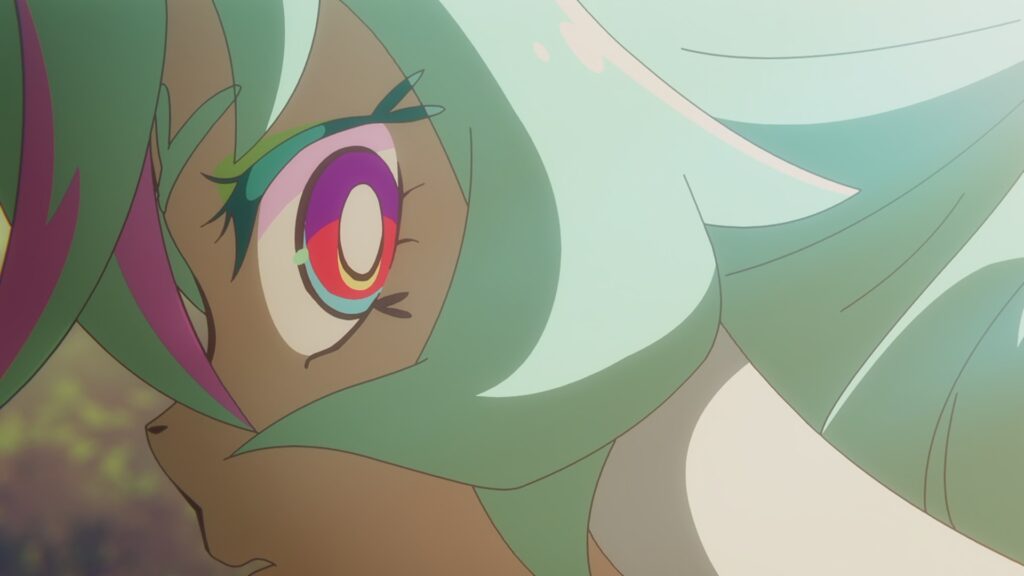
Interviewer: The movie Pretty Cure All Stars F gathered all 78 Precure across the history of the series. What was the biggest challenge in terms of script and visuals to have them all share the same stage?
Tanaka: 78 people in a 70 minute movie – this isn’t possible to fit them all under normal circumstances.
This had to be done with shrinking screen time of the main characters and compressing the story development. To say it’s a challenge is putting it lightly, it was the most important task, fitting it all within the movie time frame.
It had been 5 years since the previous All Stars film, so we decided to cut off all relation to the previous entries of the All Stars films.
In terms of script, the first half of the travelling scene sets the happy and peaceful mood, in the middle the truth is revealed and the story develops in one go, which is like a smack in the face for the audience. The Precure end up being completely wiped out, the world destroyed and reshaped. Considering this is the 20th anniversary movie, the focus was to create an impact and unique impression. With this movie, the target audience was not only kids, we also kept in mind the groups that have “graduated” from Precure so they were brought back too. Compared to the regular movies, the age range is a little broader, and I think it worked out pretty well in the end. I believe this was something that was first to be done in the history of All Stars.
I was mentally prepared to get opposing criticisms on this, however it seems to be received well which makes me relieved.
In terms of animation… Well, we couldn’t be afraid of the amount of work, we just had to draw. That is to say that I am not really an animator, so this we had to rely on the animators for the visuals. I truly believe they had a really tough job.
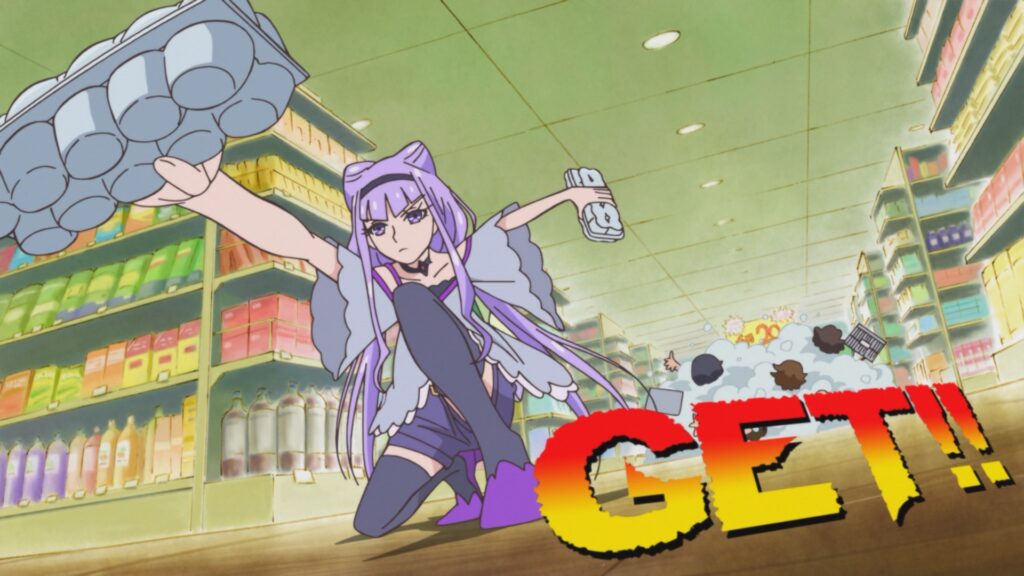
Interviewer: When you were in charge of the storyboards for Ep.15 of Hugtto! Precure, you talked about “keeping frames to a minimum”. When it comes to creating a comedic scene with limited frames, and having massive amounts of drawings for an action scene, which do you think is harder? Under the circumstance of limitations, how do you distribute the work and collaborate with the animation director? Did your experience with “controlled limitations” affect your future works?
Tanaka: The amount of frames don’t really matter these days, but previously when I was in charge for Ep.4 the amount of frames exceeded the limit by a wide margin, so I was asked to strictly adhere to the regulated amount of frames for Ep.15.
When I made the decision to join Hugtto! Precure, I secretly made a goal for myself – I wanted to do a different style with each episode I would handle this year. With this context, Ep.15 was my take on a low cost comedy bit with reduced frames. The script for Ep.15 was initially going to be more of a countryside vibe, somehow it ended up becoming a comedic episode.
In order to reduce frames, there needs to be stricter control on the Episode Director’s part when checking key animation. Firstly the storyboarding stage, you would have to consider how not to go overboard on the amount of frames for each scene. Planning camera work came first and foremost.
On the other hand, if you wanted a lot more frames, as long as there’s shots with heavy movement, and the submitted drawings are approved swiftly, the episode would be a breeze to direct. However the production side would probably not be too happy about that though.
Ep.15’s Animation Direction was handled by Kazuhiro Ota, and he is considered an animator that would rather have more frames for better actions. The A Part was a lot of frames and had shots with a lot of movement, yet I took out action frames as I was doing my checks as Episode Director. After explaining to Ota my intentions for this episode, he understood my intention as the B Part came to be, and he switched to a more suitable style for what I was going for. That’s how I remember it though.
After Ep.15’s success, I wanted to take a step further and made Ep.26.
This time it’s not a comedic episode, but used a lot of still images, and it turned out to be the episode of Hugtto Precure with the least amount of frames over the course of the entire series. It was an accomplishment, but I do agree that the notion of cutting back the animation might have been a bit too obvious.
After that I worked on Ep.37, the All Stars episode of Hugtto Precure, Star☆Twinkle Pretty Cure: Hoshi no Uta ni Omoi wo Komete, Dragon Quest: The Adventure of Dai, and instead of working with reduced frames, I ended up getting more work with much higher frame counts.
If I had opportunities to have the challenge of dealing with low frame counts, these experiences would come in handy. Unfortunately regardless of television or movies, both tend to demand high budget visual quality, so I don’t think this experience could be used for productions these days.
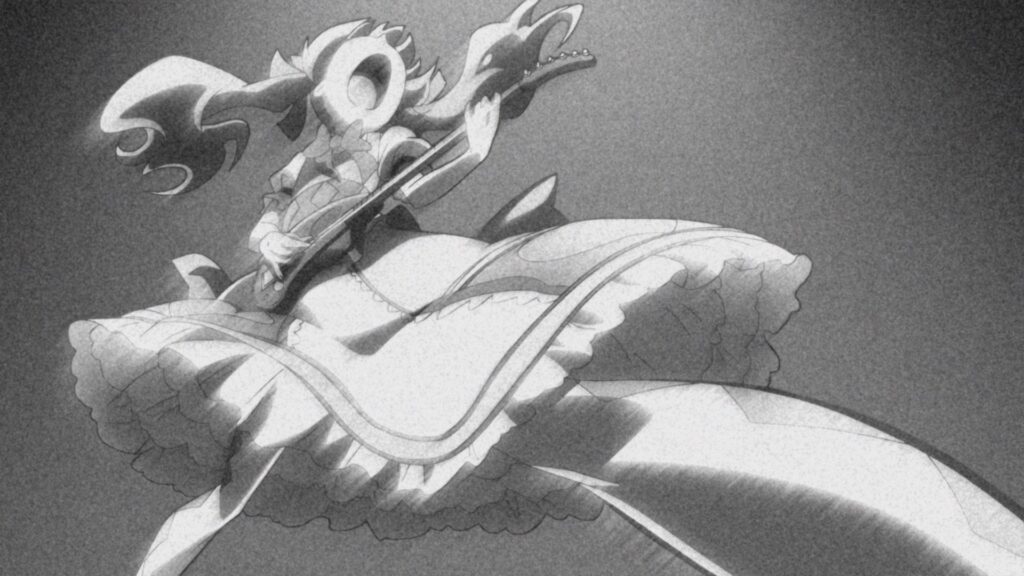
Interviewer: Before becoming the series director for Go! Princess Precure in 2015, Tanaka sensei had been a long time Episode Director for the Pretty Cure series. In the past I’ve heard you wanted to help with Ayu Oogaki’s “Book for the Assistant Episode Director”. When you joined as an Assistant Episode Director for Yes! Precure 5, what kind of role and scope of work did you do during the live production at Toei Animation? Through participating in the early stage of production, what experiences and discoveries did you make that were helpful for the future of your career?
Tanaka: After resigning and looking from an outside perspective, it was only then I realised how Toei’s Assistant Episode Director system actually made sense.
The role of the Assistant Episode Director is to stick closely with the Episode Director, participating in all related meetings for each episode. Preparing settings and reference materials which assisted in meetings. They also conduct a second check of genga of their own after the Episode Director does their check. The Episode Director deals with the core creative apects of the episode while the Assistant Episode Director would work on the finer details (such as any missing parts in the setting, directing the art department on the background art as an example). Also, during meetings for the episode, the assistant may step in to answer on behalf of the Episode Director. They would present for editing, voice acting and sound mixing. The Episode Director would give directions for the Assistant Episode Director in how to refine the work before airing, but the actual ground work is done by the Assistant Episode Director.
In other words, an Assistant Episode Director handles all miscellaneous chores that are related to the episode are handled in substitution or in tandem with the Episode Director. Hence, an Assistant Episode Director needs to have a strong understanding on each episode, as much as the Episode Director themselves.
(Due to the Assistant Episode Director handling various tasks, the Episode Director can focus on the creative aspect of the episode, get time to draw the storyboards, and allow the production to work smoothly in the rotation schedule. The two roles compliment each other.)
Doing this for the whole year while handling multiple works makes you work on a lot of episodes gaining a great amount of experience. You’d get to follow many senior directorial staff in action, observe their different work style and learn different approaches to handling episodes. After doing this for several years, (as long as you’re not slacking) you’d have grasped everything you need to know about directing. As you gain recognition on what you achieved on your role as assistant, you’d be granted opportunities to direct episodes for yourself, leading to being an independent director.
To be able to build the company under this system is one of the merits of Toei Animation. The newcomer’s road to becoming an Episode Director has been clearly set. (On occasion the role of the Assistant Episode Director or Assistant Director can be seen on other companies’ productions, but I’m not sure about the details with how the role works there. I think this has nothing to do with Toei’s system.)
However this system is under the presumption that there are is a production environment where there’s episodes in rotation all year round.
If there are no episodes, there won’t be work for the Assistant Episode Director. This is only a system that can exist when there are large volumes of work in rotation, which it’s only now that I realised that it is Toei’s biggest strength.
Now that I think of it, it was because the first company I joined was Toei that led to me becoming a Director. That’s my thoughts on it.
build note: I actually didn’t know Ayu Oogaki had a book on Assistant Episode Direction until now! Oogaki used to be affiliated with Toei Animation but is now freelance, she was a regular Assistant Episode Director on the Precure series and has since participated as a Director and Animator on various independent works and larger productions.
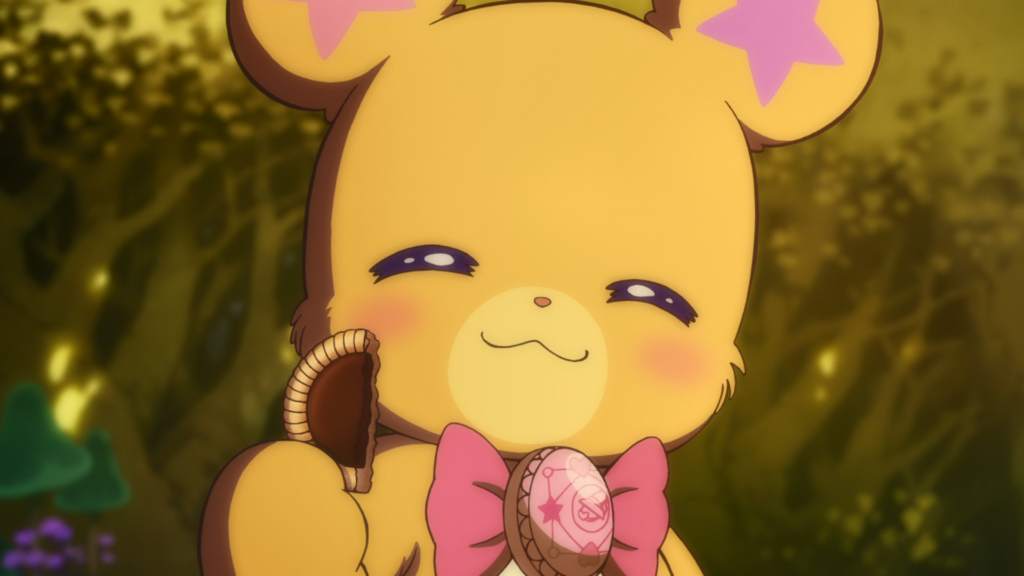
Interviewer: For the four works you directed at Toei Animation, they were all in partnership with scriptwriter Jin Tanaka. This was often a frequent topic among Precure fans. In addition, after the broadcast of Go! Princess Precure, a lot of later works started to illustrate the Precure when they become adults. Was this idea of showing the Precure “all grown up” suggested by scriptwriter Jin Tanaka, or was it decided after discussing with the team?
Tanaka: With a theme about dreams, to show what happens after dreams come true is second nature. To be honest I can’t remember who suggested it.
However, I do believe that the audience had different expectations for the ending, so it doesn’t feel right for us to determine the right answer. Some people might be disappointed by that, thus I hoped to only show a glimpse and leave the rest for the audience to interpret. In terms of my role as Director, solely showing everything has no emotional value, and also seen as tacky. This is really more of my own personal preference, as the pros and cons differ for everyone.
I was not involved in handling the series after Go! Princess Precure, so I don’t know. It’s completely a coincidence that later shows start describing their lives after growing up. This is a reflection on the staff’s idea each year, there’s no unification on the series as a whole on showing that.
In reality, the connection between each series isn’t as much as what fans often imagine.

Interviewer: You were also involved in many works as the Episode Director. When directing those, what do you focus on the most? Is it the overall rhythm of the episode, or expressing the feelings on the specific scene, and how do you strike a balance?
Tanaka: My seniors had taught me this – the job of an Episode Director is to control the feelings of the audience. Envision what kind of emotions I would want the audience to feel, letting these feelings flow smoothly with the scenes and angle shots, guiding the audience until the end of the episode. If everything is structured well, the rhythm of the episode would naturally appear.
This will happen on its own provided that the script is followed accordingly. Unfortunately this is not the case all the time. Even with the existence of a well-written script, there is the requirement for the Episode Director to step in and support, that is just the reality.
It’s not about simply going with the flow of the set script, but consider how to add a little extra something to make an interesting episode. I think it’s important to keep that in mind as part of the Episode Director’s job. If there is something that isn’t shown properly in the script, then you’d think about how to compensate for it. In the end it’s about making yourself happy with the work.
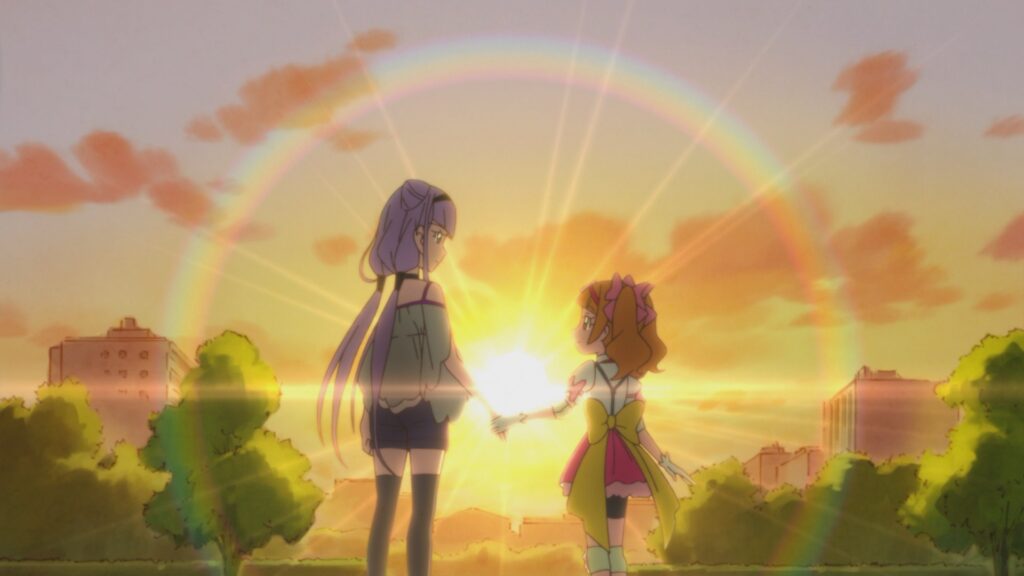
Interviewer: Being part of the Pretty Cure series for more than 15 years, how do you keep your creative desires going as a creator? Was there any work that made you feel “It was good to be able to get this far”?
Tanaka: I’m a director, not an artist. In other words, I’m working with what’s placed in front of me, it doesn’t have much to do with creative desires. To some degree, I’m able to continue working because of this mindset.
I guess a motive for me would be to enjoy the work in front of me.
To say a work that felt “It was good to get this far”, That’s kind of hard to say…
For Go! Princess Precure and the movie Precure All Stars F, I felt that I was able to realistically convey everything I wanted to. That is to say, I do put my feelings into every work I do, so I can’t say certain works get more or less effort from me.
Interviewer: Upon resigning, you said you “Wanted the challenge of working with different genres”. In your experience with the Pretty Cure series, is this applicable for other genres of works? On the other hand, was there other works that made you feel “It’s better to let this go”?
Tanaka: This depends if it is an adaptation or an original piece.
With originals, I can put my feelings and experience directly onto the work.
As for adaptations, there is the prerequisite of the original work, so first thing is to stick with the nature of the existing work.
Working prior with Pretty Cure has been a tremendous help when working on original works.
However with adaptations, there’s more to consider. This was what I felt when I participated in Dragon Quest: The Adventure of Dai.
Speaking from personal preference, original works suit me better.
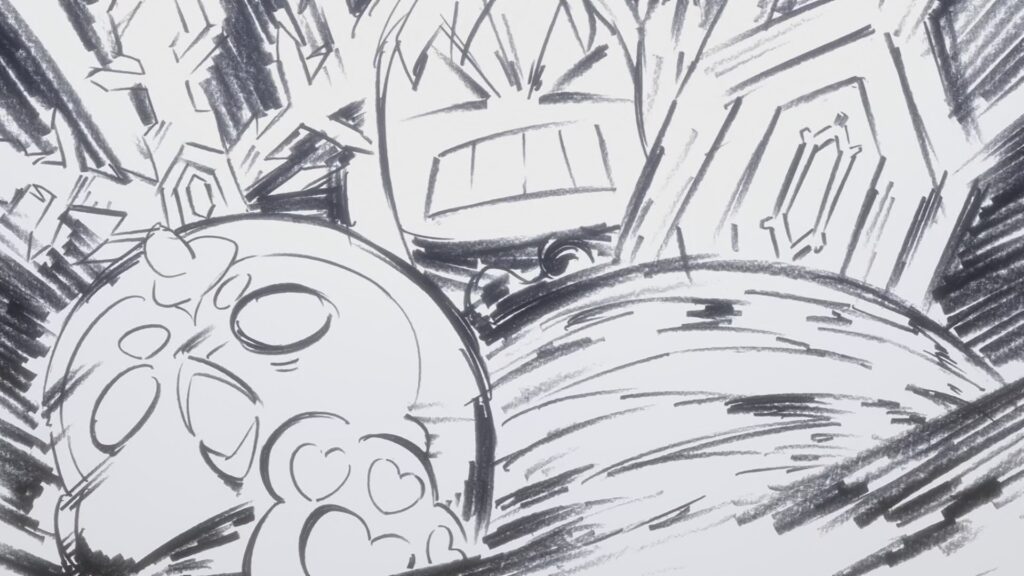
Interviewer: The movie Precure All Stars F has 78 characters and numerous staff members. As the director leading a team of such massive scale, what do you focus on the most? Please talk about the difficult areas and how you overcome them.
Tanaka: The movie Precure All Stars F is an anniversary work, but in reality there’s not much difference from working with movies in the past. The content is much bigger and tougher, but there were many familiar staff providing their support. In that sense, it was a production environment that felt reliable.
The toughest part was drawing the entire storyboard on my own, but to me this was the fastest and efficient way to stay within the schedule. It really was tiring, but I think I got through it. How did I do it? Just keep drawing till the end. The simplest work has no shortcuts.
The director is responsible for the work, but not necessarily responsible for the team. There are many more staff that oversee every part and make connections with everyone working on the film, and I had lots of supporting partners. An important policy with the directing work is to work swiftly and communicate with the entire staff body and it’s just as important as the creative aspect of the film.
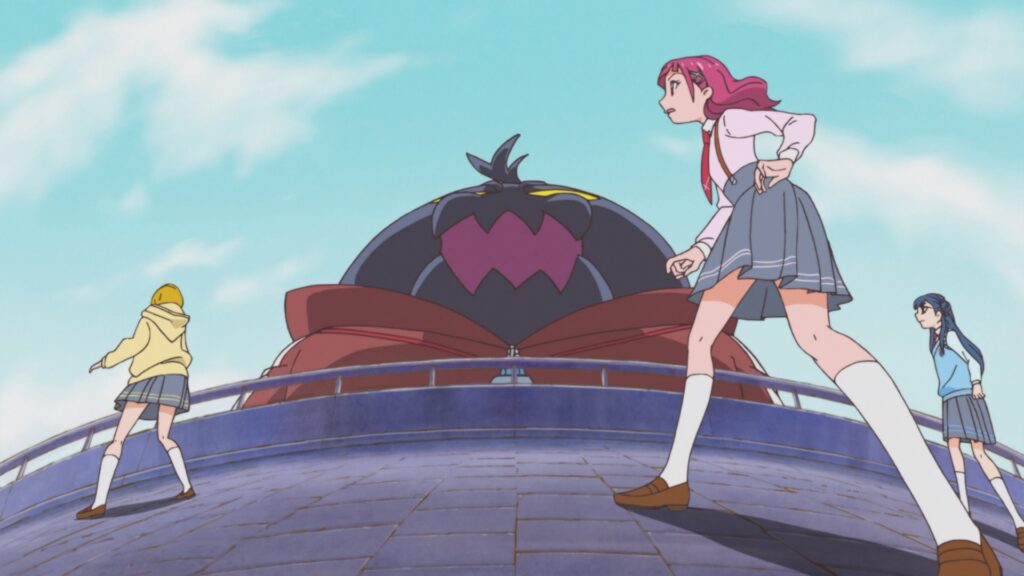
Interviewer: You’ve worked at Toei Animation for about 18 years, participating in various works. For the young animators and episode directors that are entering this industry, what do you wish to express to them?
Tanaka: The workflow of animation studios has become more complicated in recent years, I think my experience may not be relevant now. There’s a lot of things happening on productions that weren’t present during my younger days, and that makes me feel a little left out. I might be the one that requires guidance instead.
Complex work procedures, production schedules becoming longer and longer, the work that can be done by a single person decreases. For an Episode Director, how many storyboard have you drawn or how many episodes have you directed in a year? How many episodes were directed? In other words, the opportunities to gain experience are reducing. I think this is an issue in recent years.
Also most companies these days are aiming to be howaito kigyo, limiting working hours. This may be good for society, but it comes at the expense of having opportunities taken away despite wanting to do more. As a result, there are less chances to grow, and just about completing an average job.
When you’re young and full of energy, and all you could think about is working hard and pushing yourself to the limit, it’s kind of nice to have a period of time like this in your life… However this doesn’t match up with today’s beliefs.
5hiro note: howaito kigyo or white company is a company that focuses on the employee’s wellbeing with the interest of happy employees becoming happy workers.
Interviewer: In recent years, young creatives from China are also on the rise. As they’re coming from a different cultural background, do you have any advice or message for them?
Tanaka: Assuming the collective aim is to produce good work, then there’s not much relevance with cultural background. If anything, it would be the language barrier. There are areas in terms of animation that can’t be simply conveyed with just words as well as a lot of technical jargon, and every studio would have slight variations in communications, so I think that barrier is a challenge.
Aside from a few top class creatives, I think animation in Japan is becoming weaker. Henceforth there are more situations where overseas creative support is needed. We gained help from overseas for the movie Precure All Stars F, and I deeply appreciated it. I hope that we can continue cooperating like this for years to come.