
As someone who is fantasized with the world of animation and anime, one part of each year that I anticipate is the four sections of seasonal anime; winter, spring, summer, autumn. To many, those are the seasons we get everywhere, but to me, and countless others, I view them as the rotating cycles of what new possible animated classics are around the corner. For over half a decade now, I have been following the ins and outs of being a follower of seasonal anime. I’ve seen the highs. The lows. The in-betweens. A little bit of everything. Here is the latest of what I saw this past spring. I apologize in advance for not listening to getting suggested Nippon Sangoku. Had I did, this would be a clear, nice, even ten shows. But I didn’t until It was too late, so instead, it is an awkward nine.
Agents of the Four Seasons (dir. Ken “leaf” Yamamoto)
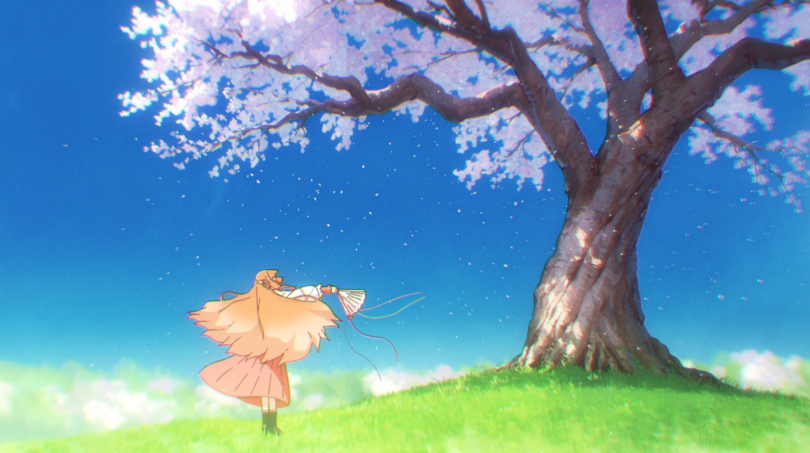
Eight years after her previous manga, the wonderful Violet Evergarden, was adapted into anime at Kyoto Animation, hearing the news Kana Akatsuki would have her sophomore manga receive it’s own anime quickly became one of my most anticipated titles of 2026. Everything about it, based on early previews, suggested something that would match the same artistic, thoughtful quality that it’s 2018 predecessor. I might be in the minority when it comes to this, but personally, this was a kind of a big disappointment. It’s not a terrible show, but something about it rubs me the wrong way here. I believe this is a show were maybe I need to re-watch, but as it stands, I have some words.
On a technical level, Four Seasons is as good, or even better, than Violet Evergarden. There’s a quality in Yamamoto’s direction that is undeniable, even against my issues. Almost every frame appears to come straight from an art gallery, down to the rich textures of colors, especially of green and orange, used to communicate the spring. The seventh episode has this nuke scene that on paper might not be anything crazy, but is brilliantly directed in it’s fluidity that it works. Ushio’s score also plays into the melancholy, emotional motif the score inherits to. I also liked Hingiku a lot. She was definitely the best character in terms of healing and overcoming her past trauma, even if she falls victim to why I’m so conflicted about the show. Which brings me to my main point of contention.
It’s melodramatic. More than any anime I’ve seen all year. It has brilliant ideas of confronting emotional trauma, but when the characters are almost always constantly wallowing in angst or misery for so much of the runtime, it’s hard to say how effective it really is when the bulk of the program drowns in it. There was a point where I felt every scene was the same variation of angst that got on my nerves, especially with the number of flashbacks that felt intentional, rather than genuine. It’s strange, because I didn’t have this problem initially. The first episode struck a nice balance between dramatic gravitas and knowing to not overwhelm in feeling it wouldn’t constantly make you cry, but something about the rest of it feels it’s trying too hard. It has great production value and ideas, but not exactly my favorite execution of them. Ah well. Maybe next time.
Botan Kamiina Fully Blossoms When Drunk (dir. Takashi Sakuma)
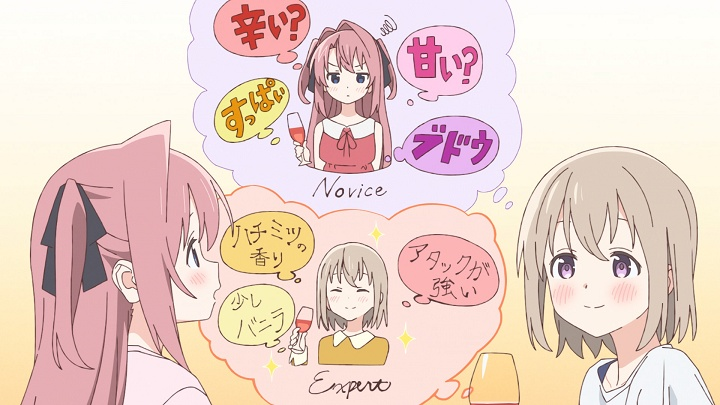
One of the great joys of each year is finding a show you didn’t initially have on your radar, but blew you away, in the best way possible. Last year, that was me with Medalist and Apocalypse Hotel. This year, it is the Botan. While I liked with Soigne accomplished with their first effort in Mono, their follow-up is signs of a true great anime studio in the making. It’s obvious once you see what Botan has to offer and why it was able to blossom past the competition, but I’d argue why this is a case of style and substance going together to create something so great and unique against it’s genre.
It’s no secret Sakuma’s direction is the secret sauce to the drink, and contributing to it’s word of mouth spreading as much as it did. Much like a box of chocolates, you truly don’t know what this show has up it’s sleeve. One episode, it resembles Akiyuki Shinbo’s body of work in discussions of analog portrayed via scribbles or chibis ala Hidamari Sketch, and then another, girls are getting emotional discussing Robert Altman pictures, or well, deception of gifting alcohol is presented with the sincere grandiose aura of a fantasy epic. The unpredictability of each episode’s direction rules. For a premise that sounds so simple, Botan flexes out a creative style that sticks with you past watching an episode on a Friday morning. For me, as a cinephile. Botan was the desert coming home from my extensively long trips to see a new picture, often being better than what I saw.
Thankfully, Botan also presents the audience with such a thoughtful and striking exploration to the world of drinking. Much like Botan is a newcomer to drinking and this anime introduces her path to discovering how drinking can heal you in various ways, it does for us. Even if you don’t drink any beer like me, I understand it’s exploration, because how dedicated it treats it’s subject matter, also having a relaxed, gentle, calm atmosphere that marries perfectly with the writing. Aside from the direction, the best bits are when the characters are simply living life, and especially when it details into it’s romantic side. It fits naturally that I never second guess it. Botan and Ibuki’s bond is as effective as it is endearing, down to simply wanting to buy matching earrings to confirm love, or sharing a kiss under the midnight sky. Just about everything in Botan is a real winner. In a way, this is the show of the season where writing about it doesn’t do it justice at all. Whatever Sogine has ready to blossom next, you bet I will be there for it. Who knows, maybe it will be about smoking.
Ichijōma Mankitsu Gurashi! (dir. Toshinori Watabe)
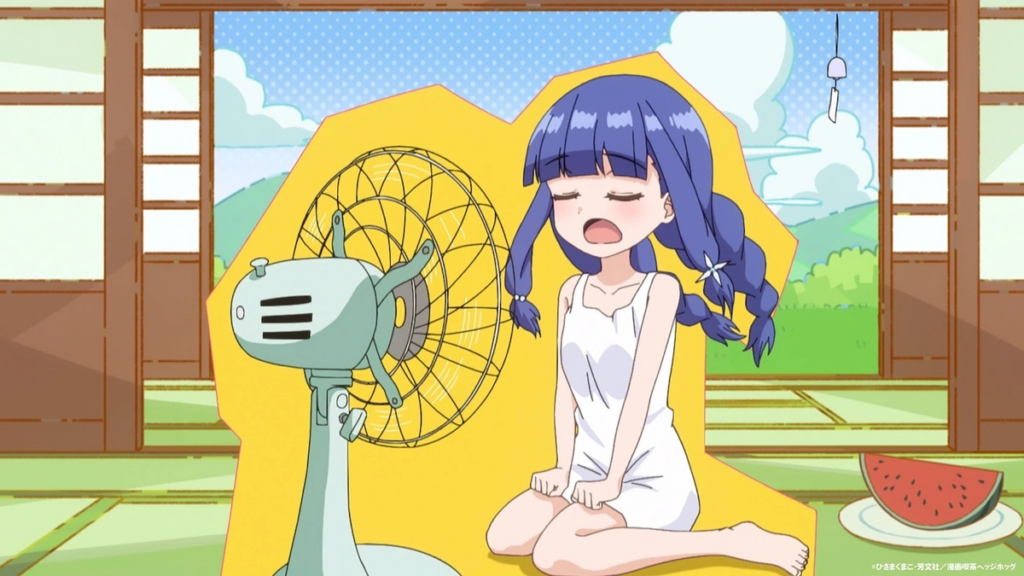
While it might not be a name that rings a lot of familiarity with western audiences, Manga Time Kirara has long stood as one of my primary interests in the realm of anime. Over the years, I have become accustomed to their classic line of shows where cute girls do cute things, many of them really working for me. Similar to how I watch a new Pixar film to keep up to date, I make sure to watch a new Manga Time Kirara anime adaptation, in the hopes they can surprise me with another gem., or at least, something that’s endearing. Unfortunately, this was not one of those instances.
Similar to how I felt with last year’s equally “meh” Bad Girl, the obvious issue is the lack of bravery to make it stand out in it’s genre, let alone Kirara anime. The classic bell and whistles are all there, but without anything substantial to make it pop or stick with you. On paper, it has potential; it follows a poor countryside girl brought into this new world of subcultures she never knew but grows to learn due to her new manga cafe life. However, not only does it never reach it’s merit, but I struggle to understand why I should care about these characters, with such familiar archetypes. You have a rich girl with all the manga. This YouTuber manga reviewer. This super cute girl who’s a hardcore gamer and tough-as-nails, and yet, none of these girls ever feel three dimensional. It’s all Kirara 101. What you see is what you get. Not even the comedy is safe from this. It’s all too predictable.
In a way, this show is the polar opposite of Botan, where that taught me so much about drinking and it’s culture, this didn’t excite or educate me about manga cafes. There is barely anything worthwhile to latch onto. The furthest it got was when Meiko, once the rhythm of the cafe is fully established, begins to question herself, and how she doesn’t feel special if her presence in her new place means anything. only to become encouraged by one of the other girls that she does have impotence as the one who is able to look out and be a reliable friend for others when nobody else can, even if she might not see it initially. The sort of compelling weight I wanted to see, but it’s in a sea of mediocrity and forgettability that is unremarkable. Here’s hoping the next few Kirara anime can be better.
Magical Sisters LuluttoLilly (dir. Shintarō Dōge)
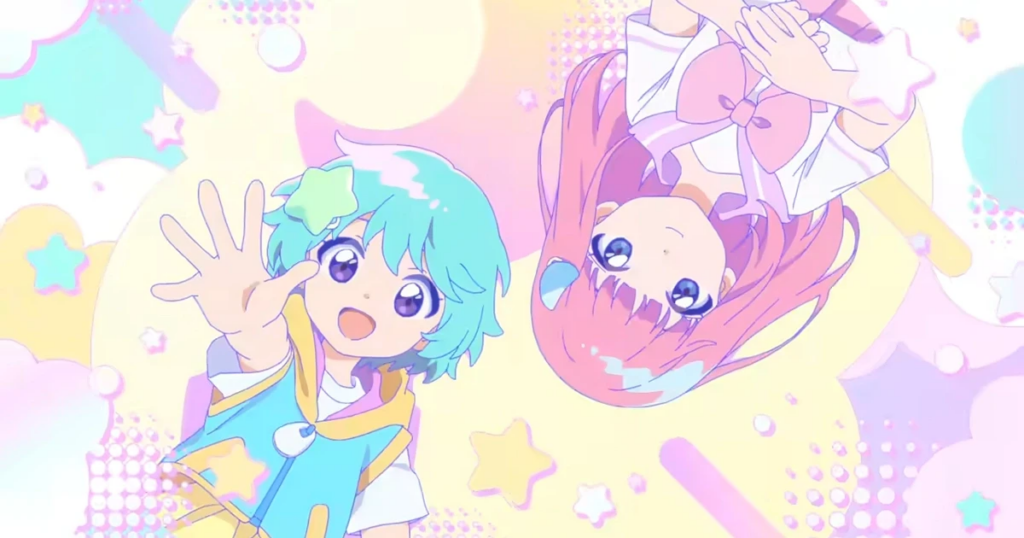
It’s always a pleasure when I get to discuss a magical girl series, which should happen way more often than it should. There were two of them I had watched this season. I think if you knew me from elsewhere, it’s obvious which one that it is, but that’s not to discredit the other new Mahou Shoujo I checked out, because it’s really good. One of the few times I know of having seen that an anime got announced on my birthday, which is rare. As someone who never saw any of the previous Pierrot Magical Girls line of anime, and going into this blind, I must say this was a solid first impression.
Easily, it’s strongest aspect is the focus of sisterhood, and the worldbuilding around them. Fuu and Rui have easily understandable characters. As sisters who drifted away, with opposite personalities on the other end. I was impressed by not just how charming and sweet it was, but the legitimately great dramatic and emotional tension that comes out of having to keep both of their new identities a secret, as they are in a position where they must rebuild their bond from scratch. Which makes it all the sweeter when they can connect. Scenes such as Rui giving half of a make-up set to Fuu from the kindness of her heart, or the whole manju talk that is tender about being honest about feelings and sincerity. Small moments that make a difference. Something this show is expectational at.
The progression from a relatively normal environment to something much more magical, is also solid. I think it was genius to have everything appear mundane, only to expand on how magic exists. I love how one of the side characters has their big reveal foreshadowed from simply the number of customers that show up to their cafe that weren’t obviously human, but isn’t so on the noise that it doesn’t work. It’s all so clever and fun. That being said, I do wish certain things were better, such as the direction. With such strong production design and concepts, it’s a shame the show lacks a certain tactile feeling direction to make it pop more than it does. Watching Fuu reflect on her mental struggles would be more impactful if the direction also reflected that. That being said, it’s very much a show worth checking out, and I hope the second cours is even more magical.
A Hundred Scenes of Awajima (dir. Morio Asaka)
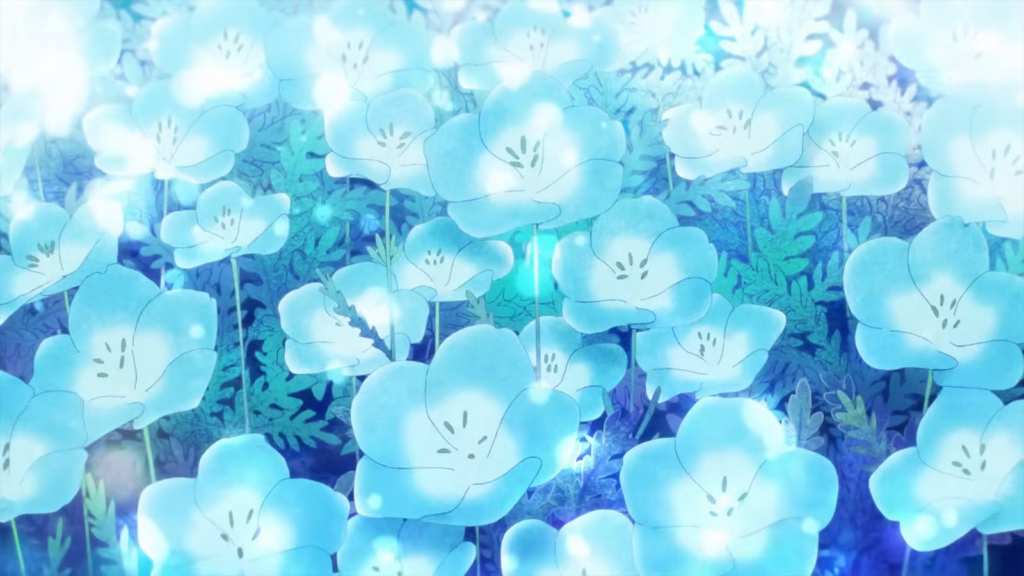
Out of all the shows from this season I watched, this is the one where I feel I need to re-watch the most, if I were to revisit any of these years down line. Not because it’s my favorite, but because it’s the most interesting, and I feel it would benefit. I’m no stranger to non-linear work (Christopher Nolan’s Memento being an all timer in that regard), but Awajima presents this format of storytelling that has both it’s best and worst attributes. A show I liked, but one I don’t know if I definitely loved. It is very good, boarding on great, but maybe one where one watch does not do it the proper justice.
I was confused on how to approach this was one, which makes sense, because the show itself is confusing. The best way to discuss this show is how it really is the titular hundred scenes from this school, as it jumps around various periods in time and characters. On one hand, it’s impressive in being able to communicate not just one’s life, but multiple of them. We get so many perspectives in the same working environment, in addition to the layers of girlhood and adolescence. It presents so many ideas and topics that wouldn’t be possible if we only had one girl. It’s a lot to take in for an anime, providing to asking poignant life lessons and humanity, from the legacy between mother and daughter, to striving to work hard on becoming a star in Awajima, to their own rendition of Romeo and Juliet playing into that star aspect, or the regrets from death and bullying. That’s only a few.
The first episode establishes the school and gossip of these students having to deal in a cut-throat world from how hard their ambitions and emotions drive everything that is only expanded upon each episode. Asaka’s direction is great at portraying a muted, watercolor style that plays into the realism and dramatic weight of what we are seeing. It enhances the texture to it’s melancholic warmth, with a clever usage of blue in the opening and endings subtly address it’s sorrow, sadness, and youth of being a girl. The symbolism of flowers to show it’s ensemble cast reminded me of how Paul Thomas Anderson’s Magnolia used it’s titular flower to express similar direction, but I think it’s even better here. This is a very good show, though maybe it is a little confusing at times to say that I loved it.
The Ramparts of Ice (dir. Mankyū)
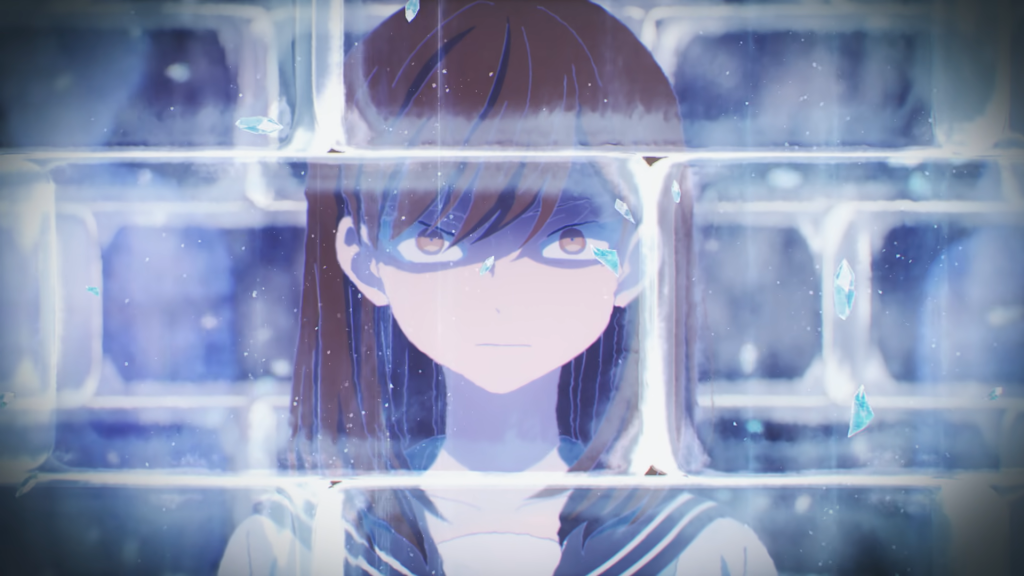
It’s not every day you get a mangaka who has gotten two of their anime adapted into anime. Most would be lucky to get even one of their manga given an anime. It’s even more rare for them to air so close to each other, let alone in the same year. It’s almost unheard of them to air in back-to-back anime seasons. Kōcha Agasawa must be the luckiest author of 2026. While I thought You and I Are Polar Opposites was a wonderful time in a genre I’m slowly starting to come around, and it was the best seasonal I saw earlier in the winter, think it’s sister series might been even better and greater.
In counterbalance to the mostly peppy Polar Opposites and it’s deception of finding love that is super sweet and lovable, this is a work that does not bother to hold back from it’s rawness and inner beauty that hits close to home. Koyuki Hikawa has always been a girl who had trouble interacting with fellow peers. This is her story. One that is filled with many of the lighthearted trademarks or comedic timing a romantic comedy may have offer, but also not afraid to asking it’s questions and take it seriously on a deeper level. They don’t call her the ice queen for nothing. Not only is Koyuki’s trauma and lack of social interaction so real and authentic, but it’s so sweet to see her overcome them to get the friendships she’s always deserved. I can’t say it didn’t strike a certain chord with me.
While the premise might seem familiar with a shy school student learning to break out of her shell, it’s the execution that matters. Minato Amamiya appears to be the idealistic man, in spite of his sincere reputation that drives Koyuki away. The most memorable scene, to me, is episode four’s masterful sequence between Koyuki’s frustration towards him and the times she spent bullied, and Minato being unable to communicate back. It might seem relatively minor, but it strikes a picture of how messy high school life is. The brilliance of this show is diving deeper into the humanity that makes us human, using to reciprocate the familiarity to make something that’ll break and touch you.
Re:Zero − Starting Life in Another World – Season 4: Loss Arc (dir. Masahiro Shinohara)
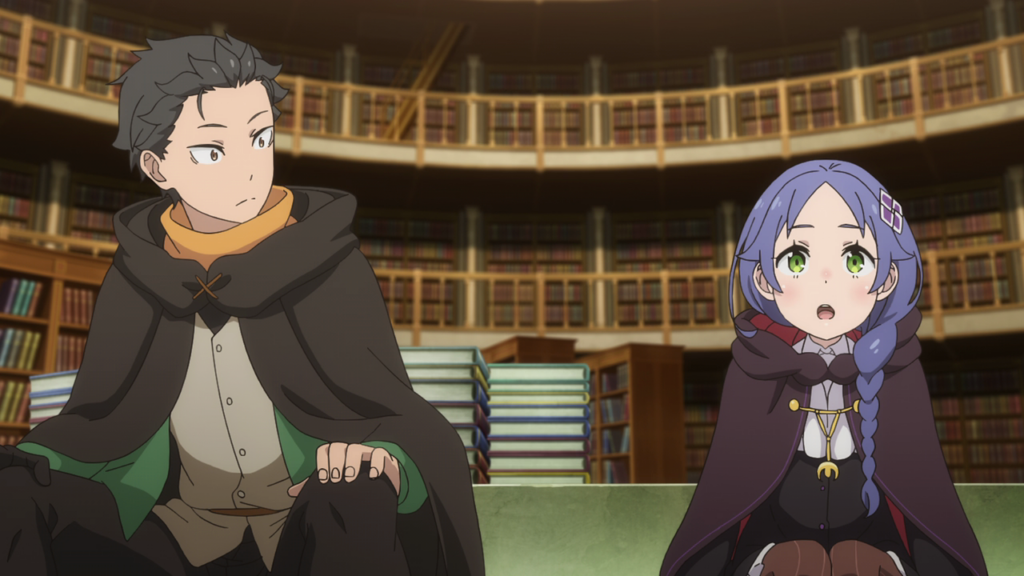
While I might have been hesitant to give the series a go for many years, Re:Zero quickly became one of my favorite long-running anime. I was introduced to this world around the time of the third season, and it surprises me why I didn’t get to it sooner. It’s truly a unique piece of not only it’s genre, but of animation history. There truly is nothing else like it. It is it’s own labyrinth of trying to discuss this series that I could be lost for hours and days trying to decipher it, which only makes it all the better that I find this fourth season is the strongest it’s been since the inaugural season.
In many ways, S4’s Loss Arc is the most Re;Zero season that a Re:Zero season can be. It presents the most physiological and horrific presentation this series has had since that first season, which remains my favorite and the one I consider the best, so it’s a good thing I got reminded a lot to the brilliance of how I felt watching S1. for the first time When Beatrice cried over not wanting to be left alone when Subaru screws up, even if it might be a brief moment in their histories, tells you so much about their dynamic and love for each other, in such little time. The season is perfect as depicting who Subaru wants to be and who he is, because at it’s core, he is a man willing to take it on himself to protect what he values, even if it means having to die over, and over, and over again.
The last few lines are some of his best, as the brilliant culmination to everything we have learned about him. The sequence of pure distortion and hatred attacking each other is a powerful imagery of not only how far he’s come, but the physiology of how this season deconstructs his character, especially because it does not bother being mysterious. It tugs directly at him. The physiological drama and horror is exceptional. The pacing flows the best since S1 from it’s strong attention to oppression and danger immediately in sight. Over and over again. I think this is the season that made me admire Anatasia’s character, even if might technically not be here that we are following most of the time. I don’t think it’s an understatement to say Eridna would haunt you if she truly existed. Nor would it be that this is really superb television. Keep these arcs and seasons going.
Witch Hat Atelier (dir. Ayumu Watanabe)
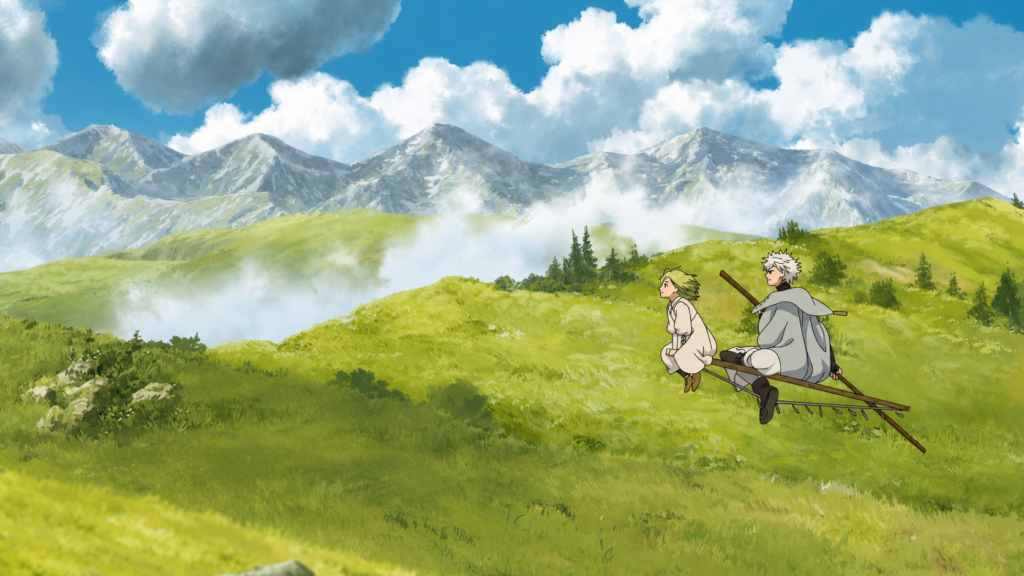
If there is going to be one show people will remember most from spring 2026 years from now, it will be this one. The show of the moment. Arguably the most popular new anime of the year. The one people won’t and wouldn’t shut up about. For good reason. had read a little bit of the manga earlier last year, knew of the basic premise and characters, but decided to mostly go in blind. Yeah. it’s as good as everyone says it is, though I might be more hesitated to call it one of the great 21st century anime masterpieces until further notice. I mean, it’s pretty close to being there, and it’s easy to why.
Witch Hat Atelier is a classic storybook brought to life. The direction and cinematography make it obvious. The fifth episode’s signature scene of ink, having taken years to bring to life, is pure magic. Coco is the right blend of being a scrumptious goofy girl, while having great compelling drama and dramatic coming-of-age entice, feeling the guilt of what happened to her mum. There’s so much more than just an excited girl who has her fantasy be realized. You believe in Coco as much as Quifey does. A gentle soul fighting for the injustices of the magic system in his world. Said system is interesting, from how it equals magic to art, or the obvious gun control parallels forbidden magic with the ink. It reminded me of de Blob and it’s take of art and ink, which is a good thing to say.
What else can be said about this series that hasn’t been said before? Even if I’m not sold on the Olruggio hype in this first season, or that I wish more of the magic concepts were explored in greater detail, or that it needed more Tetia, or maybe I’ve seen too many animated shows to know where Agott is going with her arc of having what she needs beset with Coco’s arrival in the long term, it is wonderful television that I’m sure will only get better as more material is animated. It gets better the more I think about it. After all, someone will tell Richeh the amount of disdain I would get for saying this is not my favorite of the year, like how she was scolded for magic. What a poor girl.
Star Detective Precure! (dir. Kouji Kawasaki)
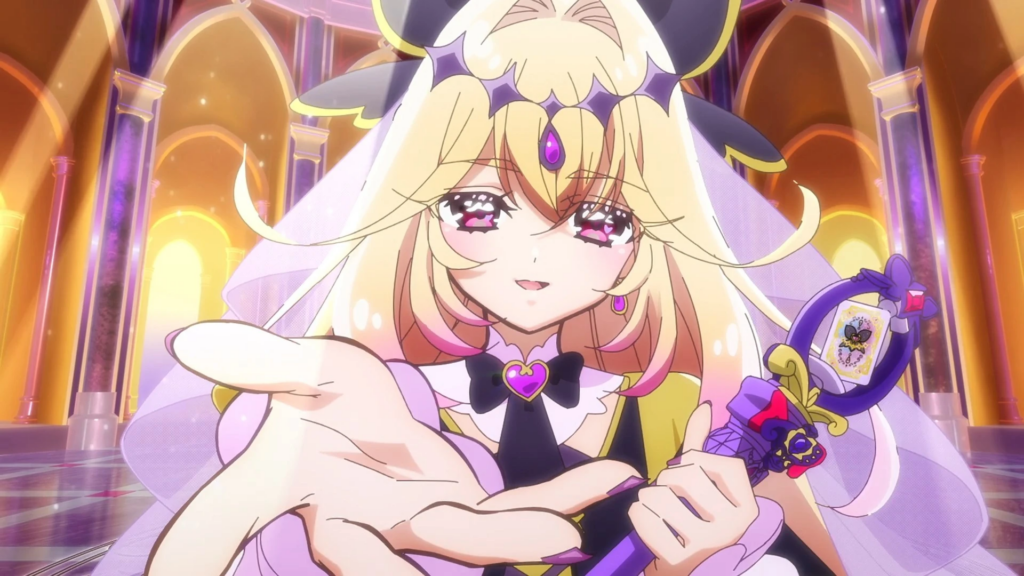
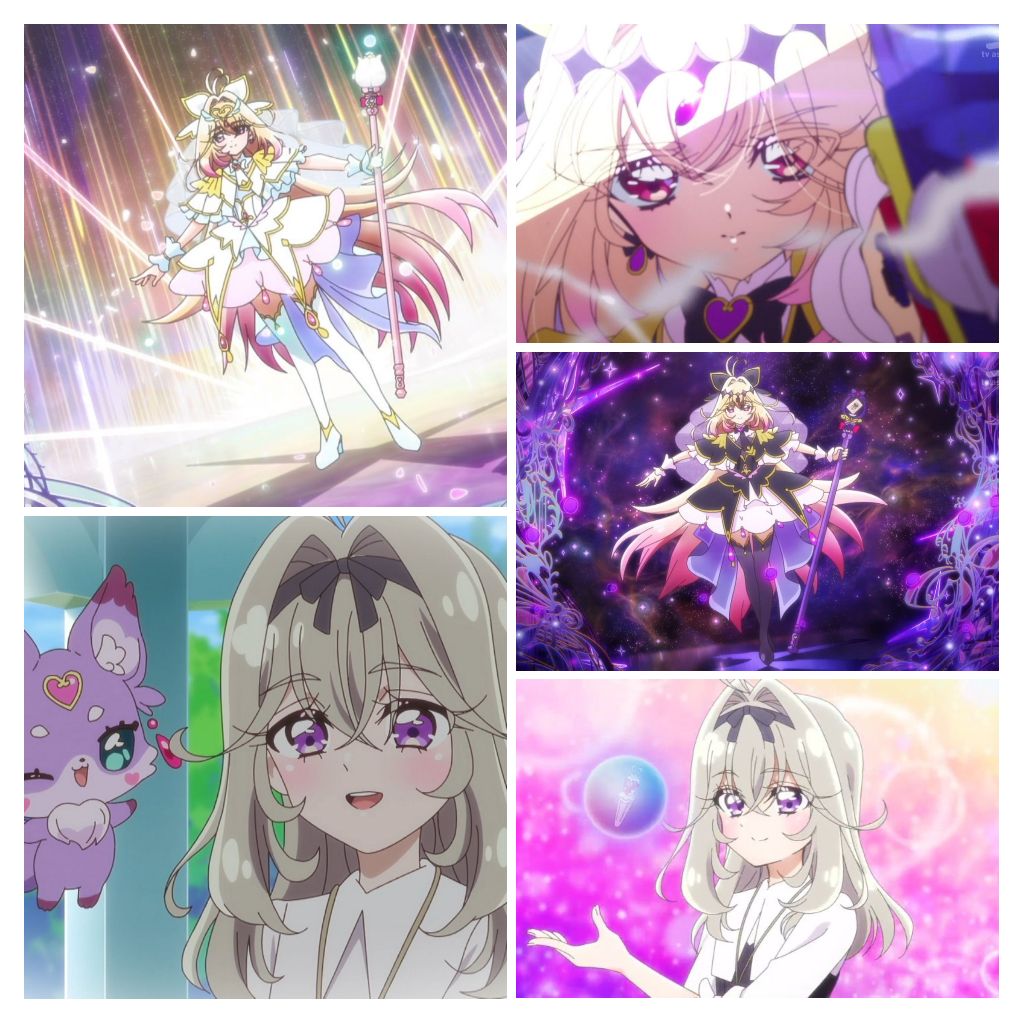
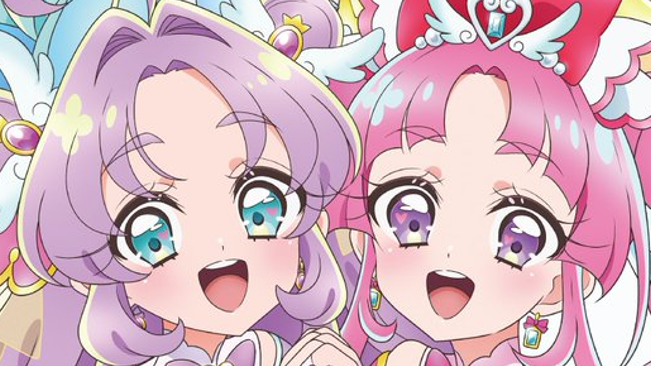
Even if I know in my heart that Botan, Ramparts, and Atelier are better shows, I think it’s obvious which show has left the biggest impression on me when it comes to not just 2026 anime (in the first half at least) but 2026 fiction in general. If you told me the anime I would be most invested in this year would be, yet another Precure season, coming off a relatively disappointing installment, I would’ve not believed it. If you told me HeartCatch would be in jeopardy of having it’s title as what I consider to be the best of the franchise questioned, I also wouldn’t believe it. If you told me I would grow one of the strongest obsessions with a character ever because of Precure, I also wouldn’t buy it. Yet, it all happened. This is more of an overview of the show’s first half, but yeah, it’s really good.
On the surface, Star Detective is a solid Precure season, but nothing more. It has a cool premise, a solid leading duo, enjoyable enough detective solving and villains. That is what I thought at first. I liked it fine enough, but that’s all. However, the brilliance of Star Detective becomes a lot clearer the more it reveals itself, much like a secret opens up. It takes what we all know and (sometimes) love about Precure and creates a unique experience within the classic formula. There’s a far stronger focus on it’s story, with little-to-no filler. There is a consent throughline that is always active to make a mystery not as easy as it sounds. Even if it’s a show for kids, there is a quality and sophistication within the obvious cuteness, and I get the sense there is clearly something else here other than a cute show. Each passing week, I continue to be invested in it’s story, because it so clearly cares to.
To be more specific, when it comes to the episodes that aired during the spring anime season, I think it’s strongest attribute is simply doing what it knows best. It is a well told mystery and magical girl show, complete with just enough obvious clues and surprises to keep you second guessing. There are so many little details and things that return when you least expect. Even an episode focused on Pochitan, that seems inconsequential, set-ups and evolves the narrative, without feeling it’s only there to pad out the episode count. I could talk so much about her that it needs it’s own article, but I truly believe Cure Arcana Shadow is destined to become one of the most iconic anime characters of the 2020s. She is every bit deserving of her popularity. I can’t wait to see where this show will be go next. It’’s only going to become more obvious why this was the Precure season that broke through. It happens to be the one that made me watch the entirety of Precure in the spring.