Hello everyone, or should I say “goodbye everyone”? No, I’m not disappearing into the night, it’s that we’ve got an interview with Takushi Koide, the Director of Goodbye Lara, which has ended up being one of this summer’s hottest anime! It’s also the first time in several years that I’ve binged an anime like that. Haven’t watched at least eight episodes of anime in a day in almost a decade!
In this interview, Koide talks about how he ended up being a Series Director for the first time, why Goodbye Lara is set in Shiga Prefecture and how the anime gained its striking visual style!
This used to be a two part interview on Febri but with the magic of editing, the two articles can be smushed together! Convenience at its finest!
Let’s get reading this one!
Translation by “nui”, Editing by me. The Deep Story Behind Goodbye Lara was originally published on febri.jp in July 2026.
Original Links:
Part 1: https://febri.jp/topics/sayonara-lala-interview-1/
Part 2: https://febri.jp/topics/sayonara_lala_interview_2/
The Deep Story Behind Goodbye Lara: A Chat with Director Takushi Koide.
Part 1
Goodbye Lara is an original TV anime brought to life with dynamic, beautiful animation by Kinema Citrus. It follows the daily lives and the fateful encounter between two polar opposite girls: Lara, a mermaid princess resurrected after 200 years, and Mari Otsu, a high school girl boxer. Right after the broadcast of Episode 3, we invited Takushi Koide, who is making his debut in series direction with this show, to talk about everything from how the project started to the core themes he poured into it.
Interview & Text by Daisuke Okamoto
Clashing the Global “The Little Mermaid” with Local “Shiga”
Interviewer: So, how did the project for this show actually get started?
Takushi Koide: Ever since I joined Kinema Citrus as an animator, I kept saying, “I want to direct something someday.” I was working as an assistant director on a project before this one, and right around the summer of 2021 when that production was wrapping up, the president at the time, Muneki Ogasawara, called me in and asked, “Are you ready to direct?” At that point, nothing was set in stone. We didn’t even know if it would be an adaptation or an original work. But I figured it was now or never, so in the heat of the moment, I just blurted out, “I want to do an original anime!”
Interviewer: From there, how did you end up landing on the whole “The Little Mermaid, Shiga Prefecture, Boxing” concept?
Koide: Well, it wasn’t exactly a straight line to get there. For about a year and a half after that, we just threw around all sorts of different ideas. We’d have meetings every two or three weeks, bringing in new concepts one after another and just hammering them out. The project that finally came out of all that brainstorming was Goodbye Lara.
Interviewer: You mentioned a lot of ideas were tossed around. Ultimately, do you feel like your own personal tastes ended up shining through?
Koide: I guess so. It’s kind of hard to judge my own tastes, but personally, I really love the TV shows directed by Isao Takahata and the works of Junichi Sato. The essence of the creators and shows that influenced me might definitely be showing up in Goodbye Lara.
Interviewer: What made you choose The Little Mermaid as a motif?
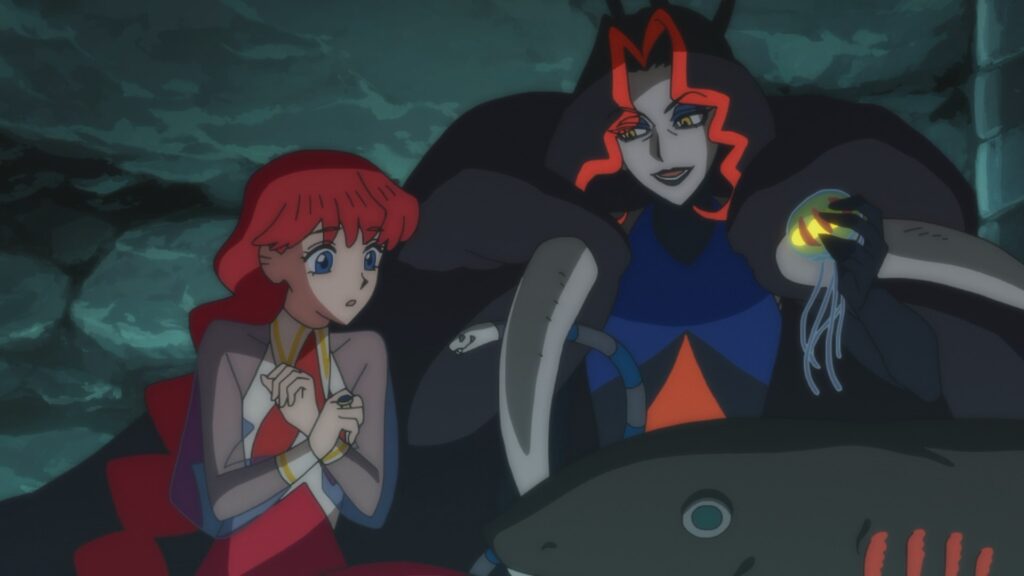
Koide: The Little Mermaid is a super global concept, right? No matter where you go in the world, even if people don’t remember the exact details, everyone shares this vague idea of “it’s a story about a mermaid and a prince.” We have mermaid folklore in Japan too, and I just thought it would be really fun to take that standardized global image and crash it into something incredibly local like Shiga. I really wanted to make something by mashing together something broad with something super narrow.
Interviewer: Tell us a bit about your goal in setting the story in your home prefecture of Shiga.
Koide: Since it is my home prefecture, I obviously love Shiga. But it wasn’t like I was trying to make a show about regional revitalization or anything like that. My main drive was just to set it somewhere local and create a story that felt connected to my own life. When you look at it that way, the local area I know best is Shiga, so it feels like a really natural choice.
build note: Takushi Koide’s hometown is Otsu, the capital city of Shiga Prefecture.
Depicting a “Tough Life” Instead of a Naive Coming of Age Story
Interviewer: The show centers on these two totally opposite characters: the otherworldly mermaid princess Lara and the grounded, realistic high school boxer Mari Otsu. Mari is a really unique partner character. How did you come up with her?
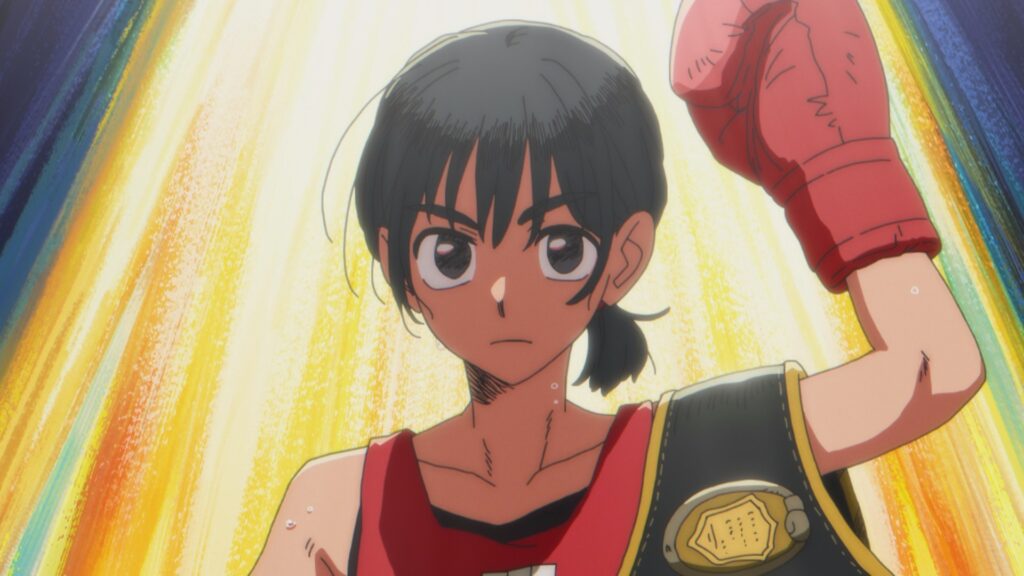
Koide: Visually and conceptually, Mari is the result of tossing a bunch of different ideas into a blender. But at her very core, she is the physical embodiment of my desire to make a “tough show.”
Interviewer: A “tough show”?
Koide: I was telling the staff all along that since this is a mermaid princess story, the plot will naturally involve Lara worrying and dealing with naive, internal struggles. But I really didn’t want to just focus on those naive parts and make a simple story where “she overcame her issues and grew up.” If the actual future looks bright, a straightforward coming of age story is totally fine. But if it doesn’t, I wanted to make a show that says, “When the going gets tough, the tough gets going.” That’s why I didn’t want to pair Lara with a character who was too naive.
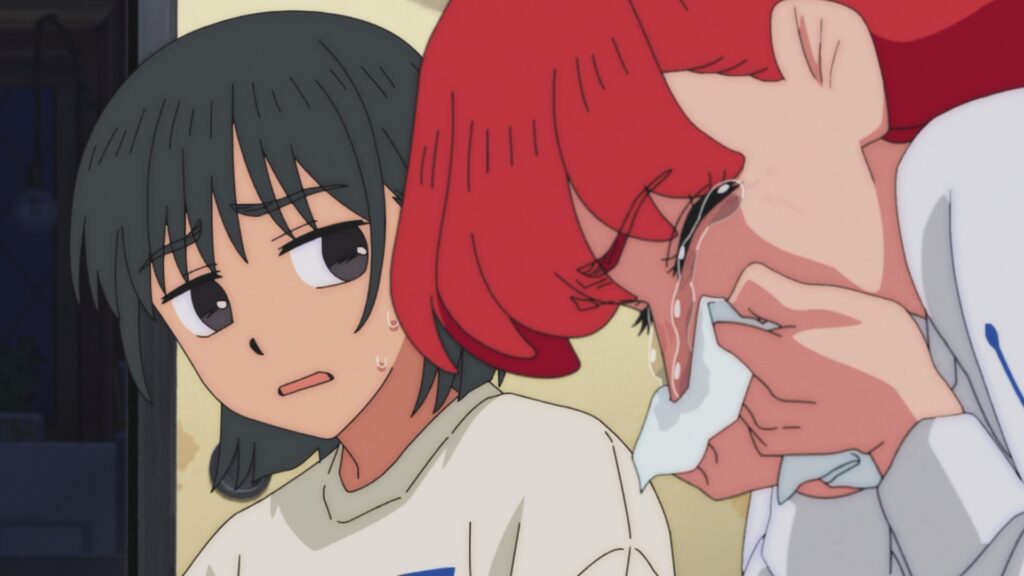
Interviewer: I get it. So instead of a beautiful “girl meets girl” story where they spark a chemical reaction and mutually grow, it’s a much grittier, more grounded relationship.
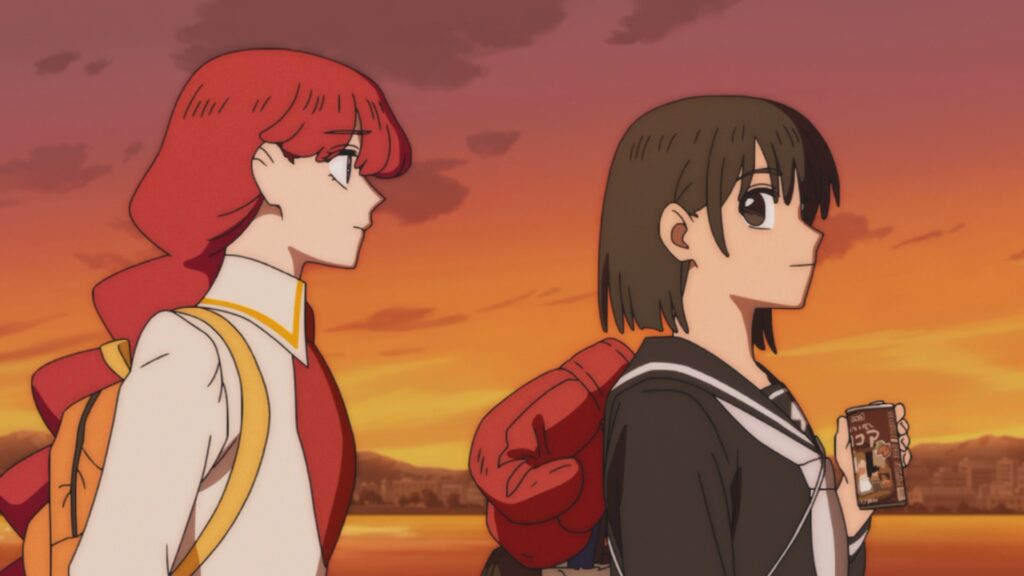
Koide: I’m a bit of a cynic, so maybe I just don’t want to easily admit they “grew up” (laughs). But to capture that slow burning sense of reality, we really needed a character like Mari. I wanted her to be this tough girl who is so insanely dedicated to her sport that she doesn’t even have the time to sit around thinking negative thoughts. Just to try it out, I asked our character designer, Shiori Tani, to draw Mari with boxing gloves slung over her shoulder, and it just looked ridiculously cool. It was a bunch of inevitable choices overlapping like that which shaped the Mari we have today.
Thick Lines and Bold Colors: A Look to Reclaim Anime’s Power
Interviewer: Shiori Tani’s character designs and the overall visual look of the show are super unique and really grab your attention. The thick lines and bold colors leave a huge impression and even give off a slightly nostalgic vibe.
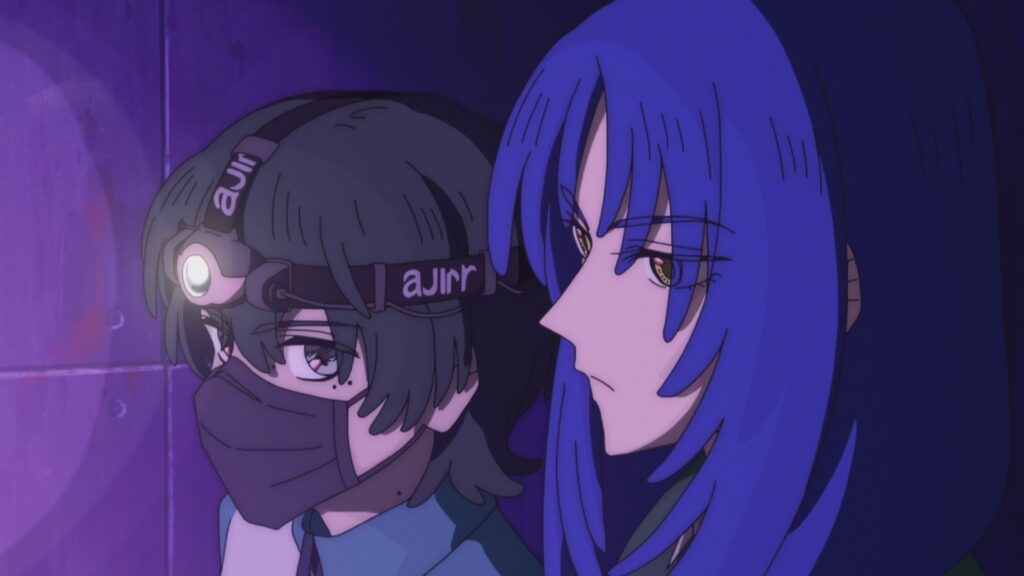
Koide: Shiori Tani is a year younger than me, and we’ve been working together at Kinema Citrus for a long time, so I know her vibe and sense of style really well. In a lot of recent anime, partly because of workflow and compositing setups, the mainstream look usually features thin lines and pale colors. That’s definitely one of the right ways to do things in modern anime production, but I genuinely believe there is a link between the art style and the story.
Interviewer: You mean like, “This specific art style shines because of this specific story.”
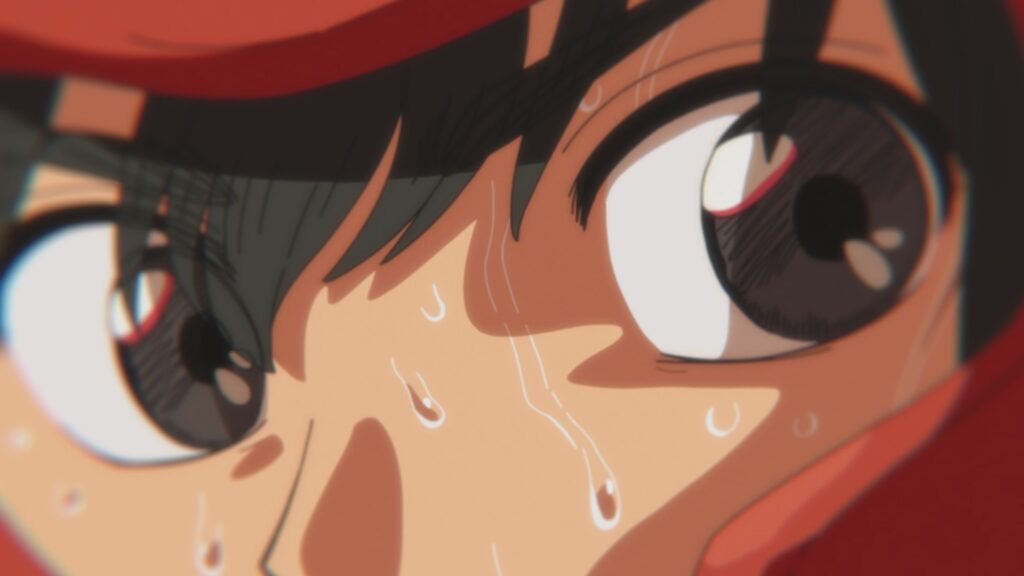
Koide: Exactly. If we were going to spend 12 episodes telling this slow burn human drama, I figured making the lines thicker and the colors bolder would create an anime that viewers could really sink their teeth into. I told her, “Let’s just make the lines thick, crank up the colors, and make a show that brings back the power of the line art, just like older anime.”
Interviewer: And the result of that is the striking visual style we see on screen.
Koide: The thing is, she’s even more extreme than I am (laughs). So the final product ended up pushing the colors and lines way further than I had even imagined! But it turned out great in the end. It gave me the confidence that even if you lined up 50 posters for this season’s anime, ours would still easily stand out and grab people’s attention.
Interviewer: It’s definitely surprising, because when you think of “The Little Mermaid,” you usually picture delicate artwork.
Koide: That is exactly why I can’t deny that contrarian urge to deliberately sprint in the complete opposite direction (laughs).
Interviewer: Thanks so much! In Part two, we’d love to hear more about your dedication to the Shiga setting and how you approached directing the individual episodes.
Part 2:
The original TV anime Goodbye Lara takes Hans Christian Andersen‘s fairy tale The Little Mermaid as a motif and brings it into the modern world, setting it right by Lake Biwa in Shiga Prefecture. Just as Episode 3 finished airing, we invited Takushi Koide over for a chat. This is his first time directing a series, and this interview project covers everything from how the whole thing got started to the deep themes he packed into the show. In this second half, we dive into his obsession with capturing the real, authentic vibe of Shiga, along with some behind the scenes directing secrets for each episode.
Casting that Highlights Contrasts and Intentional “Subtraction”
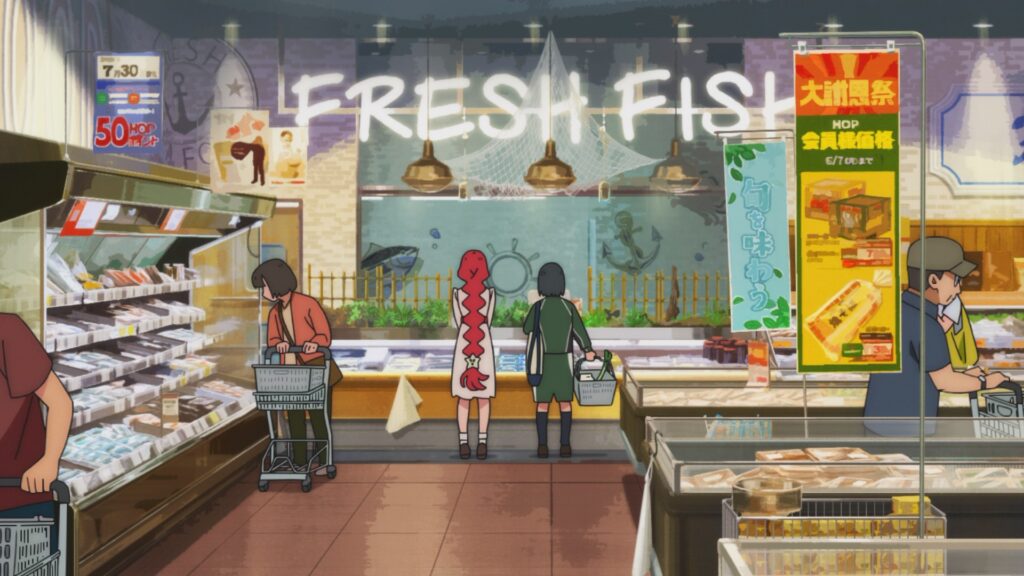
Interviewer: The scenery of Shiga Prefecture, the setting for this show, feels super real and highly detailed, like the Heiwado supermarket and Cheerio vending machines.
Koide: We decided on Shiga for the setting pretty early on, so I went on a bunch of location scouts. My own family home is actually in Shiga, so I even went around taking photos while visiting my parents. Setting it in a place I already know gave us a huge advantage in making an original work so quickly. We weren’t asked by any local groups to “feature this place” for the settings or props; I just selfishly picked places I wanted to show! (laughs)
Interviewer: I heard your “love for Shiga” really exploded at the voice recording sessions, too.
Koide: Well, rather than love, I ended up giving the cast a ton of direction just to get across the fine nuances of the Shiga dialect (laughs). Even though they are all Kansai dialects, there are subtle differences between Osaka, Kyoto, and Shiga.
Interviewer: The banter between Lara and Mari is also super charming. What kind of direction did you give those two for their acting?
Koide: I absolutely wanted a voice actress from Shiga Prefecture for Mari, so we asked Nana Kawaishi to do it. I really wanted to bring out the contrast between Lara, who is a resident of a fantasy world, and Mari, a girl who feels like she could actually exist in Shiga. So, I asked Lara’s voice actress, Hana Hishikawa, for a slightly more anime style performance, while I asked Nana Kawaishi for a more raw, realistic acting style. As the story went on, the chemical reaction born from their banter was amazing, and I honestly just enjoyed watching them myself.
Interviewer: I was surprised when I looked at the script, because in the actual broadcast, a lot of the explanatory dialogue was cut out. Was this an intentional subtraction of information?
Koide: On set, we often said, “If we do that, it will just turn into a standard anime.” I am totally not rejecting anime, but for this project, I wanted to make something tough and raw that viewers could feel was relevant to their own lives. Because of that, we wanted to stay as far away as possible from “lines you would totally hear in an anime.” But, taking that path also meant sacrificing easy understandability, so it was really difficult and I constantly agonized over how to convey information within the 24 minutes of an episode. On top of that, we frequently had to mess with the scripts that our writer Anna Kawahara and her team had put so much tenacious effort into neatly organizing. So in that sense, a feeling of guilt and worry always followed me around.
Directing that Pushes Back Against the “Time Performance” Era by Depicting Time and Existence
Interviewer: Let us talk about the aired episodes from here on. What were your specific directing points for Episode 1?
Koide: First off, I decided not to obsess over crazy camera angles. A lot of recent anime have complex compositions that cleverly use the spatial relationship between the foreground and background, but I felt that trying too hard in that direction would ruin this show’s charm. I tried to keep the camera as level as possible, focusing on creating screens where you can see the characters straight on and clearly. Also, in Episode 1, we scattered elements like being born, dying, and eating as anchors. We set it up so that it subconsciously communicates that this is a story about Lara’s second life.
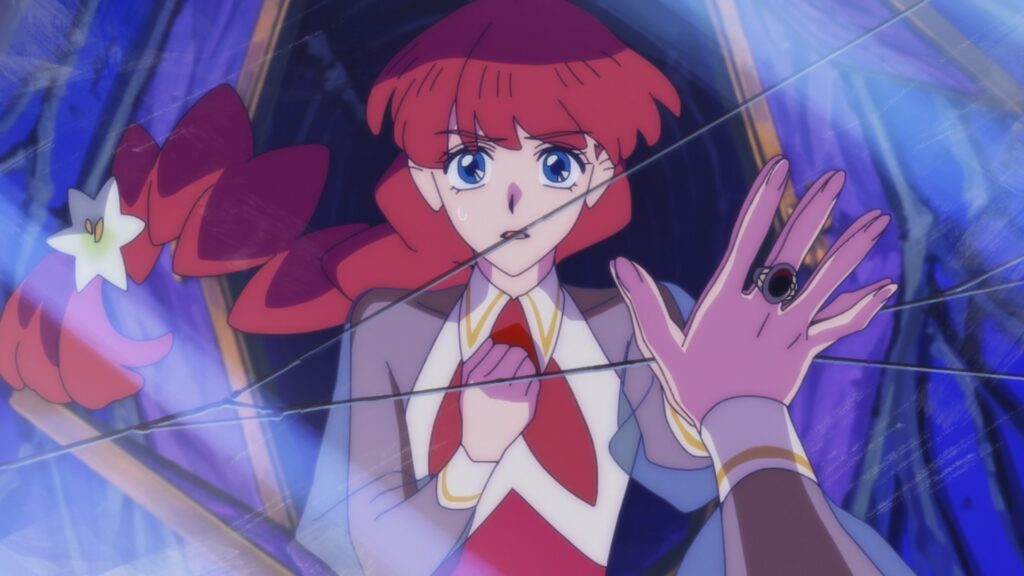
Interviewer: The depiction of water in this show is also very striking. Did you have any particular obsessions there?
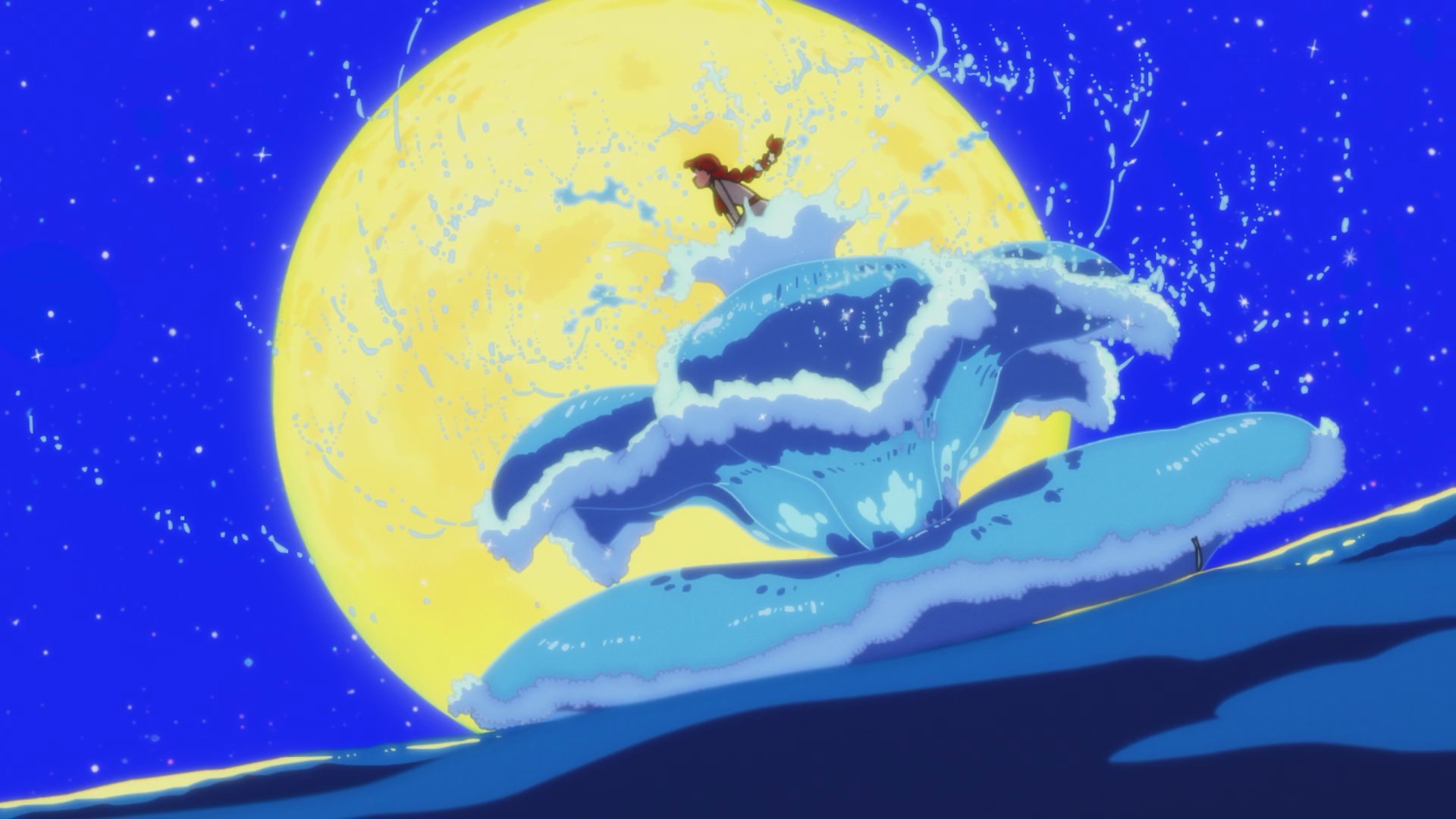
Koide: Since I actually started out as an animator, I definitely wanted to be as particular as possible about how the water looked. But there were just so many frames required that, in the end, I only have memories of struggling with it! (laughs)
Interviewer: How did you approach Episode 2?
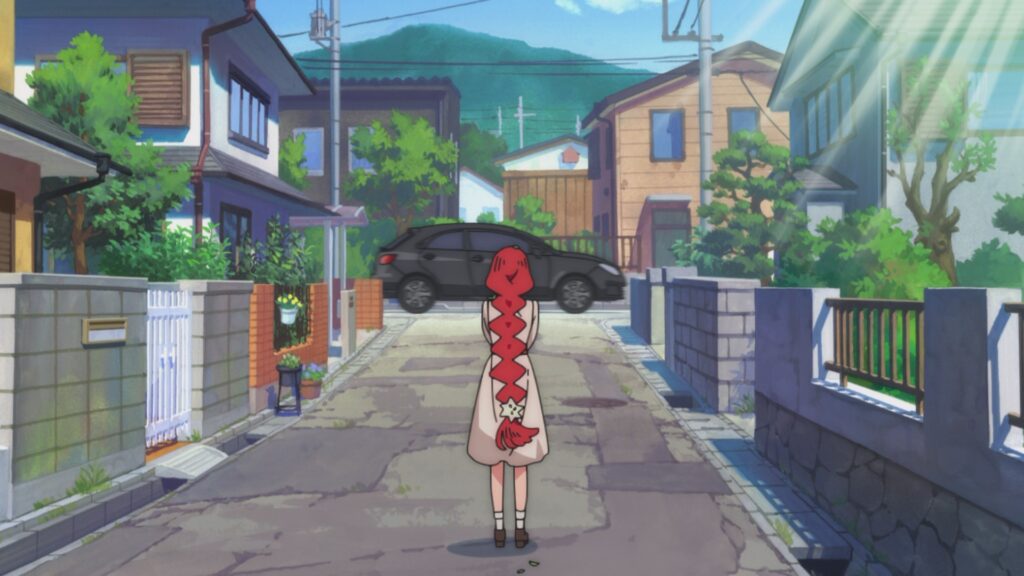
Koide: For Episode 2, I wanted to show the range of this series. To be specific, in contrast to the speedy development of Episode 1, I wanted people to feel the slow sense of time and the atmosphere of Shiga.
Interviewer: You could definitely feel the real Shiga.
Koide: When portraying regional areas in anime, we tend to only show perfect scenery. But with my aesthetic sense, I find beauty in things like a decades old dilapidated building left just as it is, or the cracks in the asphalt. I even made weird requests to the art staff, like asking them to draw the asphalt cracks so that you can feel a rhythm from them. (laughs)
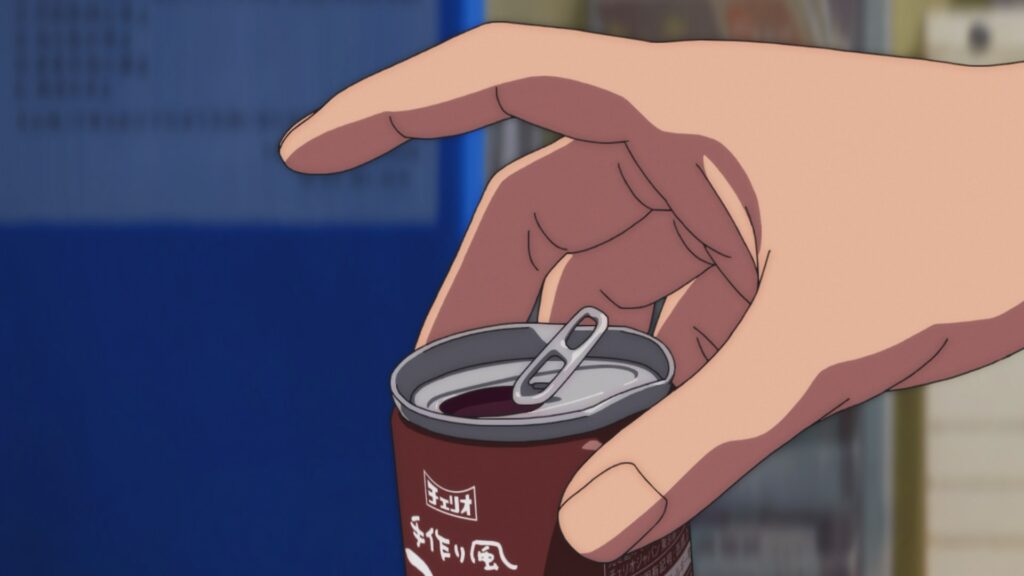
Interviewer: Personally, the scene where they drink cocoa while taking shelter from the rain left a huge impression on me.
Koide: Actually, that scene is straight out of my own real life experience. It suddenly started raining while we were location hunting, so we ducked into a rest area, bought cocoa from a vending machine, and drank it. In that moment of relief, I thought, “Ah, let’s make this a scene.” We used time really slowly and luxuriously for that part in particular. Especially since we live in an era that heavily values “Taipa” (time performance or efficiency), I am just praying that viewers will take their time and watch it slowly.
Lara’s Existence: Lovable Because She Has Weaknesses
Interviewer: In Episode 3, we see Lara and Mari’s distance closing, but there was also this frustrating feeling that their relationship had not completely deepened yet.
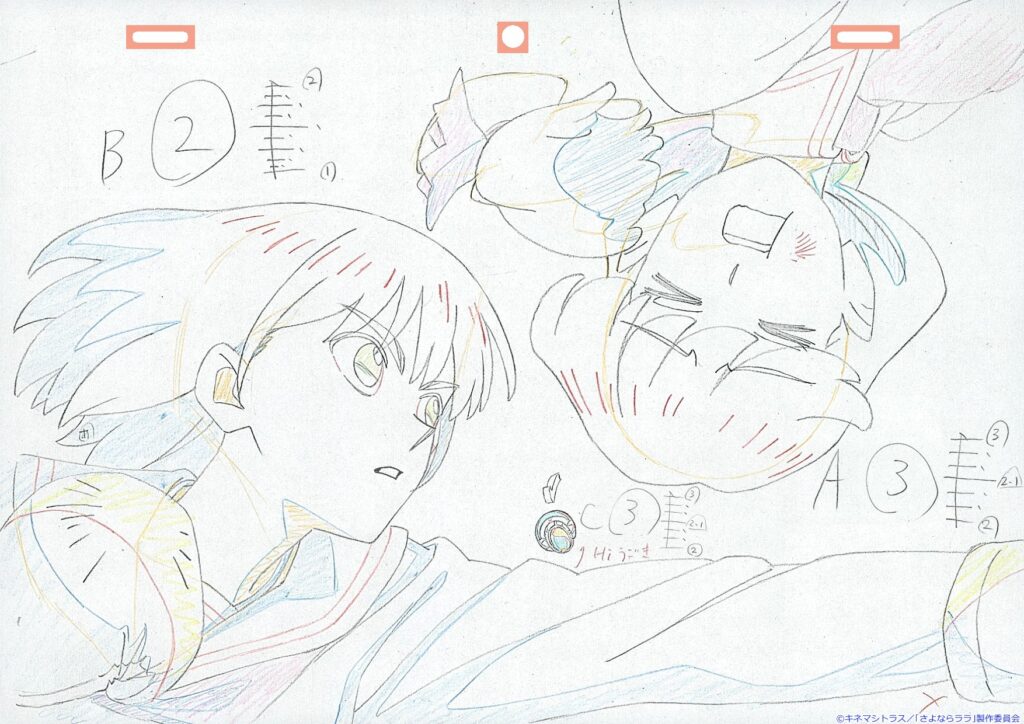
Koide: In a normal anime, they would probably form a solid bond in Episode 3 and be like, “Alright, let us go, Episode 4!” But they stop just one step short of that. I think that agonizing, slow burn relationship is the charm of Episode 3. Also, the boxing scene was drawn almost entirely by a single animator, Hidehiko Sawada. Without cheating using camera angles or still frames, he used a ton of drawings to animate it really rawly, so I think it turned out to be a spectacular scene to watch. Episode 3 has a lot of different elements, but thanks to the hard work of our episode director Ayaka Tsuji, I think it became an episode with extremely rich expression.
Interviewer: Finally, please tell us about the developments from Episode 4 onwards.
Koide: I believe this work is fundamentally an anime that just keeps chasing after Lara. Lara is an extremely incomplete person, and she has plenty of weaknesses. But I did not want to make a character who had no flaws and only lovable traits. I would be really happy if the viewers would warmly watch over how Lara lives her life from here on out. Not knowing what is going to happen is part of the charm of this show, so please enjoy it all the way to the end!