Hello everyone, this might be the first time I’ve ever seen an interview in a tweet. Nowadays if you pay some bloke money every month you get to write more in tweets? Kinda defeats the point of the website to be honest.
Anyway, Toei Animation’s very own Production Department arranged an interview with Katsumi Tamegai, one of their legendary animators. He was a regular part of the animation rotation on Sailor Moon and has been on numerous seasons of Precure. He was also Chief Animation Director on Interstella 5555 as well!
Let’s go read this one then!
Translation by “nui”, Editing by me. This tweet was originally published on Twitter (the website that for some stupid reason is called X these days) in September 2026.
Original Link: https://twitter.com/i/status/2095806663622353083/
Interviewer: We had the opportunity to interview animator Katsumi Tamegai! Katsumi Tamegai mainly works as an animation director on titles like Sailor Moon and the Precure series! Did you watch Toei Animation shows when you were a kid?
Katsumi Tamegai: Of course. You’d wonder why a guy who didn’t would even come here. (Laughs) For Toei, it was Galaxy Express 999. But the very first thing I got hooked on was Mazinger Z. It was right around my first or second year of elementary school, so I was the exact target generation and got completely obsessed.
Interviewer: Were the kids around you the same way?
Tamegai: Yeah. It was either anime, Kamen Rider, or Ultraman. Everyone was into those three. Among them, I was totally hooked on Mazinger Z, so I kept begging my parents to buy me Mazinger Z toys. Because of that, they stopped letting me watch robot anime. (Laughs) I couldn’t watch Getter Robo, Daitarn 3, or Zambot 3 at all, even though they were super popular at the time.
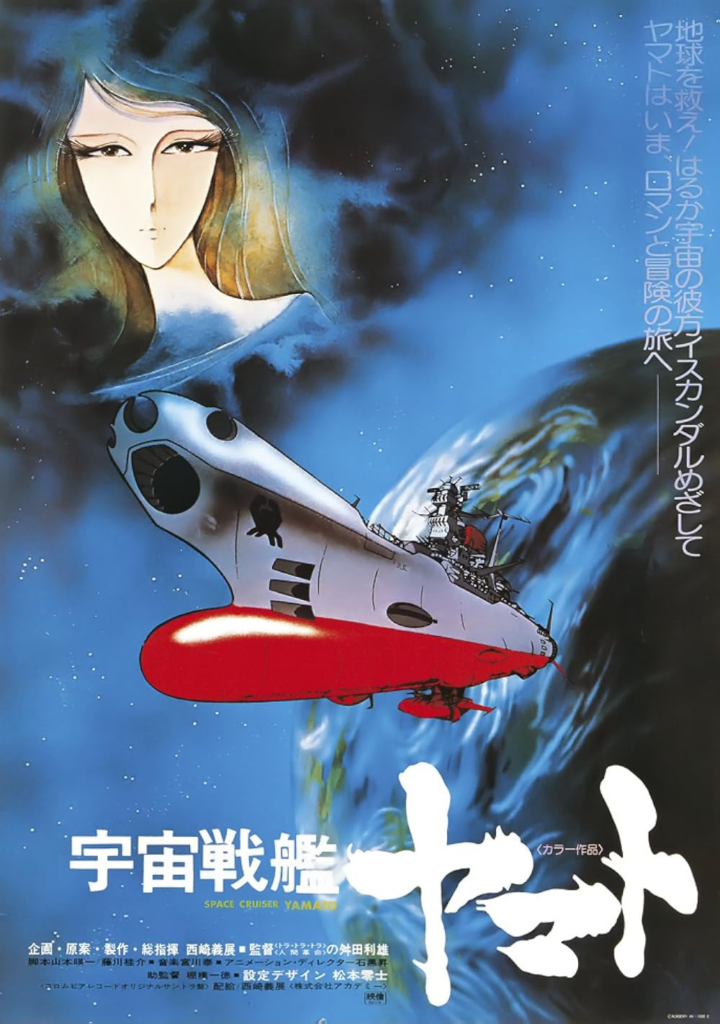
As for Space Battleship Yamato, it was a battleship. My parents were born before the war, so they had some familiarity with that kind of thing and didn’t get mad at me for watching it. So I got totally absorbed in Space Battleship Yamato and learned the name Leiji Matsumoto. When I heard LeijiM atsumoto had a new manga starting called 999, I read it, and then that became an anime, and through that whole flow, I fell even deeper into anime.
Interviewer: When did you start becoming aware of the job of an “animator”?
Tamegai: Back then, I learned how anime was made for the first time by looking at guidebooks, and that’s when I recognized the profession of an animator. A guidebook that came out around the time the 999 TV series started included a “cel” as a bonus. It wasn’t a real one, just an illustration printed on a cel, but it made me realize, “Oh, so this is what a cel is.” It also had various articles about “Anime Jobs,” which showed me exactly how anime is made!
I still wasn’t allowed to watch robot anime, so I didn’t watch Gundam at first when it started, but a friend told me it was incredibly interesting. When I watched it, it wasn’t a robot show filled with “Something Beam!” special moves like the ones before it, but rather depicted a realistic world where you had to worry about your remaining ammo. I was shocked, thinking, “Wow, anime turned into this while I wasn’t looking!” If it weren’t for 999 and Gundam, I might not be in this industry.
Interviewer: So that’s when you started aiming to become an animator.
Tamegai Right. By the time I went to vocational school, I had already decided to go into animation. So I was determined to watch absolutely every anime airing on TV.
Interviewer: Did you watch every single show back then?
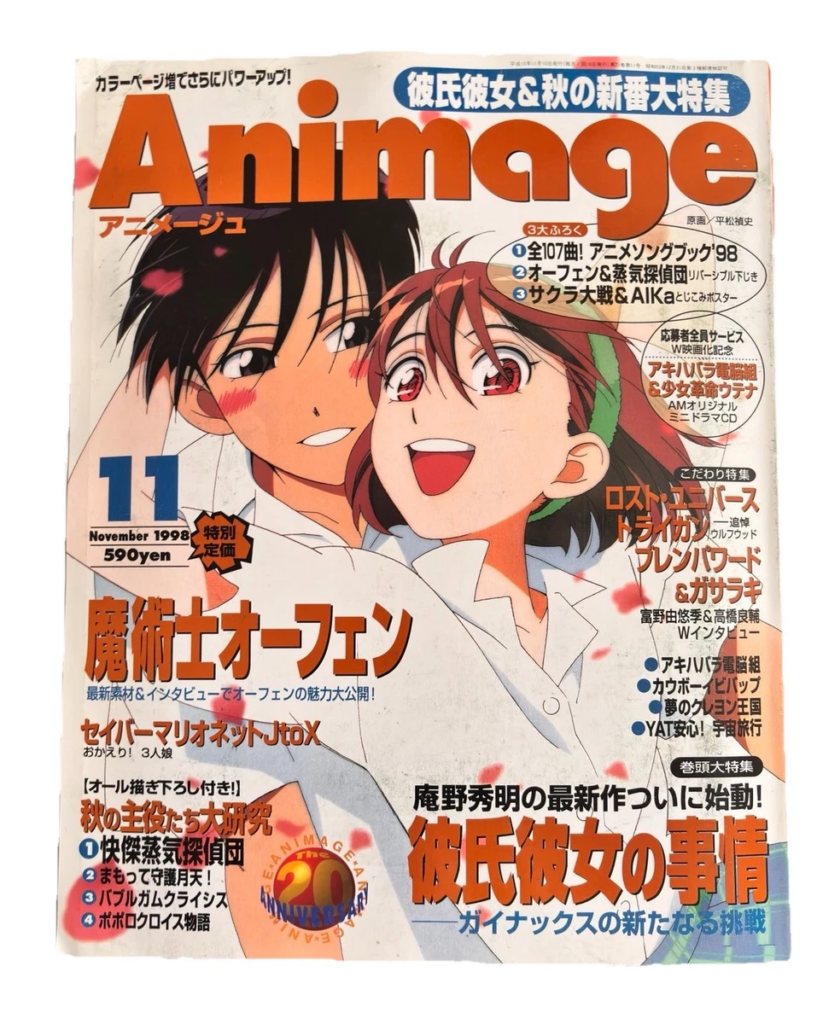
Tamegai: Yeah. Especially back then, it was pretty unthinkable for someone who hadn’t watched anime at all to become an animator. By the time 999 was airing, I understood how anime was made, so as I watched, I noticed, “The art is different every episode.” I think magazines like Animage still print next month’s broadcast schedules, but back then, they explicitly listed the animation director for each episode. So from that point on, I started watching with the mindset of, “Next week is this person’s episode.”
Interviewer: Magazines were an important information source, too.
Tamegai: Well, back then about five different anime magazines came out every month. Today, anyone chasing animation-related info just goes online, probably.
Interviewer: Nowadays, overseas fans also memorize names like “the animation director for this episode is so-and-so,” and individual animators have fans all over the world.
Tamegai: An Italian person once told me, “I’m a fan of your work, Katsumi Tamegai.”
Interviewer: Wow! Even fans in Italy.
Tamegai: I thought, “Yeah, right.” (Laughs)
Interviewer: No, no, it’s true! (Laughs)
Tamegai: It is something to be happy about.
Interviewer: From here, please tell us about your rookie days. What kind of work did you do first when you joined Toei Animation?
Tamegai: I joined in April, and for the first month, the animators, assistant directors, and production assistants all took lectures together. Then, from May until right after the Obon holidays, we practiced doing in-between animation as part of our training. After Obon, we were assigned to different productions.
The first one I was put on was a 30-minute show called Blondie. It was a co-production where the storyboards and character designs came from America, we animated it here, and delivered it to America. Blondie is kind of like the American equivalent of Sazae-san, famous enough that even my parents knew it. It’s a four-panel comic that was even published in Japanese newspapers after the war. I was the only one assigned there. In the staff room, there were only four people: the episode director, the animation director, the production manager, and me as the in-betweener.
Interviewer: So it wasn’t a room just for animators.
Tamegai: Exactly. After that, I was constantly assigned to direct-to-video titles, but I was placed in staff rooms exactly like that. Usually, there’d be two or three key animators, an in-between checker, the animation director, the series director, the assistant director, and the production assistant all in one room, so somebody was always talking.
Interviewer: That sounds great! Very fun!
Tamegai: So even while working, you could hear who was saying what in the background. I learned a lot of different things that way. “That guy is getting yelled at. Why is he getting yelled at?” “That person is getting praised.” All of that came in as important information. I definitely feel like I was raised in that kind of atmosphere.
I was in charge of in-betweens, but the animation director, Abe-san, asked me, “Want to try doing key animation for one cut?” However, the cut was a scene where a guy steps into freshly poured concrete, his feet sink right in, and the camera follows him as he plods along, squelch, squelch. That was just suddenly handed to me. Even a normal walk cycle is tough! (Laughs) Abe, who had been watching me, told me something one day. “Katsumi Tamegai, as an animator, give it your all for 10 years. Around the 10-year mark, an animator suddenly gets good. Everything you’ve accumulated up to that point pops open and blossoms. So work hard until you get there.” Everyone around me was so skilled that I felt rushed, but hearing that made me feel so much better, thinking, “Oh, I still have 10 whole years.” It was a piece of advice I’m deeply grateful for.
Back then, the teaching for improving your art was “draw even if you have to sacrifice sleep.” I suppose you can do that if you have something you want to do or express, but for someone empty like me, I just wondered, “What am I supposed to draw?” I felt like that for a long time. So when I started thinking, “I just have to draw for work. I just need to stack that up and get better,” it genuinely made things easier.
I had another problem, too. I didn’t have my “own art style” inside me at all. All animators have specific traits in their art, but I didn’t have that, so for years I worked thinking I had to grasp those traits myself. Every animation director had a different personality, and they were all great. I’d try thinking, “Let’s copy this person’s traits,” but it wouldn’t work out. I repeated that several times and never found anything that really clicked.
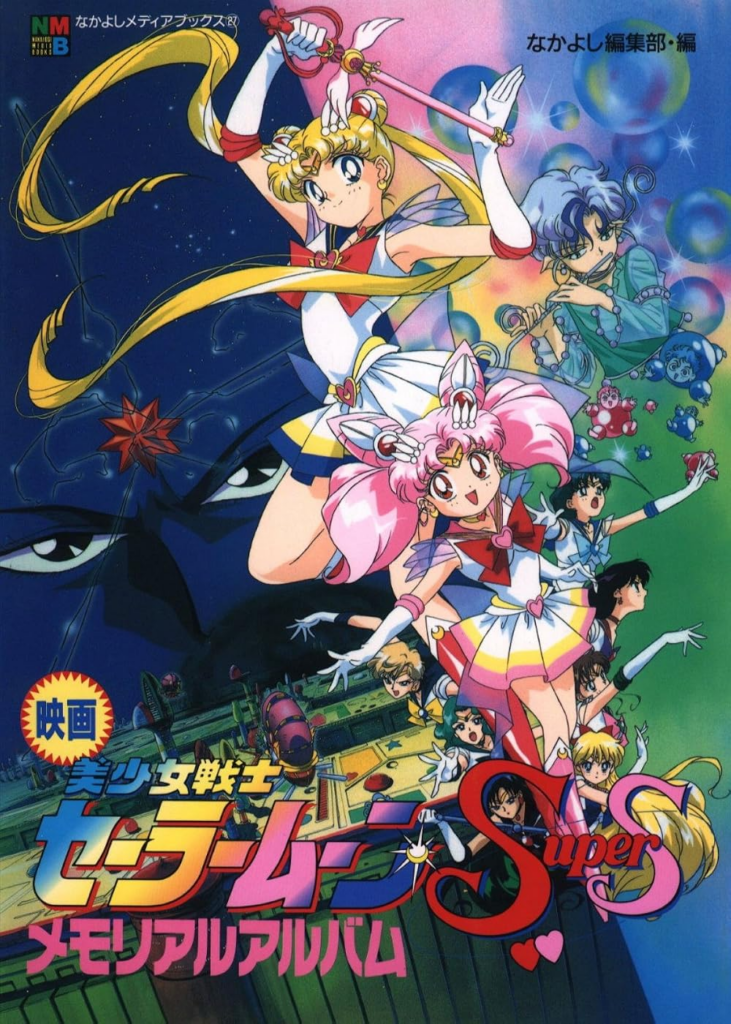
That changed when I met Hisashi Kagawa on Sailor Moon. Hisashi Kagawa was the animation director for the second and third theatrical movies, and I was put on as the assistant animation director, so every single day I just traced over Kagawa’s drawings. And when I did that, it clicked perfectly. The way the proportions were taken, and the fact that the girls Kagawa drew were just so cute. I decided, “I’m going to go in this direction,” and from then on, doing animation became a little more fun for me. Up until then, I had just been trying to faithfully follow the character sheets, but I always felt this agony of it not quite working out. I wouldn’t go so far as to say “I can now draw my own art,” but I established a style of my own and it became easier to draw.
That happened right around my 7th year, out of the “10 years” Abe had mentioned. I realized that the “you suddenly get good around the 10-year mark” thing was probably exactly this. A few times in my life, something someone told me hit me like a ton of bricks, and I am where I am today because of those words. So now, I tell everyone, “Give it your all as an animator for 10 years.”
nui note: Abe-san is presumed to be Takashi Abe. He was a veteran animator at the time so that’s likely who he is.
build note: If it isn’t him, do let us know!
Interviewer: Those are wonderful words.
Tamegai: In our day, they didn’t hire every single year, so the seniors one term above us were actually 5 years our senior, and it was a 10-year gap before our juniors came in. But now, they get new people every year. When you have a ton of people below you, I think it’s natural to feel anxious. But honestly, if you stay in this industry for 10 years, any initial gaps in skill eventually vanish. There is absolutely no need to panic. The path you’ve lived and the path someone else has lived are completely different, so simply comparing them over just one or two years is pointless.
Interviewer: Not having a junior join for 10 years is unthinkable today.
Tamegai: That’s why I kept saying, “I’m a rookie,” forever. (Laughs) Even in my 7th year, I was still the lowest-ranking rookie, which also took the pressure off.
Interviewer: Have you ever voiced your own requests, like “I want to work on this specific title”?
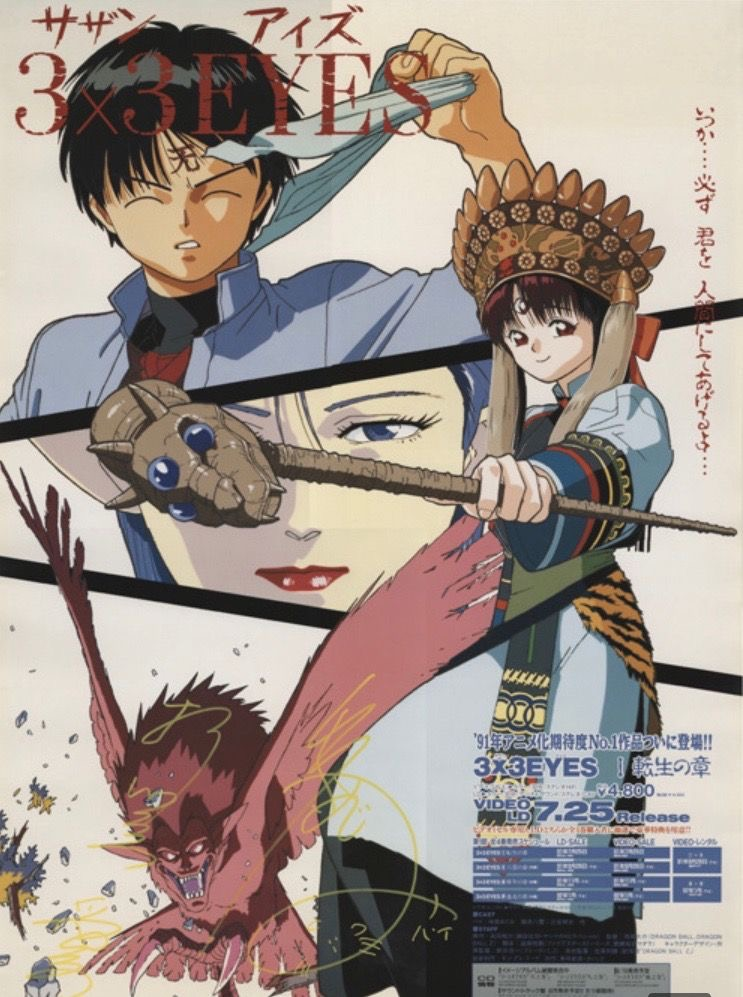
Tamegai: I’ve only ever said “I want to do this” once. It was for a video series called 3×3 Eyes. One time, a little ways over from where I was working, everyone was chatting excitedly. I went over to see what they were talking about, and they were all looking at a layout drawn by a senior animator, which had been corrected by Kouichi Arai, a first-generation trainee. That senior was a skilled artist who could draw proper spatial depth, but once Arai’s corrections were layered on top, it didn’t just feel like “there’s some space here.” It became a drawing where everything was perfectly locked in, screaming, “This is the correct answer.” The second I saw it, I knew, “I have to study this.” The senior who drew the original layout was there too, and he asked me, “Well, makes you want to work on it, doesn’t it?” (Laughs) I said, “Yes. I’m going to the staff room to appeal to them directly right now.”
Interviewer: Oh!
Tamegai: When I got to the entrance of the staff room and reached for the doorknob to knock, the door suddenly clicked open from the other side, and Arai was standing right there. We made eye contact, and he just grabbed my hand tightly and dragged me right inside. (Laughs)
Interviewer: Eh!? (Laughs)
Tamegai: Inside, the director Daisuke Nishio was having a meeting. He looked at me and said, “Tame-chan, you’re here at the perfect time. Since you’re here, wanna take a storyboard?” He immediately followed up with, “Just kidding!” so I replied, “No, it’s not a joke, I actually came here to ask you to let me work on it, and I was just outside the door.” Arai was absolutely thrilled. He was saying things like, “I haven’t heard anything about this,” and “I’ll definitely get you in.” When I told him, “I haven’t told the company anything yet,” he just said, “Leave it to me. To hell with the company.” (Laughs)
Interviewer: That’s amazing. (Laughs) Finally, do you still watch anime today?
Tamegai: Right now, the Yamato remakes are airing. I’ve decided I’m going to see that through to the very end. Aside from that, probably Gundam. I mostly watch the Universal Century titles. Like Hathaway’s Flash. In the end, I’m just still an anime fan.
Interviewer: Thank you so much for the valuable stories today!