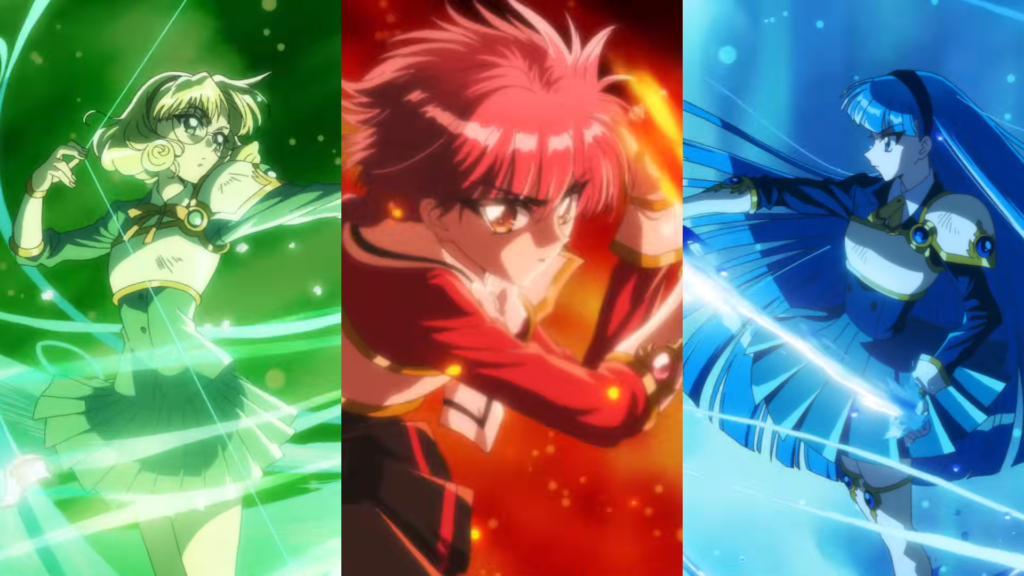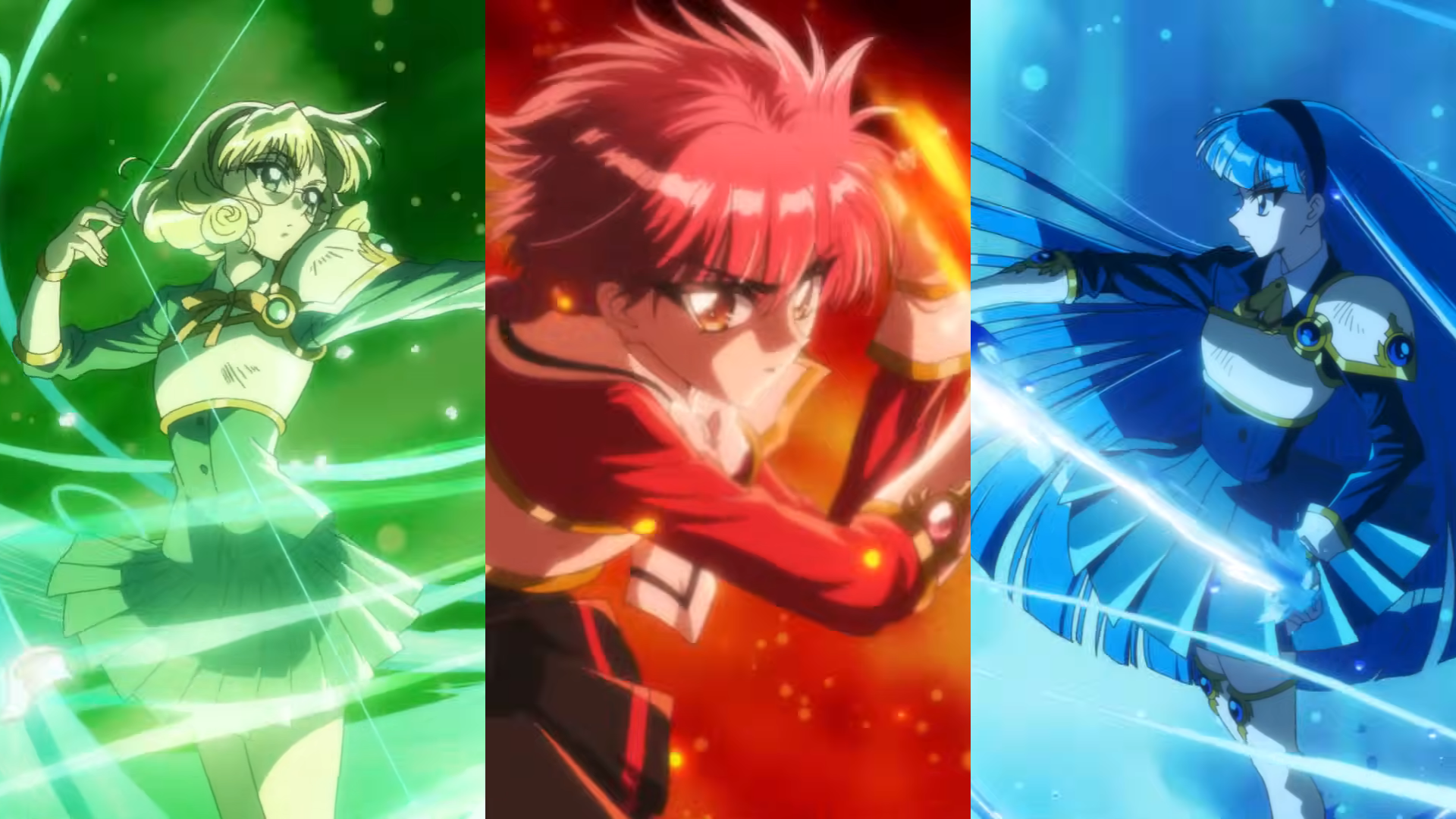
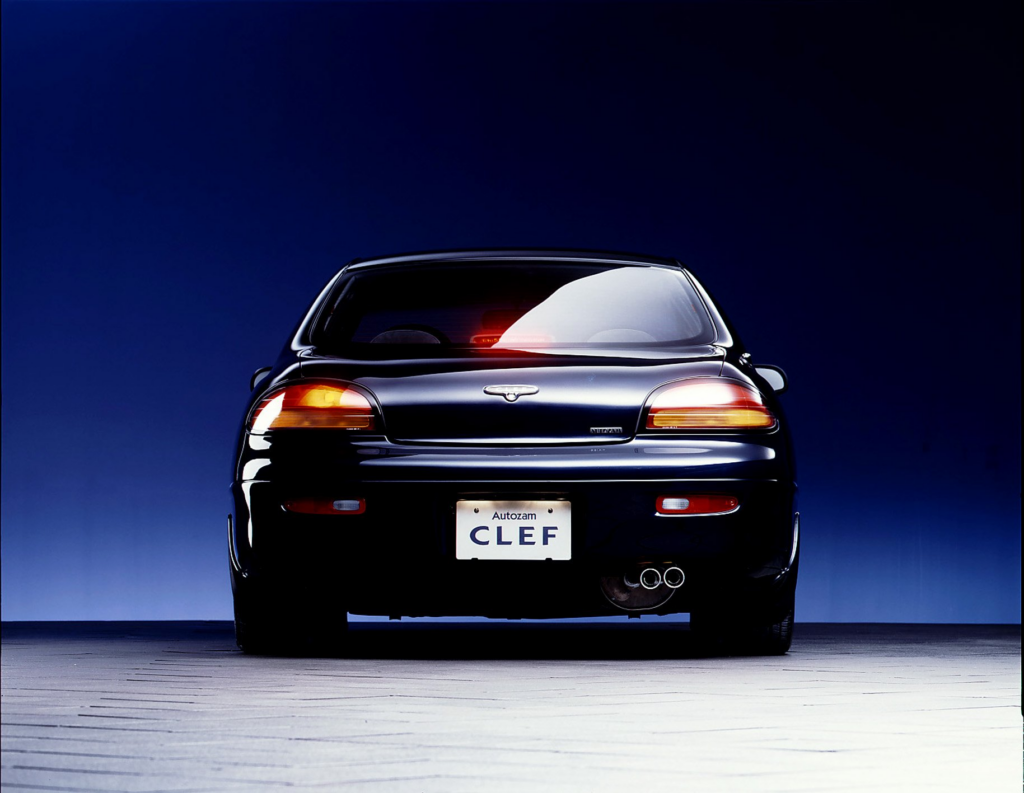
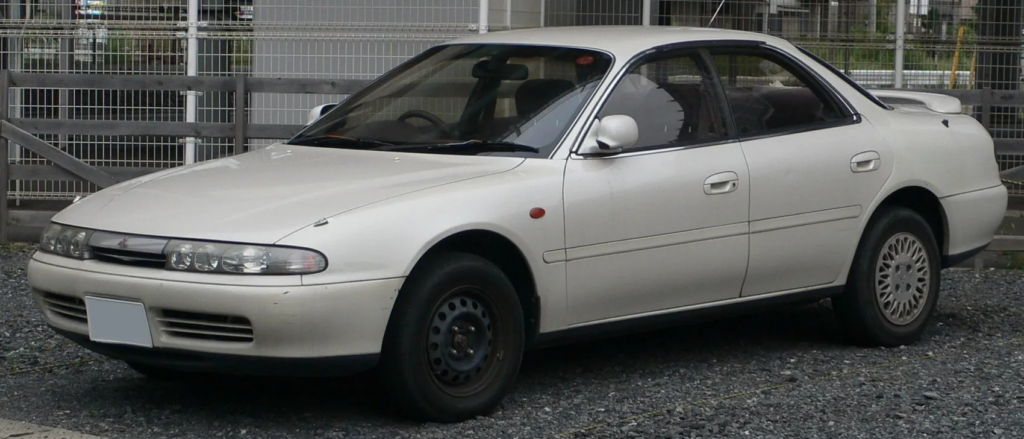
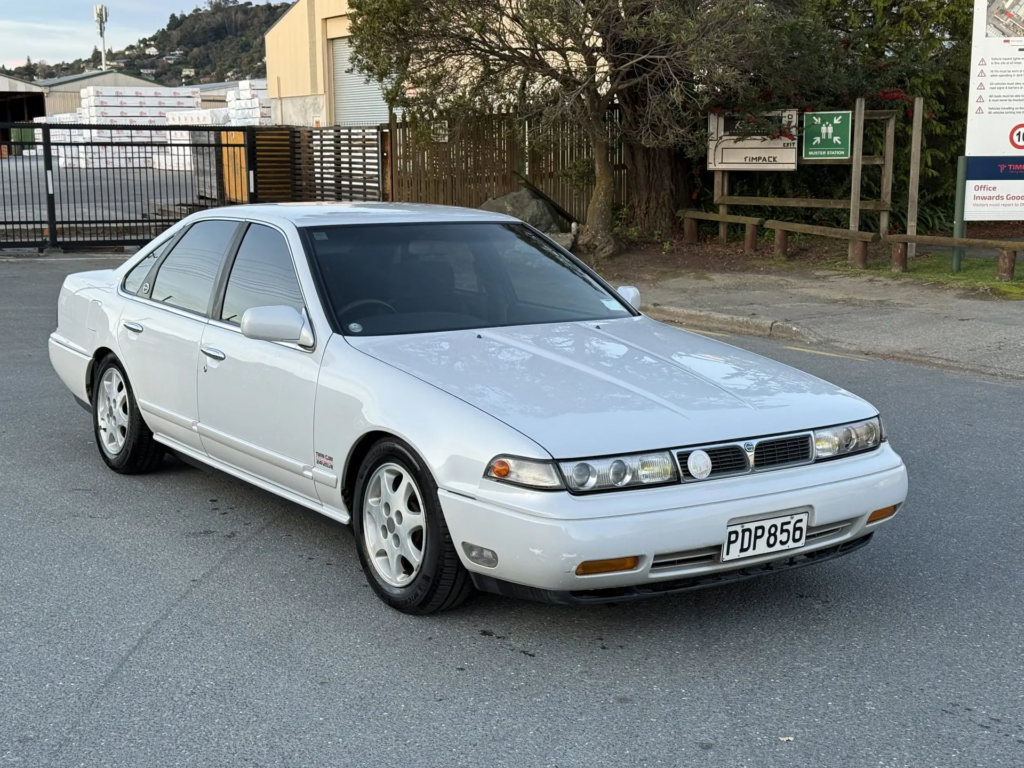
Hello everyone, the year is 2026 and Magic Knight Rayearth is airing on the telly. No, it’s definitely not 1994. I checked the calendar just a moment before writing the cold open to this article! Some bright spark plugs decided it was a good idea to bring back this classic story from CLAMP back to be enjoyed by a new generation and inadvertently rejuvenate the sales of 80s and 90s used Japanese cars.
I finished Magic Knight Rayearth very slowly in a groupwatch on my Discord server last year and it was a very fun watch. It’s a great fantasy adventure, with some silliness and some cool mecha action too! Hopefully this new remake gets folks just as interested in the story!
We ended up getting the first part of a set of interviews from oricon with the new voice cast of the three main characters from the show where they talk about eras and becoming the new voices of the Magic Knights!
Translation by “nui”, Editing by me. Ayane Sakura, Rumi Okubo, and Rie Takahashi on Taking on the Reiwa Edition and Their Three-Way Bond “We’re All in This Together” was originally published on oricon in October 2026.
Original Link:
https://www.oricon.co.jp/news/2484944/full/
The TV anime Magic Knight Rayearth (every Wednesday at 11:45 PM JST) kicks off its consecutive two-cours run on October 7th in TV Asahi’s “IMAnimation W” programming block. Oricon News sat down for an interview with Ayane Sakura (voice of Hikaru Shidou), Rumi Okubo (voice of Umi Ryuuzaki), and Rie Takahashi (voice of Fuu Hououji). We asked them about the bond they built while recording together, as well as the team’s dedication to honoring the original work while creating this Reiwa-era adaptation.
The series is based on the fantasy manga by CLAMP serialized in Nakayoshi (Kodansha) from 1993 to 1996. It follows three eighth graders, Hikaru, Umi, and Fuu, who are suddenly summoned from Tokyo Tower during a school field trip by Princess Emeraude of the alternate world of Cephiro. To save the imprisoned princess, they embark on a journey as the legendary Magic Knights. The original TV anime aired from 1994 to 1995. This new anime project commemorates the 30th anniversary of that broadcast, marking the first new animated entry in 29 years since the 1997 OVA.
Part 1: “A Room Full of Nerves and Anticipation”
Interviewer: Could you tell us what stood out to you during the recording sessions with the three of you together?
Rie Takahashi: What truly stuck with me was how each cast member arrived at the studio wearing the specific color of their character.
Ayane Sakura: Going into the first episode, I felt immense pressure and was extremely nervous. Hoping to boost my confidence, I decided to wear a vibrant red outfit to the recording. For that initial session, I felt a bit self-conscious and worried I seemed overly eager being the only person dressed in character colors, so I opted for a more subdued look for episode two. To my surprise, that was the exact session where the other two arrived fully dressed in their respective character colors! (laughs) Looking back on how we began, the sheer intensity of everyone’s anxiety really stands out.
I found it particularly challenging because Hikaru is inherently upbeat, carefree, and pure, yet my nerves made it hard to deliver a relaxed, natural performance, and I worried I wasn’t doing the character justice. The Sound Director offered guidance, noting that while there were minor issues with vocal distance or internal monologue delivery, the top priority for episode one was capturing her core personality. He advised me to keep Hikaru’s portrayal consistently bright, energetic, and projected, which became my main focus moving forward.
Rumi Okubo: Regarding the character colors, Rie and I were likely a bit hesitant. I had plenty of blue clothing picked out at home, but given how vocal I have been about my admiration for CLAMP and Rayearth, I worried that overshowing my excitement might backfire or look like I was trying too hard. I had always viewed Ayaneru (Ayane Sakura) as unflappable and steady. So seeing how anxious she felt during the first episode, and understanding the immense pressure she was under, it really struck me that she still chose to wear bold red for our sake despite those nerves. That initial session made it completely clear to me that Hikaru would be the driving force guiding our cast in the studio.
Because of my lifelong affection for Rayearth, my main goal was to keep the experience enjoyable as we pushed toward the final session. Beyond just having fun, I wanted to foster an uplifting workplace where no one felt discouraged. By nature, I naturally incline toward backing whoever is out front rather than leading the charge myself. Thus, right from episode one, I made up my mind to join forces with Rie in backing Ayaneru as she spearheaded the team. After all, that role fits Umi’s character perfectly. Regardless of how well I executed it, I firmly set my sights on taking on that supportive role on set during our very first recording.
Casting the Trio: “A Perfect Alignment of Perspectives!”
Interviewer: How did you feel when you found out the three of you would be playing the Magic Knights?
Sakura: It has been a while since Rumi and I worked together. We were regulars on a show for a year back when I was a teenager, but since then, our chances to work closely together had decreased. I was a bit curious about how Rumi saw me now that I have gone from my teens to my thirties. Especially knowing she was a big Rayearth fan, I wondered how she felt about Ayane Sakura playing Hikaru. I would not have minded at all if she was strict about it, but I also felt like she might try to be considerate, so I was hoping she would just be straightforward with me. I was feeling a lot of different kinds of tension.
As for Takahashi, we have bumped into each other here and there over the years, but we have rarely co-starred in main roles like this. I always saw her as incredibly earnest, straightforward, and passionate, and I figured that must have shone through as Fuu’s defining charm during her audition. I was really looking forward to seeing what kind of vibe her Fuu would bring. Also, the two of them are at the same agency and I am the odd one out, so I really wanted to figure out how to join their circle smoothly! (laughs)
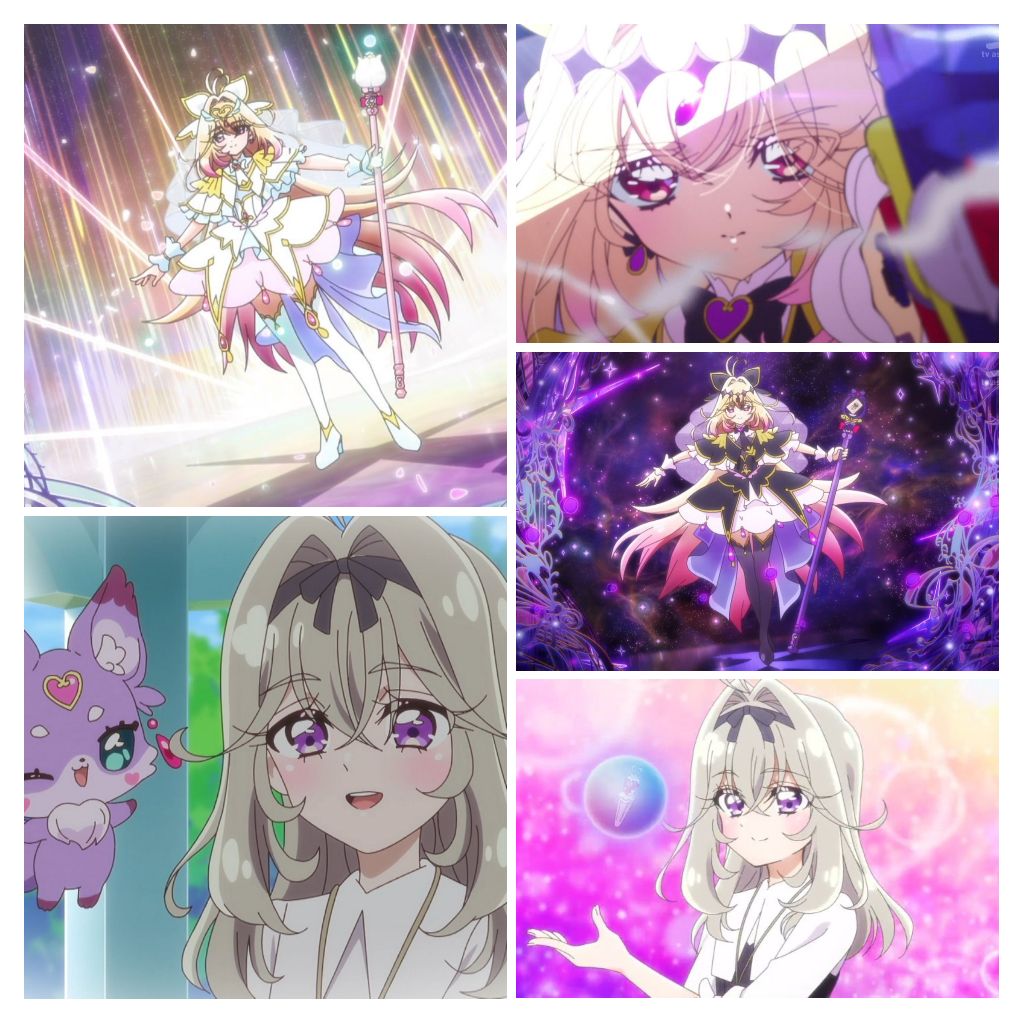
nui note: The interview itself does not name the specific project, noting only that they were regular cast members on a show together for a full year when Ayane Sakura was a teenager. The show they are referring to is the anime Pretty Rhythm: Dear My Future, which aired for 51 episodes from April 2012 to March 2013. Rumi Okubo voiced the protagonist Mia Ageha, and Ayane Sakura voiced Ayami Ooruri. To clarify a minor detail of her response, only Ayane Sakura was a teenager (18 years old) at the time of the broadcast. Rumi Okubo is a few years older and was 22 during the show’s run.
Okubo: I just thought, “A Perfect Alignment of Perspectives!”
Sakura & Takahashi: Oh! [Applause]
Okubo: Reviewing the cast list gave me a clear sense of the direction requested of us. While I anticipated our dynamic might evolve once we entered the studio to develop the show together, the lineup immediately communicated the production team’s precise vision. Having collaborated with Ayaneru for about a year during her teenage years, our paths crossed only sporadically afterward, and COVID-era recording setups kept us in separate groups. Nevertheless, following her successful career across the industry gave me immense confidence in her talent, making me eager to experience the Hikaru she would create.
Hikaru’s choices directly shape Umi’s emotional journey. Conversely, as a frequent collaborator of Rie, I am accustomed to her portrayals of gentle, sincere, and pure-hearted characters. Because Fuu lies slightly outside that range, I anticipated she would present a fresh dimension of her acting talent, and I remained fully confident in her ability to deliver.
Takahashi: Upon learning that I had successfully passed the audition, my immediate thought centered on who my fellow cast members would be. While I felt immensely honored and thrilled to join the Rayearth project, and receiving the invitation to audition for Fuu was a major milestone in my career, I realized my focus shifted from simply playing Fuu to the team I would be working with. Hearing their names instantly reassured me that I could stand beside them in battle. Had I been on my own, the overwhelming pressure might have broken me. However, working alongside senior colleagues who approach their craft with complete dedication and face challenges head-on inspired me to push forward together.
Navigating this journey independently would have been far more daunting. Ayane is the same age as me and very easy to talk with, while Rumi shares my agency; having that blend of profound respect and genuine approachability brought immense comfort. Ultimately, knowing who my co-stars were gave me total confidence in my place within the cast.
Consulting the Original Manga to “Remove Unnecessary Alterations”
Interviewer: How did you all go about checking the differences between the original manga and the Heisei-era (previous version) anime during the recording sessions?
Sakura: A lot of isekai vocabulary pops up, so we definitely found ourselves checking things like, “How did they pronounce this in the Heisei version?”
Okubo: The very first one of those was the “Zagato” issue. Neither pronunciation was technically wrong. While we aren’t just copying the Heisei version beat for beat, we wondered if there was really any need to go out of our way to do something different from it. Speaking as a viewer myself, just thinking, “Oh, they pronounced it this way in the Heisei version, but it is different this time,” acts as a kind of noise. It is a shame for the viewers to have their attention pulled away by that, so we all talked about it and agreed, “Let us just match the Heisei version for Zagato.”
Sakura: On the audio side, we were very careful to distinguish between meaningful and meaningless changes, and we tried to eliminate the meaningless ones as much as possible. I think keeping the original manga dialogue as intact as possible was a core theme of the script this time around. We would each cross-reference with the original manga and ask, “The phrasing is slightly different here, is there a specific reason for that?” Often, we would adjust it by saying, “Let us change this back to how it is in the original.” We were all literally holding copies of the manga while we recorded.
Okubo: Sometimes we would be in the middle of acting, realize a line felt surprisingly different, and check it, thinking, “Wait, is this not different from the manga?” Then we would ask, “Excuse me, the original text says this. What should we do here?” Sometimes the staff would bring it up to us, and other times we would be the ones asking them.
“We Are All in This Together”: A Collaborative Recording Process
Interviewer: Takahashi, did you find having those two by your side reassuring?
Takahashi: I really did. If I asked them anything, I would always get an answer back, and they would think things through with me. Truly, everyone is fully invested; nobody treats it like it is someone else’s problem. I feel like we have an incredibly good team.
Sakura: Sometimes the order of lines would be flipped, or lines not in the manga would be added very occasionally. We would discuss things like, “Which manga panel’s nuance is this line trying to capture?”
Takahashi: The nuance of a facial expression changes a lot depending on whether we should be drawing from the preceding panel or the following panel. There were definitely scenes where things were intentionally added, so we all thought deeply about those parts together.
Okubo: There were places where the timeline of events was reversed, too. But that way of presenting it is beautiful in its own narrative flow. I believe they changed the timeline for a reason, so we filled in the gaps with our own interpretations or checked with the staff if we did not understand something. Since the original comic is from the Heisei era, there are definitely some phrases where you wonder, “Would this work in the Reiwa era?” But at the end of the day, it is the language of that specific fictional world. We had the mindset of “Yeah, people would say that,” and unless a phrase was an absolute no go, we kept it as is. At first, I wondered things like, “Are they going to have smartphones?” but everything, including how they communicate, starts exactly in the original time period.
nui note: In this section, Rumi Okubo reflects on the challenge of evaluating retro dialogue choices, comparing specific vocabulary and phrasing from the original Heisei-era (1989–2019) manga with modern Reiwa-era (2019-present) sensibilities. While considering whether aged expressions might sound unnatural to modern viewers or if modern technology like smartphones should be introduced, the team ultimately concluded that maintaining the original script’s distinct, 1993-bound world-building and character phrasing preserves the authentic tone and internal logic of the fictional setting.
Sakura: The visuals are absolutely gorgeous and utilize all the latest modern animation techniques. At the same time, the setting remains firmly in 1993, so we all put our heads together to figure out the right balance, right down to the dialogue phrasing.